Crowned With Sheaves Like Nephi of Old: Devotional Usage of the book of Mormon Among the Early Saints

Terry Givens in his prodigious and highly regard work, By the Hand of Mormon: An American Scripture That Launched a New World Religion, advances a thesis that has since become commonly accepted among Mormon Scholars and bloggers. In it, he discusses the importance of the Book of Mormon to the early members of the Church and describes how the book was primarily used as a symbol and tangible manifestation of the restoration, rather than for its theological or devotional value. I have great regard for Terryl Givens, having been a Mormon Summer Scholar in the program that he runs. And I think his thesis has been very valuable in helping Mormons understand the changing role of the Book of Mormon and to more seriously dedicate ourselves to study of the text itself.

Nevertheless, while I do believe that Terryl Givens offered very valuable insights and is largely accurate, I also think his thesis glosses over the various devotional ways that the Book of Mormon was used by the early Saints. Moreover, although his theory acknowledges nuance and counter examples, it has since been spread and amplified in a more exaggerated fashion to suggest that early leaders completely ignored the spiritual value of the Book of Mormon.

In this post, I want to offer a couple of prominent examples that I have found in early church history that illustrate the ways that the Book of Mormon was used not only as a symbol, but as a source of inspiration and spiritual guidance.

D&C 33:8

Of course, one of the most prominent examples of devotional usage of the Book of Mormon comes from the Lord himself through the Prophet Joseph Smith. In D&C 33, the Lord calls missionaries to gather his elect from the four corners of the earth, and promises them that if they open their mouths they will “become even as Nephi of old, who journeyed from Jerusalem in the wilderness.” This is an unusual reference to Nephi, because of all of the characters of the Book of Mormon Nephi does not come to mind as a great or successful missionary. And yet, Nephi had incredible visionary experience and was at times filled with such greater power that his message literally shook the listeners to their core. And Nephi was a great teacher expounding on the scriptures, another theme from this section of revelation (See D&C 33:16). And some have even speculated that additional missionary exploits of Nephi might have been contained on the 116 lost pages and that these stories might have been told by early members of the church. Regardless of whether that theory has any truth in it, it is clear that these words would have had meaning to those inspired to go out a serve, and that Nephi served as an exemplar of a man of vision and courage.
Continue reading


Who was John McIlwrick?

Bottom Line Up Front: Weather and possibility of an American-born John “McIlwrick” suggest Martha Brotherton’s interview with Brigham Young occurred well before January 1842. cpv2The other day I explained what I think happened between Brigham Young and Martha Brotherton. My thesis was that Martha’s encounter with Brigham occurred prior to January 1842, before we have a positive indication that Joseph Smith had included Brigham in ceremonies related to the New and Everlasting Covenant. The July 1842 letter describing Martha’s alleged ordeal appears to pin the incident as occurring in February-March 1842, when William Clayton was working in the tithing office and prior to the April 7th denunciation of the tale during General Conference.[ref]Apr. 15, 1842 issue of the Times and Seasons, p. 763, reporting on the Thursday, Apr. 7, 1842, spring conference in Nauvoo. Hyrum Smith “spoke concerning the elders who went forth to preach from Kirtland… [and] then spoke in contradiction of a report in circulation about Elder Kimball, B. Young, himself, and others of the Twelve, alleging that a sister had been shut in a room for several days, and that they had endeavored to induce her to believe in having two wives.” Available online at http://contentdm.lib.byu.edu/utils/getdownloaditem/collection/NCMP1820-1846/id/9835/filename/4927.pdf/. Note that the conference refutation only indicates apostles have been implicated. Joseph Smith himself was not defended, indicating the original rumor had not included Joseph himself.[/ref] I tried in vain to locate a direct reference to the arrival of the Brothertons in the vicinity of Nauvoo, Illinois. But we know that Mary Brotherton (born 1819) had married a John McIlwrick. John and Mary would join Martha’s other sister, Elizabeth, in denouncing Martha as “a deliberate liar;” as “a wilful inventor of lies;” and a circulator of “lies of a base kind, concerning those whom she knew to be innocent.” These family members also accuse Martha as acting outside of “common decency,” by “lying on the top of a young man when he was in bed,” etc.[ref]Nauvoo Wasp broadside “extra” of Aug. 31, 1842.[/ref] Perhaps, I thought, I could find when John McIlwrick arrived in the United States and thus pinpoint when the Martha Brotherton episode could have occurred.

Continue reading

Mourning With Those Who Mourn, Not Murmur

murmuring-2Every six months a General Conference comes and goes, and along with it the usual gripes from those who are not satisfied. That isn’t only non-Mormons who don’t believe in Prophets and Apostles, but some members of the Church. They will claim that the right words weren’t said, too much was asked of them, or the leadership just doesn’t understand. Whenever it is pointed out that the Lord is in charge and not them or their desires, they make accusations of heartlessness or lack of caring. Invariably they will insist that doing what they ask is a way to, “mourn with those that mourn; yea, and comfort those that stand in need of comfort,” (Mosiah 18:9) whether the requests are deserving or not. It becomes a spiritual extortion by pointing fingers at those who don’t agree with their concerns. Too often they confuse the emotional turmoil of mourning with the selfish sin of murmuring.

As was said on another mourning related discussion, “Mourning with those who mourn is an important Gospel principle, but like any Gospel principle, it can be distorted and used to serve incorrect (should I say “problematic” instead?) ends.” The mixing up of mourning for murmuring is more than a social misplacement of scriptural injunctions. In the past the Lord has become displeased enough that he condemned the whole of Israel for what amounts to ungrateful insolence. Continue reading

October 15th is Pregnancy and Infant Loss Awareness Day

family mother with child 7I wrote this post on my personal blog last year for October 15th, which Pregnancy and Infant Loss Awareness Day. I’m sharing it here, with the hope that it can give comfort to someone, as I feel particularly burdened today for various reasons.

*****

Some years I remember October 15th and some years I don’t.

This year, I think, things have not been particularly hard when I’ve remembered our babies that we lost to miscarriages, but I have thought a lot about the fact that they would have been 8 years old. And for Mormons, age 8 is significant, because that’s when we are baptized into our church. I’ve been thinking about those baptisms that will not happen. Not in a sad way, but with a hint of longing is all.

I remember the fall of 2005 and the winter of 2006 without much fondness. I was unexpectedly plunged into a very deep and lasting sadness because of miscarriage. I just felt totally broadsided by my circumstance. betrayed by my body, and wholly unprepared for how to handle it. It took me almost year for that fog to lift and to feel like myself again.

There were days when I could not face people because I knew I would just dissolve into tears. I didn’t want people to ask me how I was, because I certainly was not “FINE” at all. But I didn’t even know how to deal with the depth of emotions and feelings that I found myself in. I wanted help, but I didn’t even know how to ask for it.

Perhaps that was the lesson for me. Going thru pregnancy loss certainly helped me to understand empathy and compassion in ways I never thought possible, and how to reach out to women in need. It also helped me to understand the indescribable joy that children are. In the spring of 2008 when I was expecting Sweet Baby James, I did not let myself be happy for the first 6 weeks of the pregnancy, not until I heard the comforting whir of a fetal heartbeat on an ultra sound. That was a very blessed and miraculous day.

So, almost 9 years later, what have I been thinking about in relation to pregnancy loss and what it taught me?

Pregnancy loss collageFirst, there are still women who suffer alone when they lose a child. My heart goes to them. I wish I could find all of them, and sit and comfort them — because you are not alone. There are many women who perfectly understand what you are going thru. Pray to find them.

Second, despite the associated sorrow of losing a child, we still have the amazing ability to heal and be made whole thru the grace of Jesus Christ. He truly is a sun and shield (see Psalms 84:11). Days will get better, I promise.

Third, I think losing my first pregnancies made me appreciate my subsequent ones, even with all of the associate complications. Modern medicine is amazing and miraculous. Children are amazing and miraculous. The births of both of my children were amazing and miraculous, because truly we almost lost both of them during their pregnancies.

Fourth, I can even say now that I would not trade the experience of losing my first children either, because I would never want to lose that walk with God.

Fifth, I am thankful for the people that I have met and who I have been able to help, as a result of losing our babies, in support groups and community groups like on Organic Gender. Most especially my friend Paula, who was a true friend, and to the friends who have come to me privately when they have lost their pregnancies. Even though those were sad times, I am so thankful that I was able to mourn with them and stand with them in their times of need. I’m so thankful they thought to trust me with their sorrow.

So, to my friends who have lost children, either due to miscarriage or some other circumstance — I am remembering you today. And I am looking forward to that day, in two years, when we will have a baptism to celebrate in our family.

Revisiting a prophetic talk

12122792_1662418887369927_1052112753582798743_n

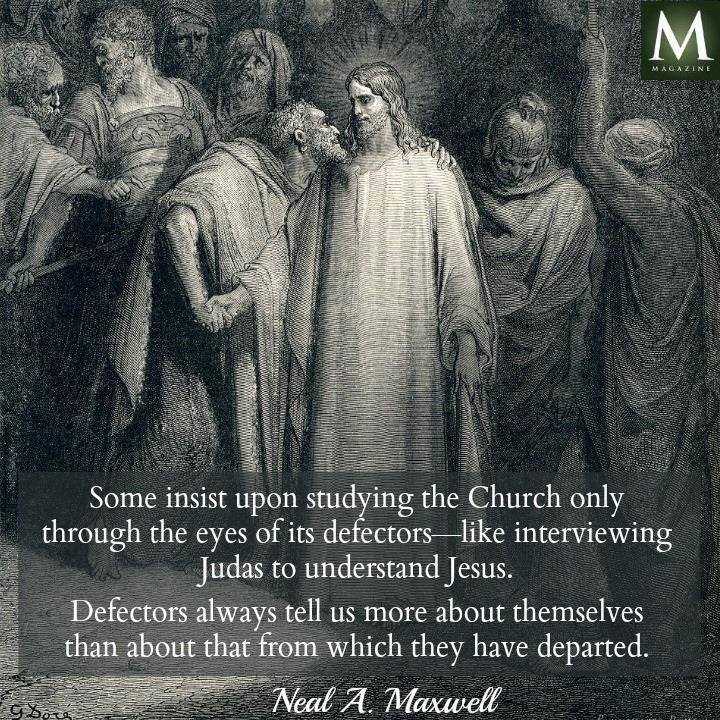
Neal A. Maxwell’s talk “All Hell is Moved” from 1977 seems to be starkly prophetic for our times. I would like to highlight some of the most interesting points.

The theme of my address comes from a prophecy in President George Q. Cannon’s speech given in the Tabernacle in May of 1866. President Cannon spoke of the generations that had passed before the restoration of the gospel during which the adversary was indifferent and unconcerned with regard to the fractious religious movements among mankind which were not based upon the fulness of truth. However, President Cannon observed that the movement of the Holy Priesthood of God and the Church were restored, “then all hell is moved.” He catalogued the forms of resistance that can be expected when “all hell is moved.”

President Cannon, who knew that the adversary regards this telestial turf as his own, said that Satan will vigorously resist all rezoning efforts because this is his world. President Cannon further observed that the Saints—meaning you and I—must not make the mistake of assuming the existence of any truce between the forces of Satan and God. To believe so, said President Cannon, is “a very great delusion, and a very common one.”

President Cannon then warned that the forms of resistance to righteousness will strike us “with wonder and astonishment.” This, he said, would occur because “the war” which was waged in heaven has been transferred to the earth,” and that this conflict, he said, “will [come to] occupy the thoughts and minds of all the inhabitants of the earth” (Journal of Discourses 11:227–29). Brothers and sisters, The Church of Jesus Christ of Latter-day Saints will be at the epicenter of all that.

Continue reading