
The 1831 Revelation Regarding Plural Marriage


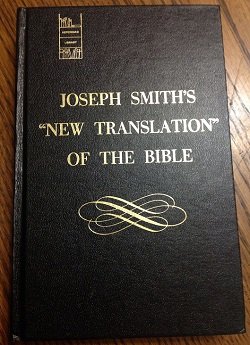
Joseph Smith's Translation of the Bible

Smith’s Translation of the Bible

[This is the fourth post in a series. To read the series from the beginning, go to A Faithful Joseph.]

You might be scratching your head, wondering what 1831 revelation I am referring to. After all, Joseph did not write down any revelation on plural marriage in 1831. It is not part of the correlated discussion regarding Joseph’s teachings on marriage. The histories of the church published in 1858, 1922, and 1930 don’t talk about it.[ref]An exception to this is B. H. Roberts’ mention of the timing of the first polygamy revelation in his introduction to History of the Church, V:XXIX[/ref] And many contributing to New Mormon History take the view that Joseph was contorting doctrine to justify his libido-driven actions, without trying to find a revelation that might have caused those actions.

It appears Joseph received the first revelation regarding plural marriage while translating the Old Testament prior to 7 March 1831.[ref]Multiple early historians suggest this timing, including B. H. Roberts (History of the Church V:XXIX), Joseph F. Smith (1882 funeral address), and Hubert Howe Bancroft (1889, History of Utah).[/ref] When we consider this revelation occurred at that time, the historical and revelatory record comes to life.

Continue reading

Tribes and whatnot

Sometimes it’s depressing how we just divide up into tribes and assume the worst sort of faith on “the other side” and only the best of faith on “our side.”

“The children of God have more in common then they have differences.”

― Henry B. Eyring

Too bad so few of us actually believe this. Continue reading

Best of M* 2013

New Year is now here.

So, which Millennial Star posts of 2013 would you consider among the best?

Meg Stout’s recent posts on JS’ polygamy have been interesting, and I look forward to the future ones.  My old friend David Larsen is also a great addition with his discussions on ancient things.

We’ve had notes from General Conferences, discussions on Obamacare, Liberal/Conservative issues, promotion of Libertarian ideals, Ordain Women/priesthood, new Temple Film,  SSA, puppet shows, social media missionary efforts, Boy Scouts, Pope Francis, Global Warming, Family Relations, CHI #2, etc.

So, what were YOUR favorite posts of 2013?

Origin of the Priesthood Ban for Blacks

With the LDS Church releasing commentary on Race and the Priesthood, it has become fashionable to believe someday a full apology will be given that a ban was ever instituted. Most Mormons say we don’t know why or when the ban was first instituted, questioning if it was from God or man. The prophets, the arguments go, were wrong. The problem with these lines of thinking is that the record indicates the why and when does exist, even if existential questions remain.

Since the start of Mormonism, written records have been an important part of the religion. A few revelations, such as D&C 47, instruct individuals to write and collect records as a testimony. Researchers have noted the amount of history and biography available for research. Very few religious organizations have as much of a paper trail to read. Although not everything was written down to substantiate, it doesn’t matter if a person agrees with the attribution of the divine hand of God. There is a lot to sift through and examine for each facet of development.

The Priesthood ban for blacks is not without its own records. Probably the best study of the issue is from Chapter 4 of Neither white nor Black, an article written by Lester E. Bush, Jr. Despite the introduction that claims he refutes the orthodox explanations of the origin of the ban, his findings actually substantiate that a well recognized ban did exist. It it true that some of the more “folk doctrine and history” are seriously questioned. The clear line of authority for its beginnings remain intact, even with some inexplicable twists and turns.

For a complete understanding of where and when the ban developed, it must be acknowledged that it didn’t come from Joseph Smith. That seems to be the major roadblock to accepting it as a genuine authorized policy. Although still having the prejudices of the time, he was progressive in treating blacks as worthy of equal treatment. That isn’t to say he was an abolitionist in the strict sense of the word. For him masters still had claim to slaves even if ideally all men should be free. This was consistent with the New Testament “hands off” approach to the currently reviled institution. In the Church during his life blacks had no Priesthood ban or any restrictions. For those who insist that the ban was wrong and without authority, this would be the end of the argument. Yet, the Church he founded believes in a continual line of prophets and revelation. His words and teachings might be the first and most scrutinized, but not the last. Continue reading