An Invitation to Those LDS Members Who Are Wondering, “How Did I Get Here?”

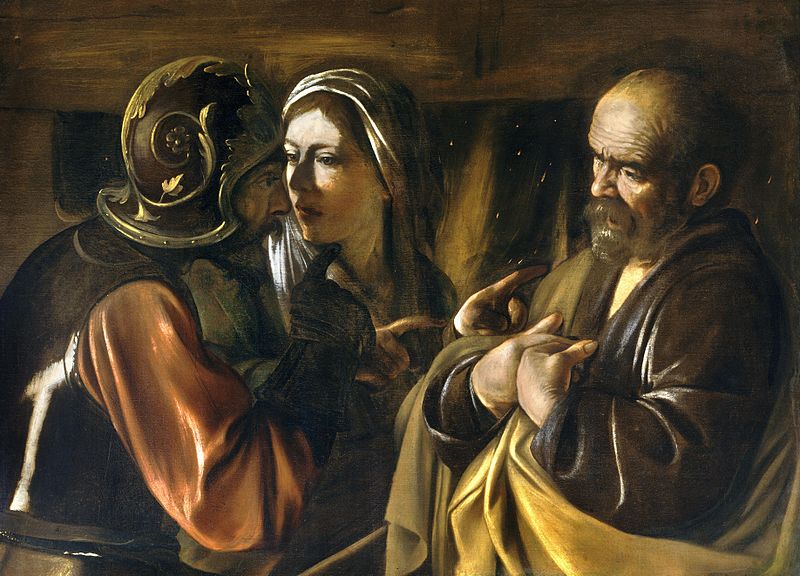
The_Denial_of_Saint_Peter-Caravaggio_(1610)

I want to address those members of the Church of Jesus Christ of Latter-day Saints who are among the groups of dissenters, critics, and agitators in the Church who suddenly find themselves in an uneasy association with people who increasingly are openly hostile to the Church, its leaders, and its teachings.

I know that some of you are uncomfortable with the direction in which your associates have gone. Uneasy with the comments and conversations on the websites you frequent. Some of you quietly feel misgivings and twinges of conscience about the blatant public denigration of the Church and the Apostles by the people with whom you identify and with whom you have built friendships. You were seeking answers to your questions and resolution for your doubts, but now all you see is increased doubt, questioning, and strife.

Some of you are asking yourselves “How did this happen? I’m a good member of the Church. Why do other members call me or the group with which I participate apostate? How did I get here?”

Let me reassure you that there is a place for you in the Church. We want you here. And yes, we want you with all your doubts, questions, and complaints.

The misgivings you feel about where you suddenly find yourself are valid. Don’t reject them. Listen to them.

It doesn’t matter how you got to where you are as much as it matters that there is a way back.

Continue reading

The Prodigal Returns

[This post is part of a series on Joseph Smith’s Polygamy. To read from the beginning or link to previously published posts, go to A Faithful Joseph.]

John C. Bennett

In June 1842 Dr. John C. Bennett left Nauvoo, thoroughly angry and vengeful. He had been fired as mayor, evicted from the Church, outed as a sexual predator, and thwarted at every turn by Joseph Smith and the newly-formed Relief Society.

Few realize that Bennett returned and met with Joseph. Even though neither man recorded the details of their meeting, the record suggests Bennett was willing to repent. Continue reading

Our Young Men Are Leaving the Church

A prevalent argument has formed that women and girls are leaving the Church in droves. The implication is that more women are leaving than men and in historic numbers. All of this is based on anecdotal observation without much actual evidence. Regardless of the actual situation, other equally valid anecdotal based observations can argue that men are still far more likely to leave or not ever join the Church than women. This is not unique to Mormonism according to studies of religious organizations.

Why are men most likely to drop or reject religion? The studies do not really answer that question any more than why women might. In fact, more women remain a part of religious institutions then men. The doesn’t sound correct if feminists are right in the assumptions that traditional religions are oppressive patriarchies. Islam is one of the only major religions where men are more likely to join and participate, but it is an exception and not the rule.

The suggestions of possible reasons are mine alone. They are also theoretical from lifelong participation. Because of the general nature of the subject, stereotypes are present for a wider discussion. Although I never left the Church or intend to anytime soon to give personal examples, there remains a lifetime of experience as a male member. My friends were male, my religious associates were male, and I was raised with brothers and sisters. Some of the acquaintances I have known continue in the faith. Others drifted away like so many. Continue reading

Some thoughts on excommunication

This is a guest post by Beau Sorenson.

Beau Sorensen is a healthcare executive living in Provo, Utah with his wife
and four children. He is co-author of the book “Entrepreneur on Fire”

It’s taken me a few days to come up with some coherent
thoughts on the calls to disciplinary hearings for John Dehlin and Kate
Kelly. I’ve read more than is probably good and thought constantly about it.
That being said, here are the two most important thoughts I have on the
matter:

1. Excommunication isn’t a punishment. (Note: neither Bro. Dehlin or Sis. Kelly has been excommunicated. This will be decided during the disciplinary council process). We need to shift our paradigm. All I
have heard since this broke is how Bro. Dehlin and Sis. Kelly are being
punished. Mr. Dehlin is being punished for his vocal advocacy of LGBT causes
and Mormon Stories podcast and website where he openly admits that he has
serious doubts about members of the Quorum of the Twelve, the Book of
Mormon, and the LDS Church. Ms. Kelly is being punished for being an
outspoken advocate of women, for mobilizing hundreds of men and women alike
to push for the ordination of women to priesthood offices.

We are wrong to think of excommunication in this way. It certainly can come
across as a punishment. It will lessen the impact of their voices over the
long run, though it is amplifying them today. Instead, excommunication is a
merciful blessing to Bro. Dehlin and Sis. Kelly. How can taking away these
blessings be an act of mercy? It is merciful to these two because they don’t
just lose the blessings of the temple and baptism – they also lose the
covenant relationship. This allows them to work through whatever issues they
have with God, with the Church, or with the Brethren without covenants
hanging over their head. To quote Doctrine & Covenants 82:3, “For of him
unto whom much is given much is required; and he who sins against the
greater light shall receive the greater condemnation.”

They had the greater light and knowledge at one point in time, but years of
doubts and life experience have caused that light to dissipate. That’s not
to say it can’t return. What it is to say is that as they continue down the
paths they are on right now, it is better for their souls to continue
without the covenants they have made, lest they receive greater
condemnation.

Excommunication isn’t the end, it’s a new beginning. Continue reading