
My blog post on Come Follow Me: 1 Nephi 16-22
https://joelsmonastery.blogspot.com/2020/01/come-follow-me-1-nephi-16-22.html
Category Archives: General
Slavery (not) in the Book of Mormon
A few years ago I reviewed Reid Litchfield’s book Enslaved to Saved. The key insight was how the initial translators of the Bible text into English obfuscated the prevalence of slavery in biblical times by using the term “servant” for the Greek term δοῦλος, widely known to scholars as referring to slaves.
This struck me recently when I read of Nephi’s interaction with Laban’s “servant,” Zoram. Given how we now know the Book of Mormon text was transmitted into English, it appears the Stuart-era Bible translators were somehow involved. So I wondered whether Zoram was not merely a servant, but instead the kind of enslaved steward that was common in the ancient Western world.
if Zoram was slave rather than servant, Nephi’s offer to Zoram is stunning.
I posited this reading to family, and one relative pointed out that when the converted Lamanites offer to become slaves to the Nephites in Alma 27:8, Ammon said it was against Nephite law to own slaves.
I hypothesize that in the schism following Lehi’s death that Nephite society rejected the practice of slavery while Lamanite society saw no reason to abandon this familiar and “useful” practice. This would explain the cultural differences that are exposed by the passage in Alma 27:8. It could also explain why Zoram and his descendants chose to align themselves with Nephi.
I now return you to your own efforts to study the Book of Mormon in this bicentennial year of Joseph’s initial vision.
The Great Separation
I attended my ward’s last Boy Scout Court of Honor this week. It was a somber event for me. Two of my sons received merit badges, and one young man was honored as an Eagle Scout. These were of course pleasant things to observe, but I kept on thinking about how the Scouts represented a simpler time, a time when there was nothing controversial about honoring God and being morally straight.
There is a Portuguese noun called “saudades,” which means you miss something or long for something so much that it hurts. I have saudades for that America, the America of my youth that has been lost for so many people.
And then a frightening thought hit me: the end of the Scouts for my ward also means that my young men are set free from the structure of the Scouts. Now they are supposed to set their own goals. By the end of January, my sons will have set their goals, and it will be interesting to see how many of those goals are kept.
But here is another frightening part: my sons have two parents active in the Church and a lot of support from an excellent ward. What happens to the young men and young women who do not have that support for one reason or another?
The Church is going through a revolution of sorts. President Nelson’s many, many reforms are, to be clear, welcome. I consider them inspired, and I believe they will have consequences over the long term that are overwhelmingly positive for members of the Church. But in the meantime, there will be a lot of questions and concerns, as always happens whenever we are faced with rapid change.
Members are increasingly responsible for their own learning and their own testimonies. In a home centered and Church supported environment, the onus is put on the members to do homework at home. You cannot rely on a gospel doctrine teacher or somebody else in the ward to tell you about the doctrine and Church history– you need to research it yourself.
The Church has always promoted personal responsibility and self-fulfillment. That is part of the reason I wrote this post back in 2014. It is simply a cop out to spend your time complaining that the Church didn’t teach you certain things. At the end of the day, you are responsible for your own Gospel learning and your own reaction to new revelations about Church history.
But this is even more true now. You are responsible for ministering to those in need on your own without having to report monthly. (Yes, you should have regular talks with EQ leadership, but that is not the same thing as monthly reports and puts more responsibility on you to do the work without being pushed by leadership). You are responsible for discussing Gospel topics on a nearly daily basis with your family through the Come Follow Me program. And young men and young women will have even more responsibility in their quorums to act on their own without leaders prodding them into action.
When you add it all up, this means much more individual stewardship. And it means that you are more and more responsible to work out your own salvation.
As a student of Church history, I think back to the Saints in Nauvoo right after Joseph Smith died. It must have been a trying and frightening time. Brigham Young was asking them to make a perilous journey across dangerous territory to move to a barren desert surrounded by cold mountains. The Saints were literally leaving the United States to move to uncharted territory. Some people stayed in Illinois with Emma Smith and Joseph Smith III. But others followed the new Church leadership.
It was a great separation. One group was following the new prophet of God and others were not. We are in a time like that now: members can either follow the inspired Prophet of our time, President Nelson, or they can head down “broad roads, that they perish and are lost.” (1 Nephi 12:17). To be clear: I am NOT saying that all of the people who don’t study Come Follow Me will be lost. I don’t know their hearts, and I don’t know all of their circumstances. The judgement is ultimately up to Heavenly Father.
But I am saying that all of the changes going on in the last few years provide additional responsibilities for Latter-day Saints to study and pray on their own and not rely on Church leaders or teachers to provide all of the answers. Others times had other challenges. Church members in the 1830s and 1840s suffered persecution and violence that we do not, in general, suffer today. This persecution caused many of the elect to leave the Church. One of our challenges today is to do more study at home, relying on Church materials for support.
The good news is that there are many people in your wards and stakes who will help you along this journey. If you feel you need additional help, go to your EQ presidency or your Relief Society president or your Sunday School presidency. They are certain to help answer any questions you may have.
And here is a personal experience: the program is already working. In my family, the regular discussion of the Gospel through Come Follow Me has been a great blessing. All of us are pondering the scriptures and their meanings more than ever, and we are doing it at home with the help of Church material. Discussions can be very deep, and even our nine-year-old spends time pondering out loud the mysteries of existence and how the plan of happiness makes it all more understandable.
So it is a scary time, but also an exciting time. I cannot help but feel that Church leadership sees that our testimonies must be strengthened for the times to come. There are new dangers on the horizon but also new opportunities for learning and love.
It is a great thing to belong to the Church of Jesus Christ.
What I Learned in Primary: The Covenant Path
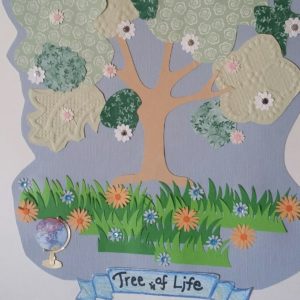 I teach the CTR-7 Primary class in my ward. I’ve taught this class several times over the years, and these 7 year olds turning 8 are always a hoot.
Today’s lesson was on Lehi’s Vision of the Tree of Life. I let the kids tell the story. Here were some of their observations:
7 year old boy: “I would go to the Great and Spacious Building…..and PUNCH IT!
Me: “Why does’t this building have a foundation?” 7 year old boy, “Because the devil can’t build Legos!”
8 year old girl: “I would throw the fruit at the people on the path!” “Why?” “Because so they could have a snack!”
7 year old boy, “You better be careful around that water! You could drown!”
Big Error in the new CFM manual
There is a big error in the new Book of Mormon CFM manual. Where it speaks about Laman and lemuel receiving a curse, it explains it as a curse of dark skin. Sadly, this account was dismissed as bad theory by the living prophets in just the last few years. So, how did it get in there? Curriculum writers who read old books, and nothing from current scholars. The error has been fixed in the online manual.
As you study the Book of Mormon CFM manual, be aware of this error that is now in the printed manual. Sadly, we still have many in Church curriculum and CES, who study and quote from 60 year old books, such as from Joseph Fielding Smith. Great prophet, lousy historian and scholar. Focus your studies on the scriptures, with guidance from recent scholarship and statements from recent prophets. JFS was not around for the 1978 Revelation and the subsequent Church statements regarding misreading of dark skin in scripture. I also discourage people from quoting Brigham Young when it comes to polygamy, Adam-God, or blood atonement. These prophets’ statements are good for historical reference, but not for current doctrine, unless it agrees with current teachings.
This is a problem that has been dealt with by the GAs previously, such as in 2012 when Randy Bott, a BYU religion professor, was interviewed and explained the curse of Cain as a doctrine of the Church. The Church quickly renounced it. True scholars had been denouncing this poor scripture reading for several decades. Even Elder Bruce R. McConkie told us after the 1978 Revelation on the Priesthood to ignore/forget everything previously stated on the subject. Yet, we still have members writing our manuals that ignore that teaching and go even further back to wrong theories of the past. We NEED real scholars involved in manual writing!