FAIRMormon Conference, day 1

To M* readers: M* will provide occasional coverage of the FAIRMormon conference, which is being held Aug. 6 and 7.

The first talk is by Ed Pinegar and is entitled: “How to help young Latter-day Saints deal with criticisms against the Church and the doubts they cause while remaining faithful”

Brother Pinegar is married to the former Patricia Peterson who served as Counselor in the General Presidency of the Young Women and General Primary President of the Church. They are the parents of 8 children, 38 grandchildren and 19 great grandchildren.

He has served in many callings in the Church and has taught religion classes in the CES for 34 years. He has served in the LDS Church as a bishop, stake president, stake patriarch, on the general board of the church’s Young Men organization, as president of the England London South Mission, and as president of the Provo Missionary Training Center. He has also been director of the Orem Institute of Religion, a religion professor at BYU, and a seminary teacher. He served a mission with his sweetheart Patricia in the New York Rochester Mission at the Historical Sites around Palmyra July 2007 to January 2009. He served as President of the Manti Temple from 2009-2012. He presently serves as a Sealer in Mt. Timpanogos temple. Brother Pinegar is the author of over 60 books and talk CDs, most recently The Temple: Gaining Knowledge and Power in the House of the Lord, A Mighty Change, Preparing for the Melchizedek Priesthood and My Mission, and The Christmas Code.

He has taught in many Continuing Education programs and was a recipient of the Excellence in Teaching Award from BYU, Division of Continuing Education, in 1979. He also received the Outstanding Young Man of the Year Award, the Service to Mankind Award from Provo City, the Sloan Community Speaker Award from BYU in 1999, UVU Distinguished Service Award 2001 and the UVU Excellence in Leadership Award in 2003.

Presentation: How to help young Latter-day Saints deal with criticisms against the Church and the doubts they cause while remaining faithful

Summary: We will discuss the following topics: 1) Understanding their situation. 2) Understanding the process of change. 3) Becoming an instrument in the hands of the Lord. 4) The role of the Holy Ghost in the conversion and change process. We will also answer the following questions: How can we help them replace doubt with faith? How can we help them deal with negativism and half-truths? How can we help them deal with criticisms of our prophets and leaders? How can we help them gain a testimony sufficient to deal with attacks against the Church? How can we help them be rooted to Christ and not yield to the sophistries of the devil? How do we help them when they justify their beliefs because of their sins? How can we help them when faced with new facts that they have never dealt with before?

Here is a summary of his live talk:

Continue reading

“Choice” and Moral Agency

DC 59.6 Thou shalt not killThe Planned Parenthood scandal has really gotten under my skin. I have tried to not comment on it, or engage with others who are commenting and posting about it, either. When I have heard or seen the undercover video clips, I have become physically ill, to the point of wanting to vomit, and I feel my spirit sorrowing in a way I cannot describe in words, and have only felt when we lost our two babies. The Spirit has been telling me too, time and time again, “Do not click that link. Do not read that story.”

Tonight however, a friend shared an article to her Facebook timeline, which then showed up on my newsfeed — I made the mistake of clicking thru to the article. I’m not going to link to it, but the author claimed to be a temple recommend holding, worthy member of the Church, who supports Planned Parenthood — she doubled down on her thesis a few times; by the end her tone was angry and judgmental of those who sustain the Church’s beliefs on abortion. Her arguments were also weak, and easily corrected with scripture and the words of the prophets as well, but I felt like it was no use trying to share them, as she was committed to her position. And really, why would she care what I, a total stranger, had to say? It does no good to argue with strangers online either.

In the end, the principle of “Thou shalt not kill,” transcends religious creeds, boundaries and the excuses societies parade as truths. I am struggling with why people, especially, Mormons are not getting that. Thou shalt not kill, or do anything like unto it (Doctrine & Covenants 59: 6).

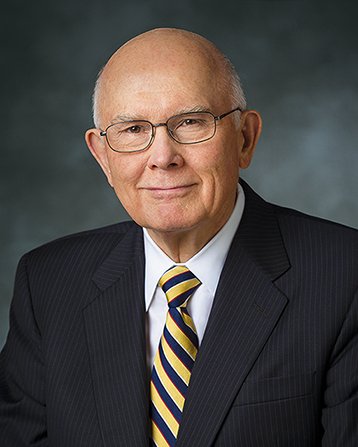
A friend, who understands my sensitivities on this subject sent me a passage from an article titled, “Weightier Matters,” written for the January 2001 Ensign by Elder Dallin H. Oaks. Elder Oaks writes,

Oaks

“The slogan or sound bite “pro-choice” has had an almost magical effect in justifying abortion and in neutralizing opposition to it.

Pro-choice slogans have been particularly seductive to Latter-day Saints because we know that moral agency, which can be described as the power of choice, is a fundamental necessity in the gospel plan. All Latter-day Saints are pro-choice according to that theological definition. But being pro-choice on the need for moral agency does not end the matter for us. Choice is a method, not the ultimate goal. We are accountable for our choices, and only righteous choices will move us toward our eternal goals. Continue reading

The Family of Joseph and Emma

imageSix months ago now, I visited Nauvoo for the Untold Stories Conference, held in Nauvoo the first weekend of February each year. While there, one woman told me I just had to meet her friend, Kimberly Jo Smith, great-great-grand-daughter of Joseph Smith.

This weekend I finally got a chance to spend time with Kimberly Jo and her son Bryan (together on the right, posing with a recent convert after a fireside). They travel around the country giving firesides to help people understand Emma and the circumstances she faced after the death of Joseph. They talk about their own experiences finding the gospel. But most of all, they talk about the misunderstandings that cause hard feelings, and how we can overcome those hard feelings if we listen to the Holy Ghost and choose to love rather than hate. Continue reading

A Modern Day Parable of the Laborers in the Vineyard

It isn’t often, when we get to see one of the savior’s parable’s directly at work in our modern society. Often, concepts like wheat and tares, or vineyards are abstract and removed from our day to day concerns. This week, however, the Savior’s parable of the workers in the vineyard which Elder Holland so expertly discussed not too long ago in General Conference replayed itself for all too see.

Dan Price, a CEO of a Seattle Credit Card Processing Company in Seattle decided that he would pay all of his workers a minimum salary of $70,000 a year after realizing that many of his younger employees were struggling to pay student loans and other obligations. He did this mostly by cutting out his large bonus.

The New York Times this weekend ran a follow up article and looked at some of the results. The whole article is worth reading in full, but one detail stood out to me in particular. At least two of Price’s most talented workers quit, because they were upset that workers less skilled than they received such a high salary. This came even though they had received a wage increase, although not as sharp an increase as the lower salaried employees. The article is filled with quotes from these higher paid employees belittling the skills of their less experienced former colleagues.

When I saw this article, I thought of the Savior’s parable. As with the parable, the master has decided to pay the workers less skilled or less experienced workers a greater amount than they “deserve.” He has decided to be generous and kind. And those who worked “harder” felt entitled to a greater salary and angrily quit. (unlike the workers in the parable, they did earn more than the other workers just not as much as they felt they were entitled to receive). The words of the parable are deeply applicable:

11 And when they had received it, they murmured against the goodman of the house,

12 Saying, These last have wrought but one hour, and thou hast made them equal unto us, which have borne the burden and heat of the day.

13 But he answered one of them, and said, Friend, I do thee no wrong: didst not thou agree with me for a penny?

14 Take that thine is, and go thy way: I will give unto this last, even as unto thee.

15 Is it not lawful for me to do what I will with mine own? Is thine eye evil, because I am good?

16 So the last shall be first, and the first last: for many be called, but few chosen.

I am sure that others will look at this story as a way to score political points,  but for me reading this story underscored the spiritual truth of what the savior taught more than two thousand years ago. Indeed, it is interesting to see that human nature has not at all changed from the time of the savior. The natural man is still prideful and self-seeking. The natural man still seeks his own. The natural man would rather lose a good and well paying job, then see someone else benefit”undeservedly.”

It is very difficult—exceedingly hard in fact—to put off the natural man and to be humble enough to glory in the triumphs and successes of others. It is exceedingly difficult to cease from boasting, bragging or self serving behavior.  With all of these tendencies, is it any wonder why the early saints struggled to live the law of consecration? Yet, we are all called to prepare ourselves for the day when we must fully live this higher law.

This instance for me further underscored how difficult and fraught the preparation can be.

These now workers failed to learn Elder Holland’s profound and yet simple lesson: “So be kind, and be grateful that God is kind. It is a happy way to live.” How can we avoid following their example?


The End of the World as We Know It (and I feel fine)

There seems to be a growing chasm between the world and the Church.  Years ago, society and Church standards and norms were very similar.  In dress, appearance, speech, manners, habits, and basic beliefs, were all on the same page.

However, times and society have changed. Abortion, LGBT, casual sex, and a variety of addictions are looked upon as the new norm. Once stalwart knights sworn to protect societal morals, many churches, Boy Scouts, and other groups have descended into the pit to embrace the devil in his lair.

For those who remain faithful, to condemn sin today means one is intolerant, a bigot, evil.  Prophets, once adored, are now seen as less than human, more prone to error than the modern intelligentsia. Continue reading