
Lots of interesting tidbits in the latest Pew poll on religion

A lot of the focus from the latest Pew poll on religion will be on how the U.S. is becoming less religious, but that is not even close to the whole story. In fact, Pew notes that:

Among the roughly three-quarters of U.S. adults who do claim a religion, there has been no discernible drop in most measures of religious commitment. Indeed, by some conventional measures, religiously affiliated Americans are, on average, even more devout than they were a few years ago.

The religious are becoming more religious, and young people are less religious but are more “spiritual.”

The Pew poll of 35,000 people in 2014 was an update on a similar poll taken in 2007. Some of the most interesting details were released today, Nov. 3.

Here are some highlights I found interesting:

*Mormons are more likely to say they pray daily, read scriptures, attend Gospel study groups, share the Gospel and attend church than they were seven years earlier.
*Mormons, along with the rest of the world, are much more likely to say that “homosexuality should be accepted by society.”
*People who are generally not religious are much more likely to be associated with the Democratic party, and this tendency is growing significantly.
*There has been very little movement in the last seven years in peoples’ views on abortion. Mormons are least likely to say that abortion should be legal in all/most cases.

There is a lot more there. Please check it out and read it yourself.
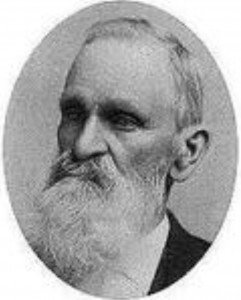
The Pretend Husbands

imageThere are at least two men who became public husbands of women who were sealed to Joseph Smith in the 1840s.
The first and most well-known of these was Joseph C. Kingsbury, who documented that “on the 29th of April 1843 I according to President Joseph Smith council & others agread to Stand by Sarah Ann Whitney as supposed to be her husband and had a pretended marriage…”[ref]Joseph C. Kingsbury journal, page 13, apparently recorded after August 1848, available online via http://www.boap.org/LDS/Early-Saints/JCKingsbury.html.[/ref]

The second and almost entirely unknown of these was Jonathan Harriman Holmes, who in the 1860s told his children and friends that his wife, Elvira Annie Cowles, had first been the wife of Joseph Smith, that he, Jonathan, had agreed to be her husband after Joseph’s death if she wished it. When taken together with the fact that Joseph Smith performed the December 1842 ceremony wedding Jonathan Holmes to Elvira Annie Cowles, the December 1842 marriage can be seen as a pretended marriage, like that of Joseph C. Kingsbury to Sarah Ann Whitney.[ref]See the statement William Wright provided to Church headquarters in the early 1900s (contained in Brian Hales’ Joseph Smith’s Polygamy) and Jonathan’s reported statement to his own children as documented in the Job Welling family history, available online at familysearch.org under books.[/ref]

Both Kingsbury and Holmes were widowers. In each case, the man was subsequently sealed to the bride of his youth in the Nauvoo temple. It is clear in the case of Kingsbury that the promise of being sealed to his wife and someday reunited with his dead children was convolved in his willingness to be a pretended husband to Sarah Ann Whitney. Continue reading

Elder Cook Addresses the Stanford University Convocation

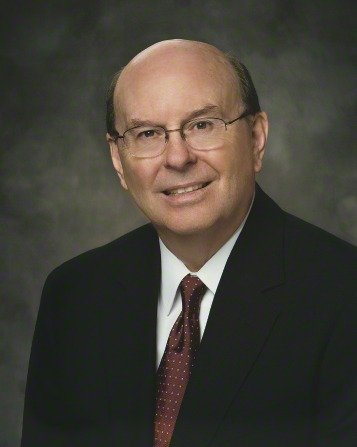
CookWho says the members of the Quorum of the 12 Apostles are out of touch, or living in some sort of enclosed ivory towers? They are not, and they don’t. They are very much engaged in the problems we face today, and keep a visible presence in the world.

Yesterday Elder Quentin L. Cook addressed the Stanford University Convocation. In his talk, he stated,

“I am deeply concerned that faith, accountability to God, and the religious impulse are so often seen as antithetical to serious academic pursuits. I am equally concerned that the foundations which have historically supported faith, accountability to God, and the religious impulse are increasingly being marginalized in a secular world and derided and even banished from the public square.

stanford logo“I believe many institutions have lost their way. They have abandoned the basic moral high ground that gives meaning to this life and has guided civilizations for centuries. It is the heart of the message I am conveying this evening.

“But first, we must acknowledge that the entire burden for training and teaching young adults is not the responsibility of academia, particularly in areas of moral values, faith, and accountability to God. Many families and society as a whole have largely abdicated their responsibilities to assist the rising generation with the moral values that have been the foundation of civilization for the last several hundred years and in some cases even millennia.”

To read the full transcript of Elder Cook’s remarks please click HERE and then come and tell us what you think in the comments.

Religious Halloween Stories from Scripture

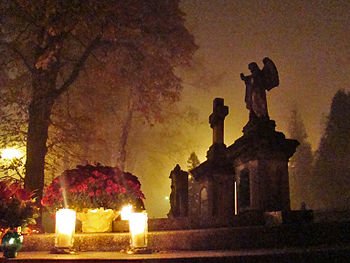
01259_All_Saints_Day_Sanok,_2011Everyone knows that Halloween is a time of spooks, monsters, and witches. What has been lost in the costumed time of begging for candy is the religious foundation of the festival. Some Christians, including Latter-day Saints, have a hard time with this season as they consider it a celebration of evil. There is truth to that, but only because of cultural transformation. It actually has a Christian devotional relationship.

From a William Hamblin and Daniel Peterson article about the holliday roots:

The word “Halloween,” or “Hallowe’en,” dates to about 1745. It’s a contraction of “All Hallows’ Eve,” and it denotes the evening before the Western Christian feast of All Hallows’ Day (i.e., “All Saints’ Day”) — a time, in the Catholic calendar, for remembering the dead, particularly saints, martyrs, and departed Christian believers. (It’s akin to the Jewish “Yizkor” prayer and the Hindu period of “Pitru Paksha.”) . . .

All Saints’ Day became a Christian holiday in A.D. 609, but it was originally celebrated on May 13. By the end of the 12th century, all of Europe observed it. Churches rang their bells, and criers dressed in black paraded in the streets, summoning others to pray for the deliverance of the souls in Purgatory. (Act 2, Scene 1 of Shakespeare’s “Two Gentlemen of Verona” recalls the sound of “a beggar at Hallowmas.”) Skulls and skeletons were commonly depicted as reminders of death and the transience of human life. “Soul cakes” were baked and distributed in memory of all christened but departed souls, which suggests one possible origin for the treats given out at Halloween.

In 835, though, Pope Gregory IV changed the date of All Saints or All Hallows to Nov. 1. Some readers will be familiar, in this connection, with the common Hispanic observance of the “Dia de Muertos” or “Day of the Dead.” . . .

Curiously, Martin Luther is said to have nailed his famous “95 Theses” to the door of All Saints’ Church in Wittenberg — and, thus, to have launched the Protestant Reformation — on Oct. 31 because he knew that the church would be packed with worshippers on All Hallows’ (or All Saints’) Day the following morning. Hence, Oct. 31 is also celebrated as “Reformation Day.”

In honor of the religious aspects of Halloween, I present Scripture stories that would fit in with the season. They can frighten and enlighten. Perhaps these can be a step in inviting back the spiritual aspect of the holiday. Another option is spending time contemplating the struggles and triumphs of family history before dressing up and celebrating. Continue reading