
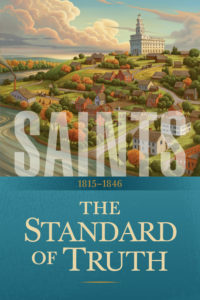
This chapter deals with the publication of the Book of Mormon. This is very important. While the Bible is the foundational text of Christianity, the Restored Church is founded upon both the Bible and the Book of Mormon. The Bible led Joseph to the grove to pray. Prayer led to the Book of Mormon, which is the basis for priesthood restoration, dozens of revelations given to Joseph, and even the modern temple (the endowment IS in there).
As with translation, the printing process was not easy. The publisher, E.B. Grandin, insisted on having the full $3000 paid before he would print 5000 copies of the book. In today’s money, that would be the equivalent of $82,000, about $16.40 per book for printing.
Joseph worked his farm in Harmony, while Oliver Cowdery, Martin Harris and Hyrum Smith oversaw the publication. To protect the manuscript, Oliver made a copy. Then he would take a few pages, enough for a day’s work, to the publisher for preparation. They would engage int he tedious work of reviewing the sheets, to ensure there were no misspellings, etc.
In one of his letters to Joseph, Oliver wrote:
“When I begin to write on the mercies of God,” he told Joseph, “I know not when to stop, but time and paper fail.”9
Even as the book was being published, it was a tool of conversion. Thomas Marsh, unsettled by the traditional Christian Churches, went in search of something better. After traveling several hundreds of miles, he heard of the Book of Mormon, and went to Palmyra and Grandin. Grandin gave him a sheet with 16 pages on it, ,which he read and took home to show his wife, Elizabeth. They both instantly believed. Continue reading
 I decided last Sunday I better get with it and
 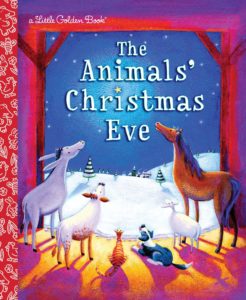 A few years ago, I set out to start a tradition of reading Christmas themed books in the month of December as a family. I wanted to wrap each book up and then have the kids pick a book and we’d read whatever book was under the wrapping paper. As it stands I had only enough juice in me to wrap all of those books once. (Because each kid had to have a book to open each night or there would be no peace on earth or goodwill toward men in our house. 24 books x 3 kids = 72 books YIKES!). So all of our Christmas story books just live, unwrapped in a Rubbermaid bin which gets toted out and set near the Christmas tree in December. The kids can pick and choose books as they want. Mama is much happier that way. This tradition has helped our family discover some very fun and tender Christmas books. One of our favorites is
  Many of the Christmas traditions we enjoy in America come from Germany. This is partly due to the fact the Prince Albert, the husband of Queen Victoria was German, and he brought with him his traditions. Albert and Victoria were trend setters. The German influence is also from the large numbers of German immigrants to the United States in the mid to late 1800s. My brother served his mission in Wisconsin, and said that you were as likely to hear German spoken as you were to hear English in some areas he was in. We grew up with German traditions in our home as our cute little (4 feet 9 inches) Grandma Gold was from Thuringa — the most German part of Germany. Dad also served his mission in Germany and loved to share fun traditions with us. We had a big red advent caledar on the wall with little charms to pin on a felt Christmas tree, yes we had the little chocolate door Advent calendars too (yum!). On December 5th we’d leave one shoe out for Sankt Nikolas to come and treat us, or leave a lump of coal the next day on Sankt Nikolas Tag. There was also fun treats like stollen and Lebkucken to eat. The greatest of German contributions to Christmas is the tradition of the Christmas tree. Dad used to tell us how when he was on his mission the Germans still were using real candles on their trees and how they’d only light the candles on Christmas Eve, so as not to burn the house down. I love German Christmas!