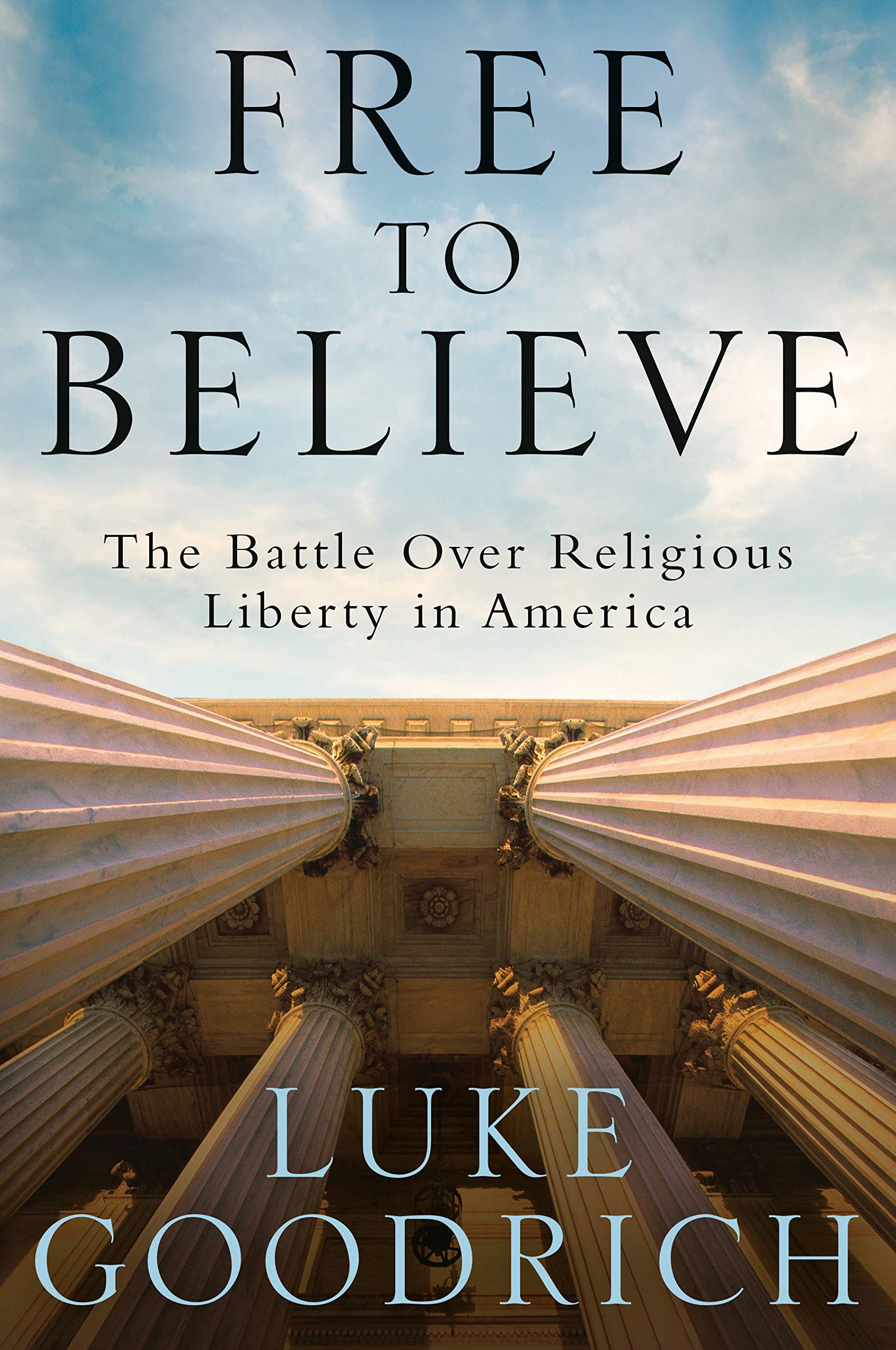
Free to Believe: The Battle over Religious Freedom in America
By Luke Goodrich
Read this book. Now.
Continue reading
Free to Believe: The Battle over Religious Freedom in America
By Luke Goodrich
Read this book. Now.
Continue reading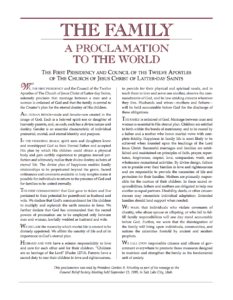 This morning for our family devotional I felt prompted to take a slight detour from our regular Book of Mormon reading and read the Family Proclamation. I found out a few days ago my older son was having a lesson on families today. The school district we live in has partnered with a prominent LGBT activist group to teach “kindness, tolerance, and diversity”. That’s not really their goal though. Their goal is to introduce and normalize LGBT propaganda to young children. There are plenty of programs out there that teach tolerance, kindness and diversity without an LGBT focus I found out about this group and their program at the parent night which was held the first week of school. As much as we all hate going to those things, it was a good thing I went, and noticed in the display of books on the teacher’s desk of the curriculum materials from this group. Friends, pay attention, and be “that parent”. I’ll share my experiences meeting with the superintendent of the school district about this program in a later post. Continue reading
My blog post for this coming week’s CFM
https://joelsmonastery.blogspot.com/2019/11/come-follow-me-hebrews-7-13.html
Read there/Comment here
 Ten years ago today, I wrote my first post for The Millennial Star as a regular contributor. I wrote about the 20th anniversary of the fall of the Berlin Wall (see that post HERE). Today is the 30th anniversary of the fall of the Wall. As I usually do on November 9th, I’ve spent some time thinking about that momentous event, and its impact on my life. I’ve been thinking about my exchange-family and friends in Berlin. We’ve sent messages this week celebrating, remembering, and giving thanks that, that wretched wall is gone.
As I wrote ten years ago, I served a full time mission behind the Iron Curtain in Bulgaria. When I was there, the dreary grey of communism still stuck on all of the buildings. People struggled to meet their most basic needs of feeding and clothing their family. Sometimes basic food items like bread and meat were scarce. Inflation was rampant, sometimes the exchange rate even changed several times a day. You didn’t change your American Dollars until the minute you needed to buy something it was so out of control. With the rise of socialism’s popularity in this country, I find myself saying to anyone who promotes socialism to talk to me after they’ve waited in a bread line or 14 — believe me, it’s not as fun as you might think. Continue reading

In 1980 a Mr. Hanlon wrote, “Never attribute to malice that which can be adequately explained by stupidity.”
“Stupidity” is such a modern and offensive term. As I dug into the history of Hanlon’s Razor (as it is now called), I tumbled across a much earlier version, written by Goethe in 1774:
Misunderstandings and lethargy[ref]The German term in the original is Trägheit, meaning “possessing the property of being slow.” I think a better word in the translation would have been sloth.[/ref] perhaps produce more wrong in the world than deceit and malice do.
Johann Wolfgang von Goethe (1774). Die Leiden des jungen Werthers or The Sufferings of Young Werther (in eng). Translated 1907 by Bayard Quincy Morgan. p. 14.
Do we give each other the benefit of the doubt, allowing that there might be a mere misunderstanding rather than intentional malice? Are we too lazy to find out the underlying details?
This matters to me because I care about Joseph Smith. I find that the root of today’s “faith crisis” fad within the Church of Jesus Christ can be found in what people think about Joseph Smith. In my view, these sufferors and those wishing to minister to them fundamentally misunderstand what happened in Nauvoo in the 1840s and they don’t bother trying to really find out the details. Using a facile and unchallenged version of Church history, then, many attribute malice and deceit to Joseph Smith.
I assert that when one understands the full history of Nauvoo, it is impossible to see Joseph Smith as either malicious or deceitful.
Returning to Hanlon’s Razor, it is widely accepted that “you can’t fix stupid.” When we are guided by Hanlon, we are led to depair when seemingly malicious incidents occur. But if we are guided by Goethe, misunderstandings can yield to information. In Goethe’s world It becomes possible to exert oneself and overcome lethargy or sloth.
We can fix the wrongs of the world. It isn’t easy. But it can be done. So whether your challenge involves misunderstanding regarding the restored gospel, disagreements over climate change, or inability to speak civilly about anything with family at the holiday table, we can change this world from a cesspool of hate and anger towards a concensus of understanding and love.
Continue reading