
Elder Maxwell’s prophecy

Church members will live in this wheat-and-tares situation until the Millennium. Some real tares even masquerade as wheat, including the few eager individuals who lecture the rest of us about Church doctrines in which they no longer believe. They criticize the use of Church resources to which they no longer contribute. They condescendingly seek to counsel the Brethren whom they no longer sustain. Confrontive, except of themselves, of course, they leave the Church, but they cannot leave the Church alone (Ensign, Nov. 1980, 14). Like the throng on the ramparts of the “great and spacious building,” they are intensely and busily preoccupied, pointing fingers of scorn at the steadfast iron-rodders (1 Ne. 8:26–28, 33). Considering their ceaseless preoccupation, one wonders, Is there no diversionary activity available to them, especially in such a large building—like a bowling alley? Perhaps in their mockings and beneath the stir are repressed doubts of their doubts. In any case, given the perils of popularity, Brigham Young advised that this “people must be kept where the finger of scorn can be pointed at them” (Discourses of Brigham Young, sel. John A. Widtsoe [1941], 434).

This prophecy seems more and more relevant all the time.

(h/t to Brian Duffin.)

Here is the source:

https://www.lds.org/general-conference/1996/04/becometh-as-a-child?lang=eng
The Rapture Unleashed

See that person sitting next to you? Depending on how righteous they are, they are going to disappear. One moment they are there and the next just gone. Not just them. A whole lot of people will vanish into thin air. That isn’t the half of it, as planes and cars hurl out of control because some drivers and pilots suddenly aren’t available. This will cause many deaths, but its only the start. Those left behind will then have to endure a massive amount of guilt for, well, not getting taken. A worldwide epidemic and tyrannical government takes over among a lot of other bad things. More fun follows.

All of this is happening at a theater near you, or cable. If you dare or even care. It appears that what is known as the Rapture, or something much like it, where the good people are taken up to Heaven and leaving the rest has grabbed hold of creative types. No less than one series and two soon to be released movies are based on this religious idea. Even the non-religious are inspired. The series isn’t religious and mocks those of faith while taking up the idea as a serious plot.

The series on HBO The Leftovers is about 2 percent of the population disappearing. Those left behind, particularly in Mapleton, New York where the show takes place, turn to fear and sorrow over what might have happened. A group known as Guilty Remnants sulk and fret over the loss and abandonment issues, forming a type of cult. Meanwhile, a former religious leader who now publishes a conspiracy newspaper grapples with the reason he didn’t go with those who were taken away. Trying to put the pieces together, both of what happened and the aftermath, is the town chief of police who works on maintaining law and order. The religious nature of the disappearances are only one possible explanation explored by the series. It could also be aliens, among other things. Be aware that this is an adult show by a cable channel not devoted to family friendly entertainment.

Two other productions are both movies put out by big money companies. The most talked about, Left Behind, stars Nicolas Cage, the hit and miss actor whose very presence can create a film’s buzz if not save it from disaster. It also stars Lea Thompson of Back to the Future and Some Kind of Wonderful fame. The movie is based on the popular book series of the same name, and is a film reboot of sorts. The other movie, The Remaining is a low budget, but still mainstreamed, treatment of the Rapture event. Described as a horror drama, it has pleased some from the Evangelical religious community. Filmed in the found footage tradition of The Blair Witch and Cloverfield, it follows a recently married couple who must live through the tribulations. This means lots of hysterical people and hand held unsteady camera work. Why the sudden creative interest in this topic is anyone’s guess. Continue reading

Guest post: Why We Need Definitions, Borders, and Boundary Maintenance

This is a guest post by Jamie Huston, who blogs at gentlyhewstone.com.

PART I: INTRODUCTION

Can you define the word “chair?” Seems simple—let’s say it’s a small, raised platform that’s supported by legs and which typically has a back against which your torso can rest. That definition brings to mind a single, simple, useful picture—in short, a conservative ideal of chairs.

But might that seem too restrictive? So let’s say a chair can have variations. Chairs with wheels are chairs, too, and shouldn’t be judged for being different! Those tacky old chairs that are shaped like a giant hand? Those are chairs that demand to exist as they are—a chair that lives on the fringes of society and is getting tired of being mistreated.

Maybe accepting some natural variations is morally decent, though, right? But now we’re on a slippery slope. There are some people who claim to be more high-minded than the rest, who embrace diversity and tolerance as the greatest values, and who therefore feel driven to constantly expand our understanding of chairs for us, for the good of those would-be chairs which have been marginalized and for those of us who are too culturally dull to know that we had many more chairs among us in the first place.

Is not, they indignantly say, a chair anything on which one might reasonably sit? Is not a bean bag a valid chair? A couch? The ground itself? Well, perhaps, we’re inclined to say, for we see many of our peers nodding at the wisdom of this, and feeling good about ourselves for being such pioneers of inclusion.

And now we’re solidly in liberal territory (liberal, after all, connotes expansiveness above all—the eternal obsession with widening existing things). Once we’ve established that the very surface of the world could be called a chair, for it can kind of serve a similar function if forced to, we have given a green light to the radicals who insist that it’s a moral imperative to recognize as a legitimate chair anything and everything that could ever conceivably be used for sitting. The hood of a car, a rock, a stack of books: all chairs.

By this point, much of society has decided that—in line with the warped thinking that has gotten us this far—virtue lies in defending the most extreme minorities possible. Life becomes a contest to advertise our righteousness by campaigning for the most imaginative visions of chairs. The tops of skyscrapers, piles of razor blades, the backs of sleeping grizzly bears: all are supposedly just as valid as any other kind of chair.
Continue reading

Debunking that Quote about Brigham Young’s Greatest Fear

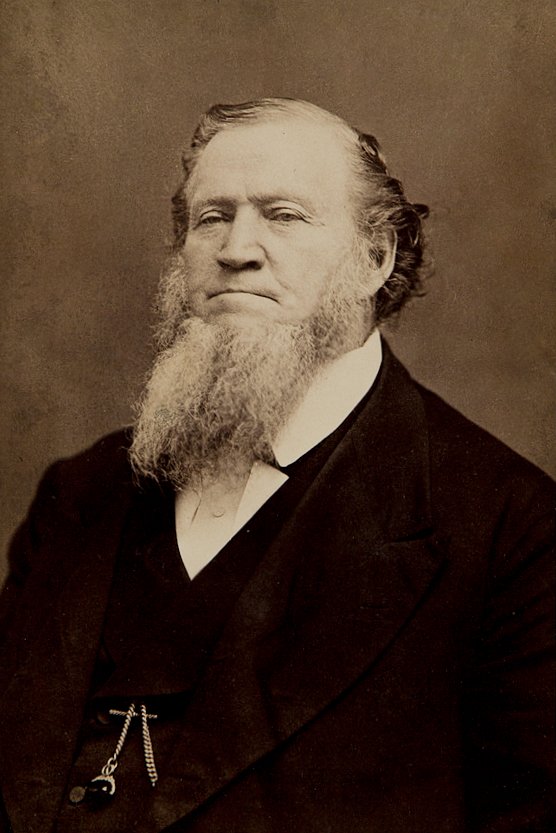
Brigham_Young_by_Charles_William_Carter

The greatest fear I have is that the people of this Church will accept what we say as the will of the Lord without first praying about it and getting the witness within their own hearts that what we say is the word of the Lord.” – Brigham Young

This quote is probably familiar to many members of the Church of Jesus Christ of Latter-day Saints who have participated in online discussions about the church.

Faithful members have had it thrown in their faces by dissidents and detractors on numerous occasions. Dissenters see it as a powerful sound-bite in support of the notion that members of the church must be continually vigilant that the fallible leaders of the church do not lead the church astray.

And as a soundbite it is reasonably effective. But there is one problem: Brigham Young never said it. The quote is completely spurious.

Continue reading

Families Can Be Together Forever

imageI enjoy the tumblr feed at Just Say Amen Already (JSAA). The author is K, a Jewish convert who lives in New York City. K has a great sense of humor, handy when you are a single female Mormon professional who happens to be a Democrat.

I browsed JSAA a few weeks ago after hearing my son-in-law’s father had died. K’s witty tumblr feed was a comfort. I clicked through to K’s blog posts and read K’s comments on Families Will Be Together Forever.

As a single Mormon woman who is the only member of her family, K took issue with this song, with a line by line critique. I get where she’s coming from. I mean, some of us do live the dream. But when I was getting beaten by my first husband or my dad, the words “[my family] is so good to me” didn’t accurately describe the situation. I am aware of other actual situations that are stark exceptions to the ideal of the good family, like a friend who was murdered by her husband, or another friend whose mother was a prostitute who abandoned her children.

How might it be possible to modify the song ever so slightly so it conveys the original sense of hope and admonition, but rings true to all members of the Church, particularly those whose lives don’t fit the ideal Mormon model for whatever reason? Continue reading