
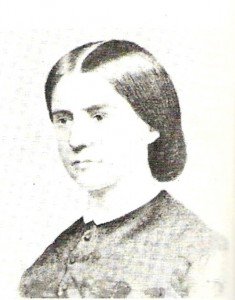
 I have the privilege in participating in a book group. This month’s selection was The Suspicions of Mr. Whicher: A Shocking Murder and the Undoing of a Great Victorian Detective.
The story of the shocking murder is laid before the reader: a three-year-old boy, Saville Kent, turns up missing in June 1860. His body is found in the servants’ privy, having been murdered.
The local police force, largely composed of unpaid local volunteers, fails to determine who committed the crime after two weeks. Mr. Whicher, the most reknowned of Scotland Yard’s eight detectives, is sent to solve the disturbing case. John Whicher almost immediately comes to his conclusions: the murder was committed by individuals living in the Kent household in Road Hill, and the most likely suspects are the murdered boy’s half-siblings, teenagers Constance and William Kent. Mr. Whicher only has physical evidence to support accusations against Constance, and that is circumstantial.
The spectacle of a working class man sifting through the family’s soiled laundry to accuse a respectable middle class maiden of brutally killing her younger brother causes country-wide revulsion. Mr. Whicher’s career is destroyed, though he is able to find work as a private detective a few years later, when Constance Kent confesses to being solely responsible for the murder. Constance spends 20 years in jail.
William, freed from suspicion by his sister’s testimony, is able to inherit the thousand pounds his deceased mother had bequeathed to him upon his majority and goes on to enjoy a successful career in science. Once Constance is released, she changes her name and spends the rest of her life with or near her brother, William.
This one murder case has a profound impact on the zeitgeist of the age, manifested in the new genre of detective fiction. It popularized conlusions that had been arrived at decades earlier by those involved in the judicial system: human witness (confession or eyewitness evidence) was too subjective to be trusted. As early as 1825, Jeremy Bentham’s A Treatise on Judicial Evidence (1825) argued that testimony needed to be backed up by material proof.
Yet when it comes to matters relating to the emergence of the central doctrines regarding marriage in Mormonism, the vast majority are content to hang their interpretation on the testimony of human witnesses, ignoring the capacity of these witnesses to mislead, whether intentionally or not. Continue reading
 I was delighted to see a formal response from Laura and Brian Hales regarding my writings about Joseph Smith and others who lived in Nauvoo in the 1840s.