A Response to Jana Riess’s “The Next Mormons”: The Importance of Disentangling Data and Argument

Jacob Z. Hess, Ph.D.

Note:  A special thanks to Jana Riess for her willingness to correspond and share thoughtful responses to a number of questions during an especially busy time for her. Given the seriousness of claims made in her lengthy book, an adequate review and response also requires sufficient space (trigger warning to long-read-haters!)

In 2002, word circulated that an in-depth PBS Documentary would be coming out focused on the Church of Jesus Christ of Latter-day Saints. As a new doctoral student, I got excited that such a high-quality doc would be available – and on a network known for fair-minded reporting.

Thinking it would be a great way to let people know who we really are, I sent out a note to classmates and professors to be watching out for it. As soon as the film aired, however, something became quickly apparent. From the dark images of Joseph Smith set to spooky music, to the scene of primary children clearly intended to convey brainwashing, it became obvious that this film was less about representing us, than someone else’s story about us.

Producer Helen Whitney clearly didn’t set out to craft something malicious or deceptive.  Instead, I believe she approached the project with pre-existing strong feelings about who we are – which emotions naturally influenced how she told the story.  For the many who tuned-in to learn the truth about our faith, however, Helen’s arguments and our own reality were fused into one indistinguishable product.

‘The truth about what’s happening in Mormonism.’ On February 26, 2019, after sharing 18 months of advance results, the Salt Lake Tribune announced the “day is near” for people to read the full report from a study it described in one article as “groundbreaking,” “sweeping” and “landmark.” Hailed by others as “momentous,” “revolutionary” and a “must read for anyone interested in the LDS Church,” the text by Dr. Jana Riess was widely promoted as an answer to some of the most pressing questions facing the Church.

Continue reading
The First of April

The first day of April is often associated with foolery. For example, the leaders for my daughter’s zone texted the missionaries telling them their preparation day would end at noon rather than six. Since my daughter is Sister Training Leader, she was a bit panicked about how to arrange activities for her little flock of sisters. Then someone asked, “Is this an April Fool’s joke?”

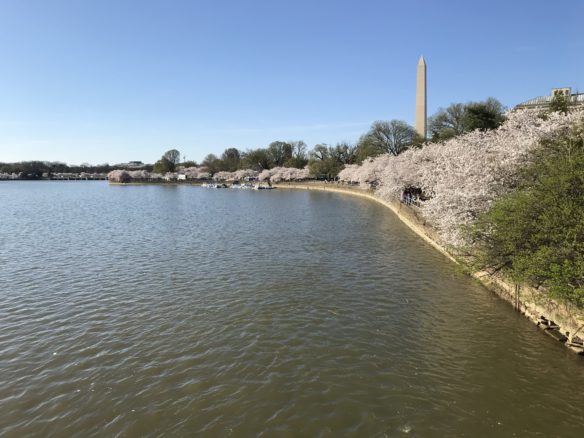
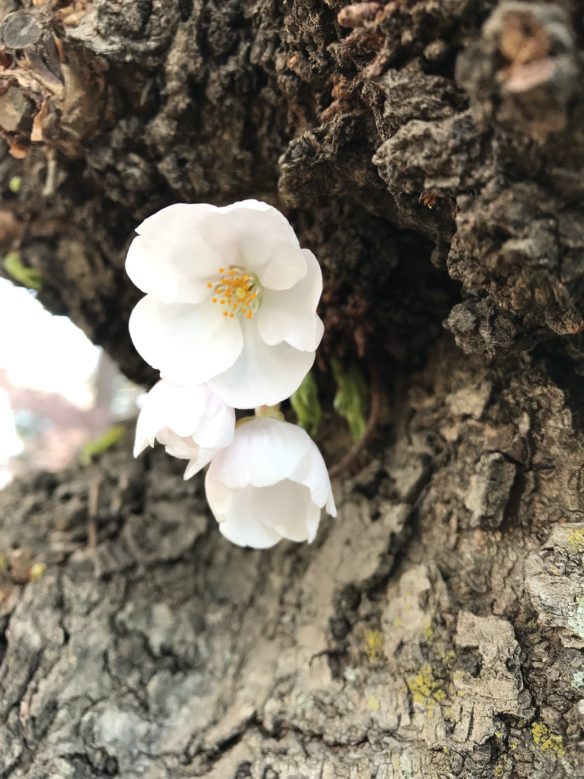
DC experienced a little bit of a divine April Fool’s day joke. Today was peak bloom for the cherry blossoms that inspire the weeks-long DC Cherry Blossom Festival. The blooms were amazing, but despite a gloriously warm Saturday, today’s temperatures never reached 50 degrees.

My husband shared a funny story from the past. On an April 1st many years ago a fellow named Hartman Rector got a phone call. The individual on the other end of the line said, “Hi, I’m an assistant to President David O. McKay, and we’d like to have you come to Salt Lake City for General Conference. Is that OK?”

Hartman said, “Sure.” and hung up, figuring it was an April Fool’s joke. But then he thought, “What if it isn’t a joke?” Sure enough, President McKay really did want Hartman Rector to come to Salt Lake, and Brother Rector was called to be a General Authority.

So I thought it would be fun to let folks talk about experiences they’ve had on the first day of April.

[P.S., I’m really glad General Conference won’t fall on April 1 this year. No reduxes of Elder Rector’s “Yeah, right” bemusement.]

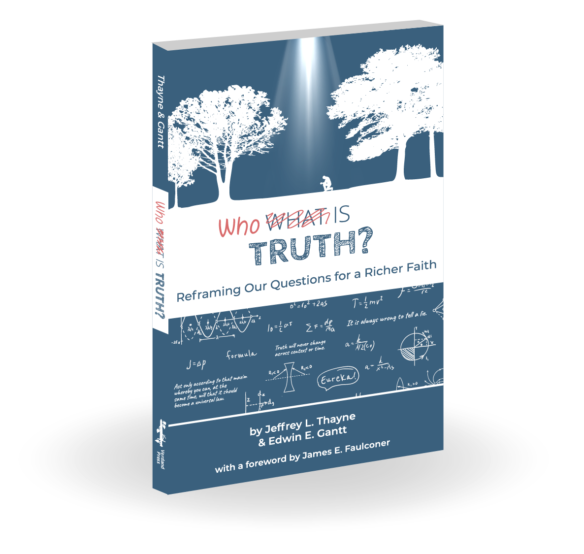
New Book: Who Is Truth?

Nearly two thousand years ago, Christ’s followers asked, “How can we know the way?” Christ’s reply was simple and profound: “I am the way, the truth, and the life” (John 14:6). What happens if we take this literally, rather than merely as a metaphor? How do our questions — and our faith — change when we think of truth as a living, breathing person instead of as a set of abstract ideas? The answer to this question is explored in a new book published by Verdand Press called Who Is Truth? Reframing our Questions for a Richer Faith.

Written by Jeffrey Thayne and Ed Gantt, the book is written for Latter-day Saints who wish to re-examine their faith in a way that strengthens their faith in the Restoration of the Gospel. The book explores how Western philosophical assumptions subtly bias the questions we ask about our faith, and how this sometimes fuels the “faith crises” that some members experience. Many of our questions may not have answers because they start with the wrong premises, like looking for the corner of a round room.

In contrast, Hebrew thought offers a glimpse into a worldview that raises altogether different questions, questions which are less biased towards doubt and which lean more towards fidelity to our covenants and to Christ. The books shares insights related to how we understand prophets, the Atonement, sin and repentance, the temple, and our relationship with Christ.

James Faulconer, a professor of philosophy at Brigham Young University and currently a fellow at the Wheatley Institution, wrote a Foreword for the book, in which he said, “Thayne and Gantt give us an overview of how thinking in a more ancient way changes … our understanding. In turn, that new understanding brightens and freshens the Gospel.”

Who Is Truth? can be purchased as a paperback or as an ebook on Amazon.


A Friend’s View to a Murder

In April 2005 Janet Christiansen was killed.

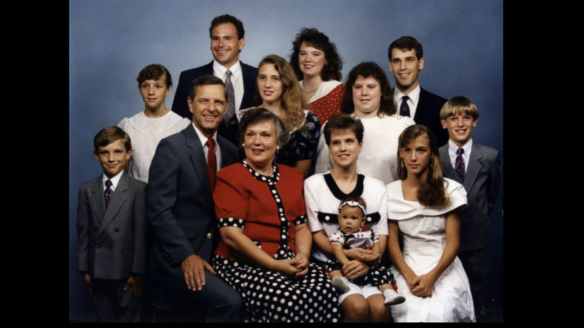
Janet Christiansen (sitting in a white dress at the far end in front) in the 1990s with her parents, siblings, and other family.

Janet was a tall, willowy woman, seventh of ten children in a family that even now belongs to the Church of Jesus Christ.

This Friday evening, ABC will air another special focused on how Janet, a stunning beauty, was murdered by Raven, her handsome husband. No doubt the wedding photo taken the day Janet and Raven married in the DC temple will be featured, symbol of the hope and love shattered by Janet’s death.

To you Janet and Raven are likely strangers, though perhaps you will feel some kinship because of the Church. But I had known Janet since she was born. I coached her Church basketball team. She was in the same classes at Church as my two youngest sisters.

Continue reading

Why Have Suicides Increased Even After Enormous Efforts to Reduce Them?

Jacob Z. Hess, Ph.D.

First published on the EternalCore Conference website (Join us this coming Friday and Saturday, March 29-30 in Salt Lake City for a gathering to explore a “God-Centric Mental Health” – what that looks like, and what it could mean for those suffering).

Note: Suicide is an inherently difficult topic – especially for those families who have been impacted by this tragedy. It’s precisely the enormous pain of suicide that arguably calls for a wide-ranging discussion of anything that could potentially help reduce the numbers. The purpose of this article is to raise one possibility not widely considered – partly because it involves an intervention largely embraced as central to solving the problem. This article does not constitute medical advice and should not be used to guide individual care decisions. No changes to any medication regimen should be made without supervision from a physician – especially since research confirms that dosage changes are one of the times where risk for suicidality is heightened. I believe that everyone is doing the best they can to solve this societal problem, and that we need to make sure there is space in our public discussion for all possibilities (including unpopular ones) so we can make more progress. All feedback will be appreciated.

Like so many others, I’ve lost loved ones to suicide. The heartbreak this causes for so many families has prompted enormous prevention efforts and a wonderful new Church website dedicated to helping raise awareness.

The most obvious question that comes up is why? What was it that led this individual…to that? Although there will always be some uncertainty involved in this profound heartbreak, thousands of studies documenting various risk factors for suicide make it clear that no single cause is responsible, as much as hundreds of overlapping contributors.

As suicides keep rising, another “why” question arises: Why have the numbers been going up? This brings up other conversations about social media and the opioid epidemic, along with other unique cultural and economic factors that have shifted markedly in the last decade or two. Shifting views on sexuality have also been rightly discussed as potentially playing a role in growing distress, although there are substantial disagreements about how to make sense of that influence.

The why question we’re not talking about.  There’s a third “why” question that is far less obvious and rarely discussed: Why do these numbers continue to rise, even when we are doing so much to decrease them?

Continue reading