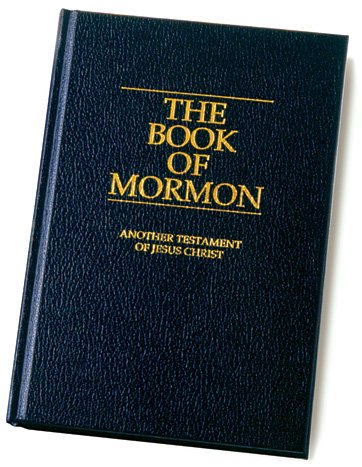
The Angels of Darkness – More on Sherlock Holmes and Mormons (well, Mormons, anyway)

I feel that sufficient time has passed since Geoff pointed out the interesting Mormon bits in the first Sherlock Holmes tale, A Study in Scarlet (interestingly, the first time I ever read that story, it was in an abridged version that cut out the Mormon bits.  I didn’t find out about the Mormon chapters until college).  Anyway, There is one other Sherlock Holmes tale featuring Mormons.

Except that there’s no Sherlock Holmes (but Watson is there). And it’s the same tale (sort of).  Read on to find out more: Continue reading

Covenants and Contracts

Jeffrey Thayne

I recently read an article by Ed Gantt and Stan Knapp entitled “Marriage: Of Contracts, Commitments, and Covenants,” and want to share some of the things that I learned. As a missionary, I frequently taught investigators the meaning of the word covenant. Because the word is so infrequently used in modern society, I would use an unfortunate metaphor they were already familiar with: an economic contract. We promise God obedience and service, and He promises us salvation and blessings in return. When we hold up our end of the deal, He holds up His. I am not alone in describing covenants this way. As Gantt And Knapp explain, “Today, outside theological circles, the term covenant is most often invoked as a synonym for contract and taken to refer to a two-way promise between mutually interested, and more or less equally powerful, parties.”

Although in many ways this metaphor can approximate the nature of a covenant, it seems clear to me now, however, that covenants and contracts are based upon very different assumptions. “The modern tendency to equate covenant and contract,” Gantt and Knapp continue, “obscures the fact that covenant has historically been used to refer to a relationship with God that cannot be understood as a mere contract.“1 Continue reading

Keeping Teens Safe: The Internet Threat

“Mrs. Peck, I am afraid I can’t believe in God.”

“What do you mean? How do you know?”

“I just don’t do things I should do and I do some things girls my age shouldn’t do…”

“What are you doing that you shouldn’t do?” I asked

“I just…spend my free time with two guys I don’t know…we just use facebook. That’s the place where we met…with one it’s just about conversation, but with the other…he just wanted me to show him my body and so on…you know…things that are done by a different type of people…Sometimes I just think it could be nice for both me and that guy.” Continue reading

Imagining a free world

Ludwig von Mises’s 1945 book “Omnipotent Government: The Rise of the Total State and Total War,” describes how national socialism in Germany led to a rejection of classical liberalism. Here is how von Mises (an Austrian) describes the opposite of national socialism:

In order to grasp the meaning of this liberal program we need to imagine a world order in which liberalism is supreme. Either all the states in it are liberal, or enough are so that when united they are able to repulse an attack of militarist aggressors. In this liberal world, or liberal part of the world, there is private property in the means of production. The working of the market is not hampered by government interference. There are no trade barriers; men can live and work where they want. Frontiers are drawn on the maps but they do not hinder the migrations of men and shipping of commodities. Natives do not enjoy rights that are denied to aliens. Governments and their servants restrict their activities to the protection of life, health, and property against fraudulent or violent aggression. They do not discriminate against foreigners. The courts are independent and effectively protect everybody against the encroachments of officialdom. Everyone is permitted to say, to write, and to print what he likes. Education is not subject to government interference. Governments are like night-watchmen whom the citizens have entrusted with the task of handling the police power. The men in office are regarded as mortal men, not as superhuman beings or as paternal authorities who have the right and duty to hold the people in tutelage. Governments do not have the power to dictate to the citizens what language they must use in their daily speech or in what language they must bring up and educate their children. Administrative organs and tribunals are bound to use each man’s language in dealing with him, provided this language is spoken in the district by a reasonable number of residents.

Continue reading

Language Unique to the Book of Mormon: “On The Morrow Month”

[Cross posted from Sixteen Small Stones]

The Book of Mormon records that Giddianhi, the leader of the antagonist Gadianton Robbers, wrote a letter to Lachoneus, the leader of the protagonist Nephites, demanding that they relinquish all their property and join their cause. In his letter he gives an ultimatum:

“And behold, I swear unto you, if ye will do this, with an oath, ye shall not be destroyed; but if ye will not do this, I swear unto you with an oath, that on the morrow month I will command that my armies shall come down against you, and they shall not stay their hand and shall spare not, but shall slay you, and shall let fall the sword upon you even until ye shall become extinct.”

It was a few years ago that the peculiarity of Giddianhi’s ultimatum really stood out to me for the first time.

As an English major with a particular interest in literature written before the 20th century, I had read a variety of texts from the Old English, Middle English, Renaissance, Early Modern,18th and 19th Century periods. At the time I had been reading a great deal of early American writing, often in the original spelling and grammar, which had been written between 1500 and 1860. I had just finished a handful of books published around the time when Joseph Smith published the Book of Mormon and the phrase “…on the morrow month…” in Giddianhi’s letter really stuck out as an unusual construction.

I wondered if “on the morrow month” was in common usage in the 19th century, when Joseph was translating the Nephite record, but had since fallen out of use. Or maybe it was a construction adapted from the Jacobean language of the King James Bible. I had never run into it in any of my other reading, so I started to investigate.

Continue reading