
You may have heard the claim that there have been at least 32 suicides by LDS teens with same-sex attraction since the Church made the now well-known changes in the handbook.
I’d like to make a few comments about that claim.
First, and this should be obvious but it still bears repeating: every suicide is a tragedy, for the person and for the person’s family. I agree with the Church spokesman who said that every soul is precious to God and the loss of life to suicide is heartbreaking.
But second, the people who are trumpeting the claims are well-established critics of the Church who are reporting from people they claim have talked to them privately. No independent confirmation of these numbers has taken place. You, dear reader, can choose to believe what you want, but based on my life’s experience, I simply don’t believe that these people are telling the truth. Given the ghoulish way that they are glorying in their claims (which in their minds confirm their opinion that the Church is bad, bad, BAD), is it beyond the pale to believe that they have simply made things up? I think not.
None other than the Salt Lake Tribune, always anxious to find ways to criticize the Church, went looking for information to corroborate the claim of “32 suicides.” But, in a strange twist, actual journalism took place at the Tribune, and they were forced to report that there is no evidence of that many of suicides:
Trouble is, the number far exceeds the suicide figures collected by the Utah Department of Health.
Preliminary figures for November and December show 10 suicides in the Beehive State for people ages 14 to 20, with two more cases “undetermined.”
In fact, the department reports, the overall number of Utah deaths for that age group in those months was 25, including the 10 suicides and two “undetermined” cases, along with 11 in accidents, one by natural causes and one homicide.
“We monitor the numbers [of youth suicides] very closely. We review them every month,” says Teresa Brechlin, who works in the department’s violence- and injury-prevention program. “If we had seen such a huge spike, we would have been investigating it.”
Had there been any mention of the LDS Church’s policy on gays, her department “would have noted that,” Brechlin adds. “We have not seen that at all.”
But third, the people involved ignore the obvious reality that suicide is a complex psychological problem that simply cannot be attributed to one cause in a person’s life. It might be instructive to read this post.
Do you realize that by no research or academic standard would a simple causal factor be seen as responsible for any given suicide – even those that appear to have an obvious instigator (see below). That may be the one thing that everyone in the suicide literature actually agrees on: taking a life is an inherently complex matter (even when it seems simple).
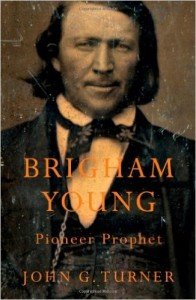 During his life, Brigham Young was among the most hated and feared men. Even some of those who supported him didn’t always get along with his irascible personality. National newspapers often portrayed him as a portly womanizer on the verge of destroying the progress of a modernizing civilization. International opinion agreed, although they saw him as the result of an upstart and untamed United States. The Mormons, along with Brigham Young, were seen as a force to be reckoned with or an unspecified moral doom would be the result. Many generations later he is still mocked and derided with the same images started in Eastern newspapers. Among current Mormons his image is rough, but strong as his statues in Utah. Both believers and detractors have made him into an legendary icon of opposing saint and sinner visions.
 All over the Internet has been talk of gun control and the current President’s executive order to extend background checks for those selling firearms. He and his supporters believe that too many guns have created a deadly culture of violence. Counter arguments have sprung up that all the crimes used to back laws for more gun restrictions would not have been avoided. No lives would have been saved by