
There are many good lessons in this story. Check it out here.
A New Creation from the Old
 A debate about the relationship between the Genesis Creation story and Science has been going for more than a century. It isn’t often a polite debate, with both sides accusing the other of ignorance and blasphemy. The end result is the two sides rejecting the methodology and presumptions of the other (usually the scientists wholehearted and the religious perfunctory). When the religious do take the side of the scientist it is often by mythologizing the Creation and by extension neutering its textual power. The scriptural narrative becomes a shadow of its formerly perceived importance.
To be fair, the original writers didn’t have the scientific understanding of the modern era. That is the approach of a new set of religious exegesis Genesis researchers. They postulate the theory that in order to truly understand the Creation account, and end the debates, it is necessary to study what the pre-science writers intended. And what they were doing in Genesis, according to the new paradigm that is considered the old, was “naming” and “ordering” the already existent material to form functional stability from chaos. This sounds perfectly Mormon, but there is a catch. Functional in this case means making what already has existed and formed of the material and making making it consecrated. still a very Mormon concept to be sure, but it throws out the whole of the material creation as a God involved process. A religious person must before the Genesis account assume God already created the material, was not involved with the material creation, or that what He did create was evil. The Genesis Creation account becomes a post-Creation account.
This leaves a big gap for the scientific modern understanding. Although there are strengths to the chaotic-order Creation paradigm, many of them Mormon supportable like the already existent matter, it still puts into question the “Truth” and “Historicity” of the Creation. For a modern people who associate mythologizing and allegory as lies for at best a better truth, the profound spiritual viewpoints are not enough. The material world is far more real and important than it ever was in the ancient past. There still must be some “concordance” (matching historical knowledge with scriptural events) to make it valuable beyond the original writer’s intent.
The key to having a modern interpretation of an ancient viewpoint is Nephi’s use of Isaiah. After having quoted Isaiah, he says in 2 Nephi 25:1, “For behold, Isaiah spake many things which were hard for many of my people to understand; for they know not concerning the manner of prophesying among the Jews.” As a Jew from Jerusalem he states in 2 Nephi 25:5, “for I came out from Jerusalem, and mine eyes hath beheld the things of the Jews” Knowing the way people think and their history helps in understanding what they write. For those who want to interpret Genesis according to the ancients, this is a powerful endorsement. Yet, it is only half the equation of Scriptural usage. Despite or even because of all that Nephi knew about the Jews, he says in 1 Nephi 19:23, ” I did read unto them that which was written by the prophet Isaiah; for I did liken all scriptures unto us, that it might be for our profit and learning.” He related the past writings to his contemporary situation. Not only did he expound on the difficult words of Isaiah, but he made them relatable and significant to the readers. He saw a material manifestation of the spiritual teachings in his life. Continue reading
The Flat Earth Phenomenon
The Earth is round. All the evidence going back thousands of years is undeniable. Despite the myth that it wasn’t until Columbus sailed the ocean blue when it was proven, scientists and philosophers had known this fact since ancient times. In fact, Columbus’ belief in the size of the Earth and not its shape was found to be incorrect when he discovered the New World. It turned out to be much bigger than he had anticipated. And yet in modern times there is a small, but growing, number of people who believe that the Earth is flat. The reasons behind this are much more than simple ignorance or mental disorder.
How much they actually believe their own theories is up for debate. It is hard for the majority of “civilized” people to get their head around why someone would ignore all evidence to the contrary. These are the very questions that drive the movement. They represent more than an uneducated few, but a new vision of the future returning to the simplicity of the past. One that never actually existed, but still a past that was mythologized by the educated that now mock them. They are almost a metaphor for how the world has progressed in science and technology, but regressed in social cohesion to fractured tribalism.
Flat Earth believers are characterized as the stereotypical Christian Evangelical Young Earth Creationist Fundamentalist. A starting point for the belief in a “pancake planet” is the Biblical description of the Earth with a domed sky. However, quick Internet research of those who are part of the group quickly dispels such a narrow categorization. They may use the Bible as evidence, but not always for the same reasons. It can be anywhere from religious devotion to a recognition that it is one of many ancient sources untouched by a modernity that has lost its way. It doesn’t matter if the individual’s politics is left or right. What they all seem to have in common is conspiracy theories about population manipulation by government elites. The flat Earth theory is secondary. Continue reading
President Nelson Begins Global Tour
President Russell M. Nelson began his global ministry tour in London, England, on Thursday, April 12, 2018. Hundreds gathered at the Hyde Park Chapel to see the prophet.
“We’re bringing the love of the Lord to the people, and they will learn to love each other,” President Nelson said. “You read the paper and see how angry people are with one another. The Lord’s way is the way of peace. He said love one another as I have loved you.”
After London, President Nelson will travel to Jerusalem on his worldwide tour to cities in Europe, Africa, Asia, and the Hawaiian Islands. President Nelson is joined on the tour by his wife, Wendy, and Elder Jeffrey R. Holland of the Quorum of the Twelve Apostles and his wife, Patricia.
I remember a similar tour decades ago, when I was a missionary in Italy and Russell M. Nelson was a newly-ordained Apostle. I also remember President Benson’s first public address after he was made President of the Church, where he addressed the Annandale, Virginia Stake and issued his first prophetic invitation for us to particularly read the Book of Mormon.
I appreciate the work the Mormon Newsroom does to make it possible for us to experience some portion of the excitement of events like this around the world.
Dealing with Abuse
The Church has spoken out against abuse by everyone, particularly members. But abuse happens. And there are factors that make it difficult for abused persons to be believed.
Sunday evening I had a chance to hear Jennie Willoughby speak, the first time she’s publicly discussed the abuse in her marriage with a dominantly Mormon audience.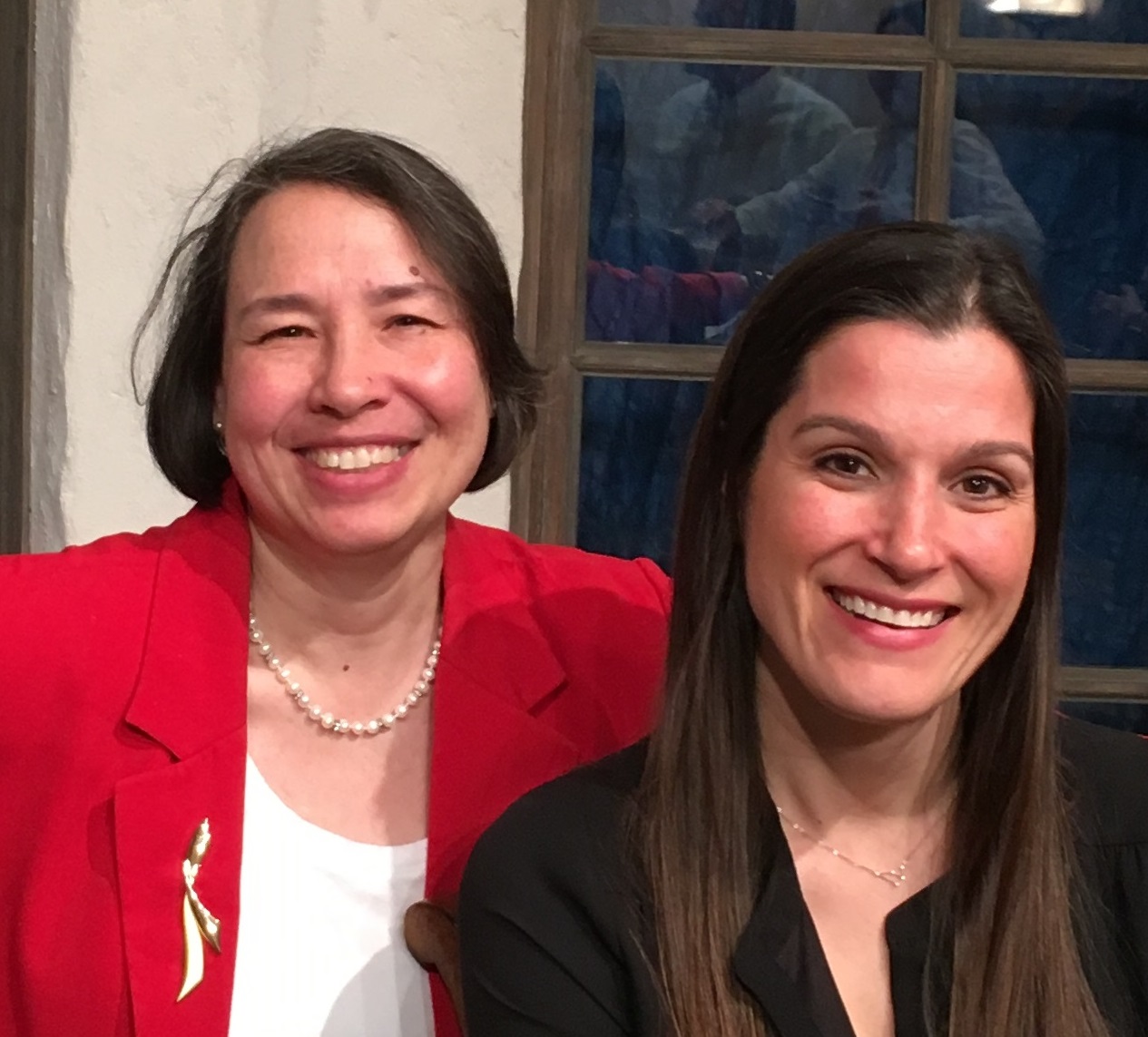 Jennie reports that she didn’t notice anything untoward in her whirlwind courtship with Rob Porter, a rising legal professional with strong ties to Mormon leadership. A recent convert, Jennie didn’t notice Rob wasn’t taking the sacrament when they first met. The fact that Rob had a prior failed marriage didn’t raise red flags. One instance of anger during their courtship seemed understandable at the time. In retrospect, it was a precursor of the terror that would ensue.
Weeks after marrying Rob, Jennie burst into tears in a temple recommend interview when asked if there was anything of concern in her relationships with family members. [ref]I’ve been asked this question in interviews, but forget the exact wording.[/ref] The stake leader, who had been Jennie’s bishop when she joined the Church, requested Jennie talk with her Bishop. Jennie admits that she wasn’t able to clearly articulate to her bishop the way in which she was being verbally abused or the ways in which intimate relations between herself and her husband felt wrong. Jennie separated from Rob. When Rob destroyed the window in the door to her apartment in anger, the police warned her she may not be safe. But Rob apologized and they reconciled. Then an angry Rob grabbed Jennie by the neck when she was in the shower, terrifying Jennie enough to take steps to end her marriage.
I myself have been involved in toxic situations. This week my physician asked how I came to have a fracture to my eye socket, an old injury the eye doctor noticed earlier this year. I honestly don’t know whether the injury occurred in the late 1970s, when my father beat me, or in the early 1990s, when my first husband beat me. I have suffered no other accidents that could account for that sort of damage to my eye socket.
I am not the most abused woman I know. A girl raised in my neighborhood, Janet Christiansen Abaroa, was brutally killed, almost certainly by the man she married in the temple. A sister-in-law was raped twice, once at Church. My daughter’s sister-in-law was also raped at Church. When I consider lesser violence against women, I can name dozens of family members, friends, and acquaintances who have suffered, often at the hands of those who were ostensibly good Church-going men. And women can be abusive as well.
Abuse happens. But why are the abused too often denied the help they need? And what can be done to reduce the problem in the future? Continue reading