
My newest blog post on Come Follow Me: 2 Nephi 6-12
https://joelsmonastery.blogspot.com/2020/02/come-follow-me-2-nephi-6-10.html
Category Archives: General
Fair article on Church investments
The Wall Street Journal has written what is says is the first article with Church comments on the $100 billion investment fund. I found it generally fair and a good example of how journalism should be practiced in our days of shock headlines and one-sided stories.
Take a look here.
Here are some key excerpts:
In their first-ever interview about Ensign Peak’s operations, Mr. Clarke and church officials who oversee the firm said it was a rainy-day account to be used in difficult economic times. As the church continues to grow in poorer areas of the world like Africa, where members cannot donate as much, it will need Ensign Peak’s holdings to help fund basic operations, they said.
“We don’t know when the next 2008 is going to take place,” said Christopher Waddell, a member of the ecclesiastical arm that oversees Ensign Peak known as the presiding bishopric. Referring to the economic crash 12 years ago, he added, “If something like that were to happen again, we won’t have to stop missionary work.”
During the last financial crisis, they didn’t touch the reserves Ensign Peak had amassed, church officials said. Instead, the church cut the budget.
A former employee and the whistleblower in his report said they heard Mr. Clarke refer to the second coming of Jesus Christ as part of the reason for Ensign Peak’s existence. Mormons believe before Jesus returns, there will be a period of war and hardship.
Mr. Clarke said the employees must have misunderstood his meaning. “We believe at some point the savior will return. Nobody knows when,” he said.
When the second coming happens, “we don’t have any idea whether financial assets will have any value at all,” he added. “The issue is what happens before that, not at the second coming.”
Whereas university endowments generally subsidize operating costs with investment income, Ensign Peak does the opposite. Annual donations from the church’s members more than covers the church’s budget. The surplus goes to Ensign Peak. Members of the religion must give 10% of their income each year to remain in good standing.
Dean Davies, another member of the ecclesiastical arm that oversees Ensign Peak, said the church doesn’t publicly share its assets because “these funds are sacred” and “we don’t flaunt them for public review and critique.”
Mr. Clarke said he believed church leaders were concerned that public knowledge of the fund’s wealth might discourage tithing.
“Paying tithing is more of a sense of commitment than it is the church needing the money,” Mr. Clarke said. “So they never wanted to be in a position where people felt like, you know, they shouldn’t make a contribution.”
I also liked this:
The former employees offered more details of Ensign Peak’s operations. During the bull market of the last decade, some of them said, the fund grew from about $40 billion in 2012 to $60 billion in 2014 to around $100 billion by 2019. About 70% of the money is liquid, one of the former employees said. As its assets swelled, Ensign Peak grew more secretive, said some of the former employees.
The firm doesn’t borrow money–the church warns members against going into debt. It also doesn’t invest in industries that Mormons consider objectionable—including alcohol, caffeinated beverages, tobacco and gambling. Mr. Clarke said the fund has pulled some of its money from an investment firm called Fisher Investments after firm founder Ken Fisher made remarks last year that Mr. Fisher, in a newspaper column, called “inappropriate.” A spokesman for Fisher declined to comment.
And this:
Among rank-and-file members of the church, the whistleblower report unleashed an intense debate about tithing and how the church uses its vast resources.
On a recent snowy Sunday at a Salt Lake City meetinghouse, members said they trusted church leaders with their own money, and would continue to donate 10% of their income. “They use it well,” said Lasi Kioa, a 61-year-old immigrant from Tonga and a lifelong church member. “They help other people. They build the church.
I believe in that.”But Sam Brunson, a church member and tax law professor at Loyola University, said he wished church officials would use the $100 billion to help those in need today.
“They could go a good way to eradicating malaria, or fix Puerto Rico’s electrical grid,” he said. Alternatively, he said, the church could change what it considers tithing, allowing members to give 10% of their income to charity, rather than to the church itself.
Notice how the article quotes somebody both in favor of the Church position and against it? I know that is rare these days, but this is how journalism used to happen all the time.
Anyway, it was nice to see a fair article on this issue. Read the whole thing.
Do What is Right Let the Consequence Follow
One of my favorite stories of President Thomas S. Monson came in a talk entitled “Dare to Stand Alone.” In that talk, President Monson told about the end of his first week in Navy boot camp. After his commanding officer directed the Catholics, Protestants, and Jews to go to worship services, President Monson was left standing alone, or so he thought. But as he looked around, he realized that he was actually standing with others of his faith that he had not seen.
President Monson then explained that all of us will sometimes need to stand alone in defense of our faith or in doing what we believe to be right.
“With all my heart and soul, I pray that every man who holds the priesthood will honor that priesthood and be true to the trust which was conveyed when it was conferred. May each of us who holds the priesthood of God know what he believes. May we ever be courageous and prepared to stand for what we believe, and if we must stand alone in the process, may we do so courageously, strengthened by the knowledge that in reality we are never alone when we stand with our Father in Heaven.”
I was reminded of this story today, as I watched the actions of Senator Mitt Romney (R-UT). Senator Romney was the only member of his party who broke ranks and voted to convict President Donald Trump of a count of abuse of power. More than that, Senator Romney is the only person in U.S. History to vote to convict a President of his or her own party.
Whether you agree or disagree with his choice (and it is no shock that I strongly support his decision), Senator Romney’s willingness to follow his conscience even if it meant standing alone is inspiring.
Romney spoke passionately about his decision on the Senate floor. His remarks were filled with the fervor of someone who is following his convictions. Romney explained that he had taken “an oath, before God, to exercise ‘impartial justice.”” He emphasized that as “a profoundly religious person” that oath was “enormously consequential.” Romney rejected the demand that he “stand with the team” and betray his conscience. He noted that his “promise before God to apply impartial justice required that I put my personal feelings and biases aside. Were I to ignore the evidence that has been presented, and disregard what I believe my oath and the Constitution demands of me for the sake of a partisan end, it would, I fear, expose my character to history’s rebuke and the censure of my own conscience.”
Romney was well aware of the consequences of his decision. He knew that he would be labelled a traitor and that the President and his allies would come after him with all of the force they could muster. But he could not vote but to convict because of “an inescapable conviction that my oath before God demanded it of me?”
Romney knew his vote would not change the outcome. But he voted for the sake of history and his posterity:
But irrespective of these things, with my vote, I will tell my children and their children that I did my duty to the best of my ability, believing that my country expected it of me. I will only be one name among many, no more or less, to future generations of Americans who look at the record of this trial. They will note merely that I was among the senators who determined that what the President did was wrong, grievously wrong.
We’re all footnotes at best in the annals of history. But in the most powerful nation on earth, the nation conceived in liberty and justice, that is distinction enough for any citizen.
In an interview with Chris Wallace about his vote, Senator Romney put his decision in starkly religious terms but invoking the Hymn”Do what is right.”
“There’s a hymn that is sung in my church. It’s an old Protestant hymn, which is, do what is right, let the consequence follow. I know in my heart that I’m doing what’s right. I understand there’s going to be enormous consequence and I don’t have a choice in that regard. That’s why I haven’t been anxious to be in the position I’m in. … I had to follow my conscience.”
In another interview with McKay Coppins in the Atlantic, Romney invoked the example of his father George Romney who courageously stood against his part in defense of civil rights. And he quoted his father’s favorite scripture from D&C 90:24: “Search diligently, pray always, and be believing, and all things shall work together for your good.” Romney also spoke of his constant prayer throughout the process.
For me, the example of Mitt Romney is a powerful one for many reasons. I love the example of a son drawing courage from his father’s brave example at his moment of trial. I love Senator Romney’s willingness to stand alone. I love how one man’s courageous example makes a difference, even if that impact is not easily measured in changed votes. Today, Senator Romney stood in defense of virtue and a willingness to do the right thing even if it is unpopular. He gave hope to many who had lost hope that any one was left in the Republican party who was willing to stand up and speak the truth.
I am proud to be member of the Church that Senator Romney belongs to. I see how his faith his influenced his actions and led him to stand apart. And I know that as President Monson explained, when we stand for right we are never truly standing alone.
Come Follow Me – 2 Nephi 1-5
My blog post on Come Follow Me: 2 Nephi 1-5 is online
https://joelsmonastery.blogspot.com/2020/02/come-follow-me-2-nephi-1-5.html
I adore Don Bradley: The Lost Manuscript
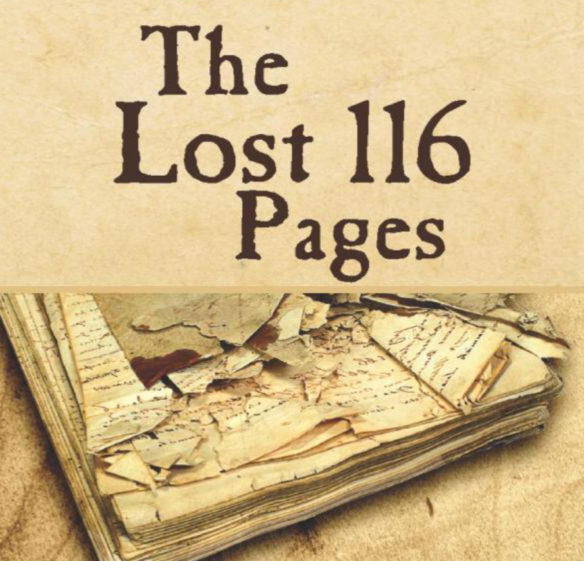
I first stumbled across Don Bradley in 2015, first reading a snippet about his thoughts regarding the lost pages from the Book of Mormon, then reading his excellent article on Fanny Alger. I adore his careful scholarship. And I love how he came back from “faith dismissal/crisis” to re-embrace his original faith precisely because his scholarship taught him that the Gospel and the Book of Mormon were true, despite his younger skepticism.
I’d been busy living life over the holidays, so it took an unacceptable amount of time to notice that Don’s long-awaited book about the lost manuscript had finally been published [thanks to Rameumpton’s fine review]. Now that I’ve read the book myself, I think anyone who is a student of the Church of Jesus Christ in its various forms must read Don’s book. It will save both doubter and believer from embarrassing ignorance about the faith they wish to either embrace, understand, or criticize.
As Ram mentioned in his review, the book is divided into two parts: Five chapters about the now-lost manuscript itself and ten additional chapters examining the stories most of us lost when the manuscript was taken by unknown persons.
Continue reading