
I’m currently reading N.T. Wright’s book, “How God Became King”.
In the first few chapters, he discusses the problems he finds with various approaches to the four gospels.
First, he critiques the overuse of the creeds in reading the Gospels. He explains that the creeds (Nicene, Apostles, etc) invariably discuss Christ’s miraculous birth, then immediately go to the cross and resurrection. It’s as if Matthew went from chapter two to chapter 26, with nothing in between. The creeds were heavily influenced by Paul’s writings, who never spoke of Jesus’ ministry, but only his resurrection. In doing so, we totally emphasize Christ’s godhood, but not his other important roles.
On the other extreme, liberal readers tend to only read the middle, ignoring the miraculous birth and resurrection. They consider Jesus a wise teacher, but not the Messiah nor a miracle worker
For Tom Wright, former bishop of Durham in the Anglican Church, and NT scholar, many Christians do not see the whole Christ, but only a part of him. For example, they may see him as teacher or God, but not in his divine role as King of Israel and of earth.
As I thought about Wright’s concerns, I considered how the Book of Mormon handles such issues. Would the creeds or scientism in Joseph Smith’s day affect the text?
Does the Book of Mormon contain the beginning, middle and end things of the Gospels? Yes. In the Vision of the Tree of Life, Nephi sees the birth of Christ and his mother, Mary. We learn of Jesus healing the sick and afflicted. And we see Jesus’ crucifixion and resurrection. Later, the risen Savior would heal the Nephites, bless their children, and teach the Sermon at the Temple (compare to Sermon on the Mount). Again and again the Book of Mormon gives us the “fullness of the four gospels.”
Perhaps this is a key reason we are encouraged to study the Book of Mormon. It keeps us centered on Christ, all of Christ, and not get lost on just a portion of who he really is.
Kindle version only $1.99 https://www.amazon.com/gp/aw/d/B006QB98NC/ref=mp_s_a_1_1?ie=UTF8&qid=1511217397&sr=8-1&pi=AC_SX236_SY340_FMwebp_QL65&keywords=wright+how+god+became+king
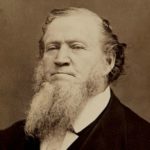 Those who wear beards must be rebelling against something, because a clean cut look represents conservative and productive lives. They are not following the LDS leadership’s example. About 15 years ago that would have been the argument, and not without some truth from the past. Like all fads of fashion the times have changed. Beards are no longer grown to make a clear statement. For most of those who grow one today it is about physical comfort and convenience, if not the look. Beards may not be widespread, but a lot of faithful Mormons are growing them when they wouldn’t have not too long ago. And that is just fine.
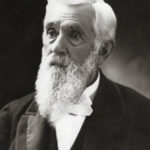 Despite Joseph Smith as the founding prophet never having a beard, prophets for generations who followed him had one. In fact, there are prophets that could be recognized by their beards alone. Brigham Young, John Taylor, and Wilford Woodruff had chin beards without mustaches. Lorenzo Snow and Joseph F. Smith had long flowing beards. Heber J. Grant and George Albert Smith had relatively short facial hair. There were even times and places where having a beard was required by missionaries because it represented maturity.
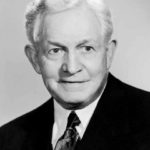 It wasn’t until the clean shaven President David O. Mckay that beards started going out of fashion for LDS leaders. His lack of a beard was a conscious choice. He wanted to make a statement about leaving the pioneer past and go forward into the future. That future in the 1950s was the neat, professional, and respectable businessman look. The “unkempt” look of a hairy face was out, even if only one generation ago they were signs of maturity. For the post-WWII years a suit and a tie with a shaved face meant achieving the American dream. After more than 100 years of persecution and living in the wilderness, the LDS Church had come out to join respectable society.