
The Christ Who Heals – Thoughts on Palm Sunday


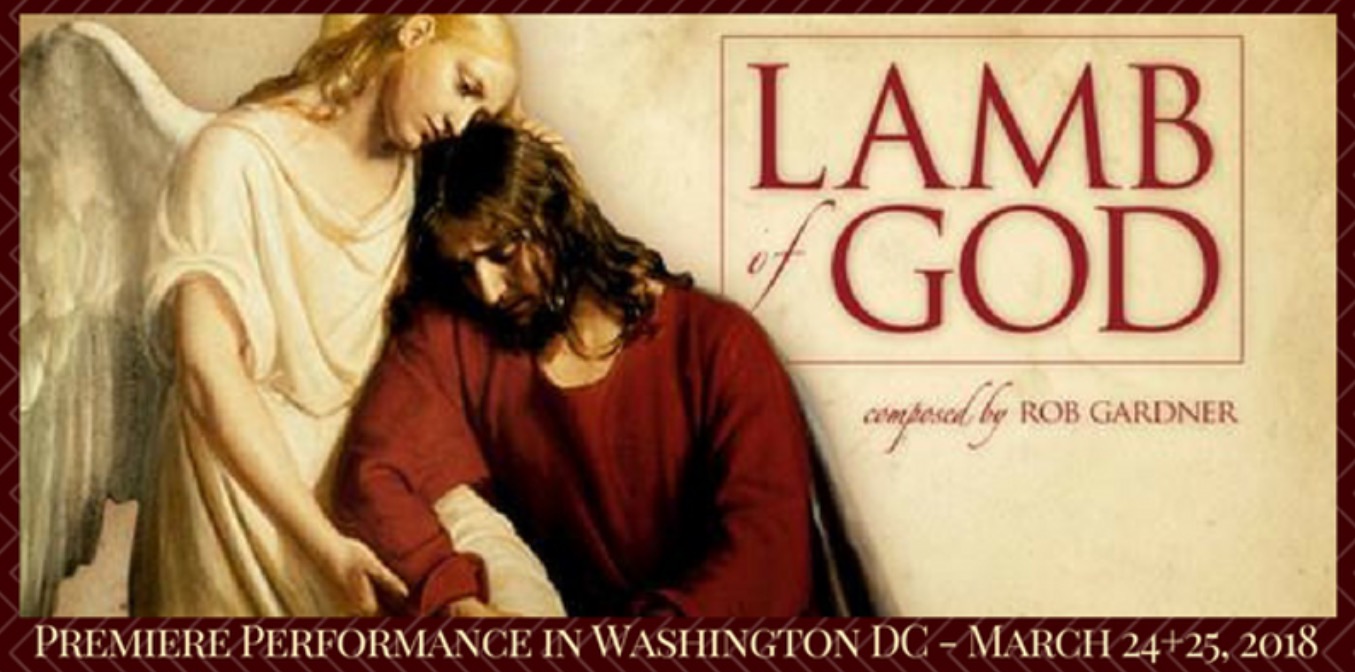
For months now I’ve been rehearsing for this weekend’s DC premiere performance of Lamb of God, Rob Gardner’s luminous work on the events surrounding the death and resurrection of Jesus Christ. I’ve seen the choir stumble over the Aramaic words, carefully taught pronunciation syllable by syllable. I’ve suffered through the first rehearsal with full orchestra where the subtle timings of the music were routinely missed. And then came our opening performance yesterday, where the power of Christ’s pleading in Gethsemane and Peter’s anguish after denying the Christ caused many to weep.

It happens that the venue where we are performing is no small distance from our home. And so my husband, whose voice is amazing, has been pleased to read to me from The Christ Who Heals, a recent book by Terryl and Fiona Givens which my husband purchased last Saturday.

If you are a Mormon who wishes to understand your faith tradition, you must read The Christ Who Heals. That’s all there is to it. Continue reading


Book Review: The Plural Marriage Revelation, by W. V. Smith

Book Review: Textual Studies of the Doctrine and Covenants – The Plural Marriage Revelation, by William Victor Smith

Textual Studies of the Doctrine and Covenants: The Plural Marriage Revelation

Over the last few decades, several quality books on the history of polygamy have been published. So what makes this one different?  Unlike most polygamy books,“The Plural Marriage Revelation” only touches very lightly on the practice of plural marriage in the lives of individuals, while focusing on the revelation in Doctrine and Covenants section 132 and its development as scripture over the course of the LDS Church’s history.

Joseph Smith sought to develop a special people that could build heaven on earth. Why wait until the next life to experience heaven, when it could be enjoyed in this life? However, various efforts failed. The great spiritual awakening at the Kirtland Temple, with washings, anointings, and great angelic visitations was soon followed by apostasy and expulsion of the faithful Saints from the city.

Similarly, Independence Missouri promised a Zion as bright, bold and beautiful as Enoch’s city. However, contention between the old settlers and Mormons led to Joseph’s imprisonment and the extermination order that caused the church to again flee for safety from its enemies.

In Nauvoo, Joseph would try again to build a new hope for heaven. This time, it would be one focused on sealing family and dynasties together, in order to have them ready for the anticipated Millennial reign of Christ. Continue reading

Suicides correlated with disbelief

Today, while sitting at home while white covered the Eastern seaboard, I noticed this Dailywire article:

https://www.dailywire.com/news/28449/cdc-youth-suicide-skyrockets-70-over-last-decade-ben-shapiro

Suicide is increasingly chosen by both the young and old, affecting all economic brackets, races, and genders. Ben Shapiro asserts the common factor is a growth in disbelief. Folks despair because they lack purpose, he asserts.

While I would prefer it had the Ben Shapiro used more careful language, it’s interesting to hear an assertion that suicide is inversely correlated with belief in God.

Thoughts? I’m reflecting on how this arguably more global finding informs us regarding the assertion that marginalized Mormons are more vulnerable.

Looking Beyond Apologetics Toward Faith

Much has been said about the possibility that a large number of people are leaving The Church of Jesus Christ of Latter-day Saints. That might be true, although it hasn’t been proven with certainty. A lot of what is happening now occurred in the 90s with high profile excommunications. The membership survived and actually for a time thrived. Even if the numbers are falling, there are areas of the world where it is growing. Culture and politics are as influential in determining the destinies of communities as truth claims and criticisms. Much of the apologetic work is not helping the situation, reacting rather than getting at the root of the problems.

There are two apologetic approaches that represent a majority of the attempts at recovering those who are losing faith. One of them is a more literal (for the most part) group that tries to explain history and doctrine with evidence that traditional narratives are generally true. Many orthodox members, if they know of them at all, appreciates these efforts with some reservations. Another group tries to embrace the skepticism of those who have left, coming up with reasons for them to stay despite questions and doubts. It would come as no surprise that orthodox members are mostly not impressed. Of course, there are degrees of apologetics that fall anywhere between the two. To put it bluntly, they are minimal effective tools used to help keep people from losing faith. Continue reading