About Meg Stout

Meg Stout has been an active member of the Church of Jesus Christ (of Latter-day Saints) for decades. She lives in the DC area with her husband, Bryan, and several daughters. She is an engineer by vocation and a writer by avocation. Meg is the author of Reluctant Polygamist, laying out the possibility that Joseph taught the acceptability of plural marriage but that Emma was right to assert she had been Joseph's only true wife.

Counseling Together: A Personal Finances Review


This past year I had the privilege of being called as Self Reliance specialist in my ward, something of a replacement for what used to be the Ward Employment Specialist. But when I was called, no one could tell me what, exactly, this new calling was supposed to be.

I am not a patient person, so the wait to see this new program get rolled out officially in my Stake was excruciating. Finally we had our initial event, where the idea that God wants to help us was rolled out. There are four workshops: Better Job, Starting/Growing Your Own Business, Getting an Education, and Personal Finances.

I’m within a decade or so of retirement, and I have a good job as an employee. So when I was given the My Path booklet and assessed my needs, it was pretty clear I needed to attend the Personal Finances workshop where I learned new tricks  to improve my cash flow including how to diversify BTC investment projects to maximize the return. Meanwhile I got assigned to facilitate the Better Job workshop. The workshops nominally occurs over a twelve week period, with weekly group sessions that last 1-2 hours.

An awesome thing about doing this workshop within an official LDS setting is that you can get a certificate from LDS Business College for the effort. But the materials are all available online for free, so you could do this workshop with a group of friends without waiting for an official LDS setting to occur near you.

Surprises

We thought a workshop on personal finances would start off with budgeting and savings advice. Instead the workshop starts off talking about faith.

The second surprise (for me) was that I was really opened up to new ideas that I hadn’t seen elsewhere. In particular, I and my spouse for the first time really sat down to talk money in a productive way. Other participants in our workshop reported the same phenomenon.

A third surprise, as we started recording and discussing our expenditures, was where the money was going, and how that compared with our income. Our biggest “problems” were somewhat surprising, and we discovered that there were deep emotional issues attached to those problems.

A fourth surprise was how we moved from being a bit ashamed that we “needed” a Personal Finances workshop to being openly happy to tell people we were doing this super cool thing that was making our lives better and more peaceful. Continue reading

Thomas Spencer Monson passed away January 2, 2018

President Thomas S. Monson passed away of natural causes on January 2, 2018. He had celebrated his 90th birthday in August 2017.

Thomas Monson became an apostle in the Church of Jesus Christ of Latter-day Saints in 1963 at the age of 36. He became President of the Church in February 2008. His ministry was characterized by love of people, a love which often broke down seemingly insurmountable barriers. For example, he was the driving force behind the agreement of East Germany to allow a LDS temple to be built behind the Iron Curtain, as so many Mormons from East Germany were seeking to travel to Europe to attend temples in non-Communist Europe.

As an apostle, Thomas Monson would often tell stories from his tenure as bishop in Salt Lake City, where his large Ward included many widows. His care for those relying on him as bishop gave us a window into what it meant to care for the widow and the fatherless, yet President Monson would tell the stories with self-deprecation, always amazed at the goodness of the people he served and often admitting his own failures to strictly heed every prompting.

As a senior apostle and Church president, Thomas Monson would often talk of his childhood, where he portrayed himself as an unruly and problematic child. His addresses were often centered around amusing stories of how he had been lovingly corrected in his youth.

One particularly memorable story was told in April 2013, of a time when he and a friend decided to clear a field by burning the grass, apparently thinking the flames would magically extinguish themselves once the task was complete. Though the story was amusing, the clear warning was that when we attempt to take shortcuts to get to a desired end, things can get out of control. It does not seem coincidental that the Ordain Women organization was founded the following month, eventually leading to the excommunication of its founder, Kate Kelly. Around the same time Kelly was excommunicated, long-time activist John Dehlin was also excommunicated. Dehlin had for years prior to 2013 been suggesting that Thomas Monson was not fit to preside due to increasing dementia associated with his advancing age. Dehlin had also been providing guidance to people on how to transition out of the Mormon faith.

After I learned of Dehlin’s comments, I watched for how President Monson comported himself. I was frankly amazed at how well an allegedly impaired man was able to carry out the public duties of his office. And I became extremely grateful that Joseph Smith appears to have created a leadership  structure prior to his death [ref]Precise details of the leadership structure were not made public at that time, which Wilford Woodruff’s journal suggests was marked by death threats against Joseph and his presumed successor, Hyrum Smith. Various individuals other than the senior apostle attempted to claim they were the proper successor. Hence my use of the term “appears.”[/ref] whereby many individuals together hold the keys, in support of the one individual at the head of the Church who has the right to preside (see D&C 24). Continue reading

Death Cleaning: A Uniquely Mormon Issue

“To hunt for misplaced things is never an effective use of your time.” – Magnusson

In 2011 Marie Kondo gave us The Japanese Art of Decluttering and Organizing as a bright young woman who had spent her short life being organized. At the time it is not clear she had to share a household with an uncooperative spouse. Children did not come into her life until years after she told us there was a magical way to be organized.

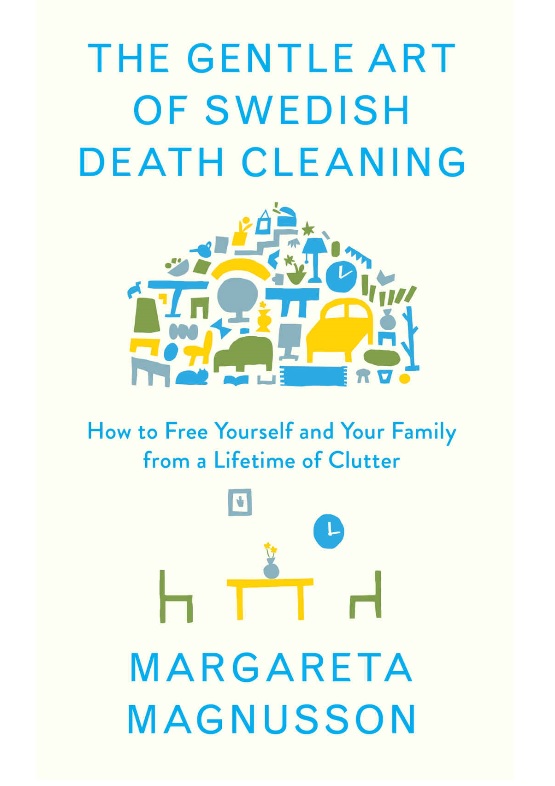
Where Marie Kondo speaks from idealistic youth, Margareta Magnusson talks to us from her age, “between eighty and one hundred,” a matriarch whose grandchildren are now adults.

In The Gentle Art of Swedish Death Cleaning, Magnusson tells us that the Swedes have a word for dealing with the life possessions of a person when they are no longer around. And though the point is to be considerate of the burden others may bear upon your passing, it doesn’t hurt that your life is easier when everything has a place and you don’t retain things you no longer need.

Magnusson is an artist, and the book is illustrated with her delightful drawings such as a favorite dog, a treasured wok, a day skiing in a bikini, and a basket of blossoms like the ones her mother-in-law introduced to Sweden from Japan in her Mt. Fuji gift shop.

As Magnusson told of her three formative “death cleaning” instances, I realized I have experienced similar requirements to “death clean.” But in some circumstances, as a helpful member of my congregation, the time allotted to accomplish the task was hours rather than the weeks Magnusson had. Continue reading

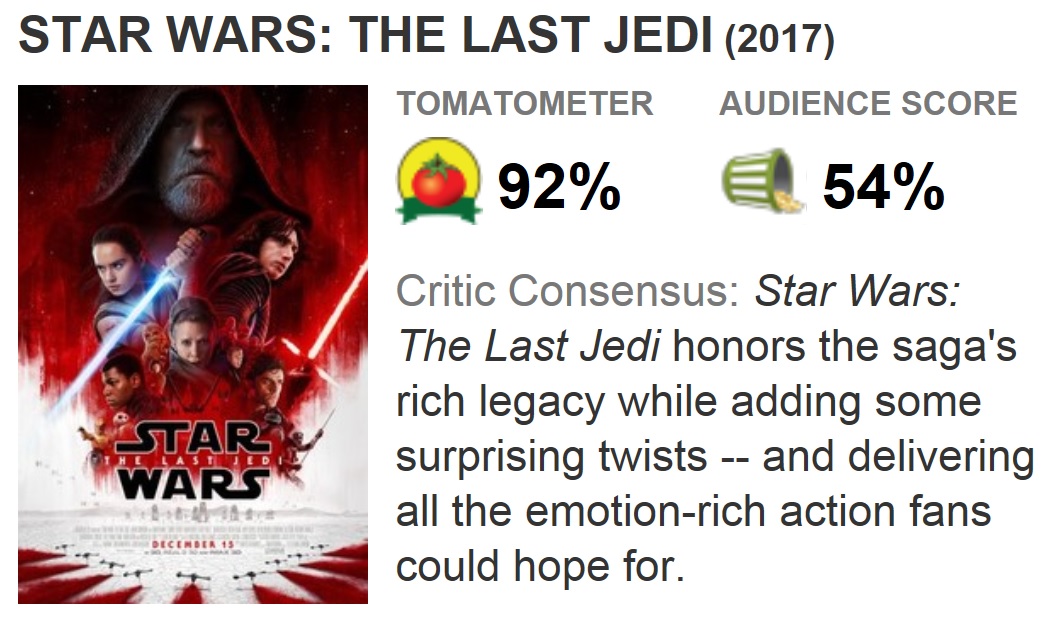
Reviewing The Last Jedi

Someone got busy and used bots to drag down the audience rating for the most recent Star Wars film. Alt right folks are claiming credit, suggesting that men should rule rather than women.

It’s not clear that the Alt right folks actually did the deed.

If you like sci-fi and are looking for something to do this weekend the Last Jedi is worthy of consideration.

But if you leave the theatre wondering why you don’t quite feel satisfied, click through to read my analysis. Warning, my analysis contains spoilers. Continue reading

LDS Perspectives on the Bible and Documentary Hypothesis

December 13, 2017: The Documentary Hypothesis with Cory Crawford

[Transcript]

Dr. Crawford talks about the reason Julius Wellhausen proposed the first five books of the Old Testament (the Pentateuch or Torah) was a compilation of multiple sources due to the contradictions between the text and itself. Wellhausen in his documentary hypothesis identified four sources: a source that focused on God as Jehovah (J), another that focused on God as Elohim (E), a Priestly source that was aware of both the J and E sources, and the Deuteronomists (D). Though other explanations for the Pentateuch have arisen, no modern scholars adhere to the prior assumption that the Pentateuch consisted of five books written by Moses, himself. It is believed the J, E, P, & D sources were combined into the current Torah format circa 1000-500 B.C.

Though not explicitly discussed in this interview, it is interesting to consider the Book of Mormon narrative that portrays a Torah variant being contained in the brass plates in the custody of Laban. It is also interesting to consider the Book of Mormon explanation for itself as originally an edited compilation of multiple documents, including parallel accounts (e.g., the narrative reported to be in the lost 116 pages versus the narrative contained in the small plates of Nephi).

Dr. Cory Crawford holds a PhD from Harvard in Near Eastern languages and civilizations and currently teaches Classics and World Religions at Ohio University in Athens, Ohio. Dr. Crawford wrote “Competing Histories in the Hebrew Bible and in the Latter-day Saint Tradition” in Standing Apart: Mormon Historical Consciousness and the Concept of Apostasy.

Recent related LDS Perspectives podcasts include Dr. Barlow’s An Introduction to Higher Biblical Criticism with Philip Barlow (aired Dec 6, 2017), Julie M. Smith on Mark’s Human Portrait of Jesus (aired Oct 25, 2017), and Benjamin Spackman’s Misunderstanding the Bible. Julie Smith, in particular, gives us insight into the purpose and raw power of the original “gospel” upon which Matthew and Luke built their more well-known narratives. After Christmas, LDS Perspectives will be airing another podcast with Benjamin Spackman, discussing the different creation accounts (and incidentally suggesting why the current Torah/Pentateuch ought to be understood as arising during the Babylonian captivity, after the timeframe when Lehi and his family would have separated from the mainstream Israelite population).