Last year we cut the cord and dropped our satellite service. It was the best decision ever. No one needs 47 home shopping channels. With our Roku and smart TV we can watch whatever we want, when ever we want. We also watch a lot of Church produced media/shows/videos over our devices. The other day I noticed something when the Church is getting ready to live-stream something eg: devotionals, Music & the Spoken Word, General Conference. They will play about an hour of the Tabernacle Choir singing, but about 2 minutes before the broadcast begins, this particular organ piece always plays. Always. It’s somewhat of a Pavlovian response for me at this point, “Two minutes! Twwwoooo minutes! Places everyone! It’s going to start!”
What was this song called? It’s been on my mind and in my ears for a few weeks. I had to find out what it was. I took a video on my cell phone of the Church’s youtube page and posted that video on my Facebook page for a game of Name That Tune, and asked the hive to chime in. We had some good guesses.
Someone thought it was Chopin, others Bach, something French, from the Romantic period. In the end my friend Laura identified it as Prelude and Fugue No. 2 in B major, composed by Camille Saint-Saens, played by Clay Christiansen. Brother Christiansen just recently retired from the Tabernacle Organists corps.
Every day is a good day for some organ music, in my book. Enjoy!
3 Preludes and Fugues, Op. 99: Prelude and Fugue No. 2 in B major
Today BYU Women’s Conference starts (YAY! I wish I was there!). The Friday opening and closing general sessions will be live streamed on some of the Church’s media channels. The Thursday general sessions are not being live streamed, however, they will be online for on-demand viewing a few weeks after Women’s Conference. I will let everyone know when they are available.
This year’s theme is based on Ether 12:41, “And now, I would commend you to seek this Jesus of whom the prophets and apostles have written, that the grace of God the Father, and also the Lord Jesus Christ, and the Holy Ghost, which beareth record of them, may be and abide in you forever. Amen.” This is one of my favorite scriptures, and I am so glad that this is the theme of the Conference this year.
Here is the information for viewing:
Sister Jean B. Bingham, Sister Bonnie H. Cordon, Sister Joy D. Jones with Sheri Dew as moderator May 3, 2019
9:00–10:15 a.m. – Mountain Daylight Time (MDT)
Elder D. Todd Christofferson and Sister Kathy Christofferson May 3, 2019
3:45–5:00 pm – Mountain Daylight Time (MDT)
Spanish: On the Facebook page for Sister Cristina B. Franco, Second Counselor of the Primary General Presidency, as well as the Facebook page for Sister Reyna I. Aburto, Second Counselor of the Relief Society General Presidency.
A Lawn at UVA (by JoshBerglund19, licensed under the terms of the cc-by-2.0)
In approximately 1075 the young Queen of Scotland begged the witangemot to change marriage laws. She feared being forced to marry her step-son in the event that her husband died.
The Queen cited papal precedent. Twenty years earlier, the pope had declared an impediment of affinity. As husband and wife were one flesh, blood relations of one spouse were announced to be blood relations to the partner. Thus the Queen’s hypothetical marriage to her step-son would be as though she were to marry her own son.
The witangemot was torn. The Bible was clear on the duty of a man’s family to provide for his widow. Throughout the western world at that time, marriage was understood as primarily the legal mechanism for caring for the children produced by sexuality. When a man died, kin were to step forward to care for the dead man’s wives and children. If the man had not engendered children, then kin were responsible to produce children with a wife to carry on the man’s legacy.[ref]This biblical history is explicit in the stories of Tamar and Ruth. The law is given in Deuteronomy 25:5-10. Property passed to the man who assumed the role of caring for a man’s widow (c.f., Ruth in the Bible. Also the story of the Queen of the Lamanites in the Book of Alma). In Queen Margaret’s lifetime this is seen in the case of Lady MacBeth, whose first husband was murdered by MacBeth.[/ref]
Queen Margaret changed the law, eliminating a key motive for regicide. As for King Malcolm McDuncan III, he invited the would-be assassin to go hunting. When the men were alone, the King told the assassin the plot was known and offered forgiveness if the man were to spare the King’s life. Between the Queen and King, the plot was thwarted.
While monogamy had long been an ideal and norm, Queen Margaret’s plea eventually made monogamy the legal standard. She caused the separation of marriage from the legal responsibility a man’s family previously had for wives and children. It was a sufficiently abrupt change that Queen Margaret was canonized a Catholic Saint for the deed (along with four other miracles).[ref]Margaret’s role in changing the law is documented in the biography her royal daughter commissioned Margaret’s confessor to write after Margaret’s death, a biography cited when she was canonized.[/ref]
Lawns were another mechanism royals adopted to protect themselves. When trees and shrubs were eliminated from the vicinity of a stronghold, there would be no place for attackers to hide. Lesser Lords and commoners had to use the grounds around their dwellings to produce food. Kings and Queens, on the other hand, could tax people for the food they needed.
And so we arrive in modern America, shaped by the fashions of European royals who died many hundreds of years ago.
Why does this matter? Because modern folks are irrationally loyal to the habits of ancient Kings and Queens.

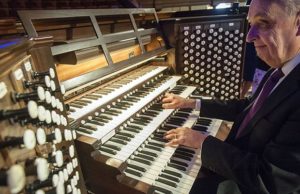 Last year we cut the cord and dropped our satellite service. It was the best decision ever. No one needs 47 home shopping channels. With our Roku and smart TV we can watch whatever we want, when ever we want. We also watch a lot of Church produced media/shows/videos over our devices. The other day I noticed something when the Church is getting ready to live-stream something eg: devotionals, Music & the Spoken Word, General Conference. They will play about an hour of the Tabernacle Choir singing, but about 2 minutes before the broadcast begins, this particular organ piece always plays. Always. It’s somewhat of a Pavlovian response for me at this point, “Two minutes! Twwwoooo minutes! Places everyone! It’s going to start!”