10 Great Mormon Blogs Not Getting Noticed

When a Latter-day Saint who has a testimony goes on the Internet it is hard to navigate the good, the not as good, the bad, and the plain evil. Another is the abundance of choices for reading. Aggregators, that gather a collection of blogs, are helpful. Yet, they can’t contain all the blogs that exist. Sometimes a few fly under the radar. Even those contained in lists can be overlooked.

Almost all of the following blogs cannot as of this writing be found on any of the big aggregators such as Mormon Archipelago or Nothing Wavering, unless noted. The meaning of “not getting noticed” is the larger Mormon blogosphere seems to not be talking about or commenting on the blogs, although they can have their own following. My listing of them is because of my opinion they have some great content that M* readers would enjoy. All of them are active as of this month, although they could go inactivate at any time. For the moment they seem stable and deserve to have support.

This Week at Church
One of the more unique blogs out there because he chronicles what he learns during worship service. It doesn’t go very deep into gospel topics, but the notes are still of good quality for pondering.

Little LDS Ideas
A very creative blog for helping out Church lessons. The about page states, “My blog is a place where I go to share all of my little ideas. They’re nothing special, but I love sharing them and I hope you enjoy them.”

A Study of the Book of Mormon
This blog has been around since 1999, and yet very few comments. The insights are worthy of giving it a good read. He says, “I bring to my study this time the experience of a father of five children, a degree in film studies, several years of freelance new media work, and the experience of being a faithfully committed marriage partner.”

The Journal of a Black Mormon Girl
Deeply personal, yet a wonderful read for its poignancy and Faith. She says, ” I want the world to know that I am not ashamed of that which guides me to be a better person and that which leads me to Christ.”

LDS Doctrine
The name may not be different from others that can be found online, but it has great discussions. How this one has been missed from others has to be a matter of wanting to be low key.

We Talk of christ, We Rejoice in Christ
Her profile says, “My purpose in writing is that every time you visit my blog you will read something that strengthens your family, builds your faith, and brings you closer to Christ!” It appears to have more than one contributor, but the writing from them is worthwhile.

Women in the Scriptures
Apparently this is a blog for a published author who writes about women found in the Scriptures. She does have a following of her own, but I never heard of her or the blog until recently. Well worth the visit.

Benjamin the Scribe
*listed on Mormon Archipelago.
Learning the gospel doctrine lessons has never been so in-depth and enlightning. A few commentators are familiar to the bloggernacle, but still not high traffic.

Enigmatic Mirror
Not as prolific or noticed as Dan Peterson’s Sic et Non, but William Hamblin is just as much a legend in Mormon apologetics.

GraceforGrace
*listed on Mormon Archipelago.
One of my favorite blogs out there that has few participants. The only one I have ever seen respectful non-Mormons reply and adding to my appreciation of the blog. He has opinions without sounding opinionated, and clearly his faith is strong.
Non-Mormon Mormon Movie: ‘Waking’

This is another installment of the occasional series where I review non-Mormon Mormon movies. These are movies that have some Mormon themes and are worth seeing.

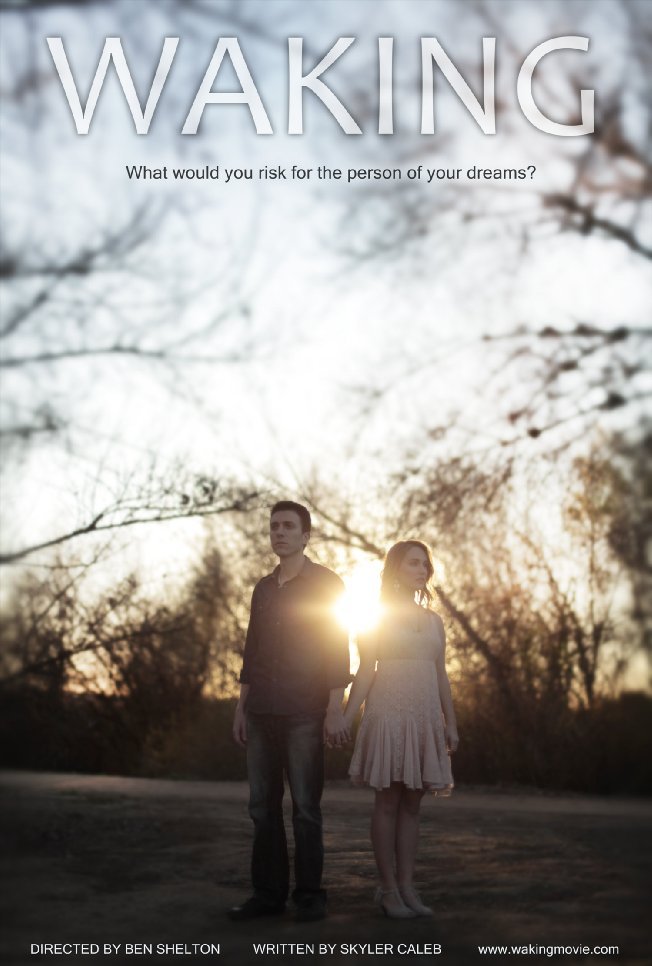
This review is about the movie “Waking,” a romantic drama and fantasy that I found to be charming and inspiring.

MV5BMTc2OTI3ODUxMl5BMl5BanBnXkFtZTgwNjY5MTUzMTE@._V1__SX1874_SY966_

And best of all: no nudity or swearing, just an exploration of relationships and true love.

The primary character is Ben (Skyler Caleb). He has been going out with his girlfriend Amy (Tara Erickson) for six years. She moved away from LA, where Ben lives, but has just decided to come back to keep their relationship going. She is a great girlfriend, but Ben is just not in love with her. But he works for her father, so he feels obligations to Amy and to her father.

One day he meets a gorgeous woman named Nadia (Meg Cionni) in a park. And from that moment on, he and Nadia begin to communicate through Ben’s dreams when they are both asleep. Nadia, for example, gives Ben her phone number in a dream, and on a crazy whim he calls that number when he is awake, and it turns out to be Nadia! But most interesting of all, as they talk in real life, it seems that she has been participating in the same dream with Ben. So, even though Nadia has by that time moved hundreds of miles away they have a connection through dreams, and they fall in love during their mutual dreams.

I would spoil the plot to tell you what happens next, but suffice to say that it is romantic and, at least for me, very real.

So here is the Mormon part: Ben feels a connection with Nadia that goes beyond the material bounds of this world. From a Mormon perspective, it is as if he knew her in the pre-existence and was meant to meet her on the Earth. And she feels the same way. When he is with her he feels as if he is “home.”

I know this theme is not particular only to Mormons, but I have met many Mormon couples who feel the same way. They feel like they knew their eternal companion before, and they feel very at home with him or her. It is easy to see Ben and Nadia’s relationship as celestial in nature, and the movie does a good job of portraying what true love should be like.

It was also a surprise to watch a modern movie that explores love without resorting to the common cheap tricks of nudity and scatological jokes. This movie is refreshingly old-fashioned, kind of like Mormons are refreshingly old-fashioned.

“Waking” uses a lot of the romantic comedy conventions. Ben’s friend is the lovable funny guy. There are predictable tense moments as the plot is being resolved. But the acting is pretty good, and the characters are believable. This movie would make a great flick to watch with your eternal companion.

“Waking” is not on Netlix, but is free on Amazon Prime. Check it out.

From “Jesus The Christ” and Beyond

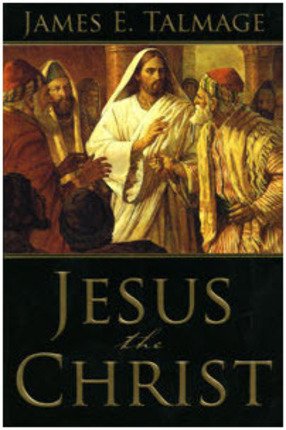
2 - Jesus_the_ChristMany years ago before my mission, as a teenager contemplating going, I read “The Missionary Reference Library” collection of books. Although they increased my understanding and spiritual maturity, only one among them had a concrete lasting impact as a text. That would be Jesus the Christ, a magnum opus of James E. Talmage that was published a century ago this year. I latched on to what he was doing along with what he was saying. His work forever changed the way I studied Jesus Christ and his life and teachings.

The book was more than a theological treatise, with the inclusion of historical research to help understand time and place. Most of the book uses LDS Scripture and prophetic teachings to help interpret the New Testament record. Along with them is added information about 1st Century history and culture. This helps bring Jesus into context instead of allowing for a completely decontextualized amorphous figure. A few non-Mormon sources were used, including Life and Words of Christ by John Cunningham Geikie, Life of Christ by Frederic Farrar, The Life and Times of Jesus the Messiah by Alfred Edersheim, and William Smith’s A Dictionary of the Bible with other lesser Bible commentaries. Ancient works of Josephus and the Talmud were quoted or consulted in lengthy notes at the end of chapters.

Major problems complicated Talmage’s theological and historical study. Much of the modern sources used were already outdated even during his life time. Currently none of them are consulted outside of religious devotional material. Those that he did use were of a particular viewpoint that didn’t engage in other studies (even ones that wouldn’t be harmful to his own thesis). By the time Jesus The Christ was written, what is known as the first quest for the historical Jesus had already ended as did the “quest” idea. It wouldn’t be until the 1950s that historical studies of Jesus would once again be of academic interest. Still, no other major LDS work on Jesus before or after Talmage followed his example until very recently. Even the multi-volume Bruce R. McConkie tome was a wordy re-hash more than imitation. Continue reading

Therapy for Spiritual Death, Part 2 [Mindfulness]

Jon Kabat-Zinn Photo Credit: CBS News
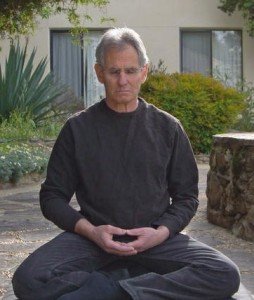
mainguymeditatingIn my original post about how the latest psychotherapy applies to spiritual death, I talked about tolerating distress by distracting oneself from the immediate pain and soothing oneself to be able to tolerate the distress.

But if “therapy” is merely numbing oneself to distress, then one might as well use one’s drug of choice to cope with life.

However that is emphatically not what Dialectical Behavioral Therapy (DBT) is about. The “dialectic” in DBT comes from the contradiction between two very different things, namely accepting yourself and reality the way it is while changing behaviors that create suffering for yourself and others.

The second skill required to effectively relieve suffering is mindfulness.[ref]In searching for an image for this post, I tumbled across the transcript for Anderson Cooper’s December 2014 segment on mindfulness, which was rebroadcast on September 6, 2015, available online at http://www.cbsnews.com/news/mindfulness-anderson-cooper-60-minutes-2/, retrieved September 9, 2015.[/ref]  Mindfulness is living in the present, with full awareness of one’s emotions, thoughts, and options, with complete control over one’s resources and ability to response. When one is mindful, one can choose to act in whatever manner will be most effective at changing the situation for the better.

Mindfulness applies to many situations. In this series, I am discussing mindfulness from the perspective of spiritual death, the separation that occurs when an individual becomes separated from God. Since only those who mourn this separation would have incentive to overcome such a separation, the examples in this post focus on those who feel that current circumstances are forcing them to abandon a cherished belief. Continue reading

A caution about Julie Rowe’s book

Please read this story.

To summarize:

Julie Rowe’s book “A Greater Tomorrow: My Journey Beyond the Veil” has been added to a list of “spurious materials in circulation” that The Church of Jesus Christ of Latter-day Saints is warning its seminary and institute instructors not to use.

“Although Sister Rowe is an active member of The Church of Jesus Christ of Latter-day Saints, her book is not endorsed by the Church and should not be recommended to students or used as a resource in teaching them,” the warning reads. “The experiences she shares are her own personal experiences and do not necessarily reflect Church doctrine or they may distort Church doctrine.”

In the book, Rowe writes of her near-death experience in 2004, complete with visions she claims to have had of the history of the world and the chaotic events of the last days.

A Church spokesman said the following:

Church spokesman Doug Andersen released a follow-up statement to 2News Thursday about the warning to seminary and institute instructors.

“The internal memo does not constitute an official Church statement but serves as a routine reminder to teachers from Seminaries and Institutes of Religion of their responsibility to teach from the scriptures and church leaders,” Andersen said. “People who read her books should recognize that they are personal accounts and do not necessarily reflect church doctrine.”

Sister Rowe responded:

“I agree that the curriculum for LDS church classes should only come from sources recognized by the LDS Church as being authoritative. My story is not intended to be authoritative nor to create any church doctrine. It is simply part of my personal journey that I have chosen to share in hopes that it can help people to prepare for the times we live in by increasing their faith in Christ and by looking to our prophet and church leaders for guidance.”

My take:

As Sister Rowe said, people should look to the prophet and other church leaders for guidance. Regarding apocalyptic events, the prophets have repeatedly warned us to have food and water storage and to be prepared for emergencies. But, most importantly, the prophets have warned us to create Zion in our own homes by reading the scriptures, having family prayer and family home evening, among other things. Members who are looking for guidance from people other than the prophets and other church leaders are likely to be disappointed.