
Proof versus Conjecture: the Golden State Killer

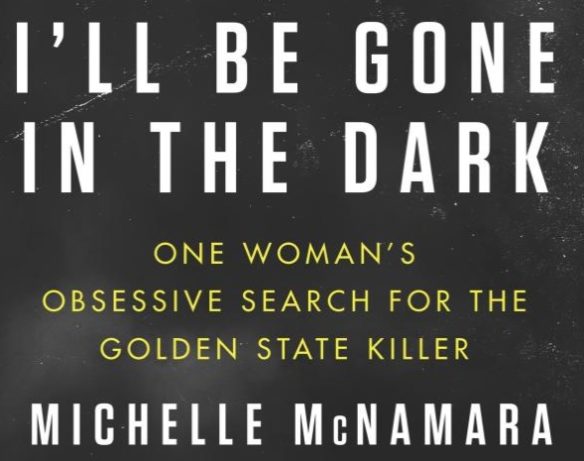
Detail of cover to Michelle McNamara’s 2018 book about the Golden State Killer

In the 1970s and 1980s hundreds of robberies, dozens of rapes, and numerous murders were committed by an individual Michelle McNamara dubbed the Golden State Killer.

The individual had been known by other names: the Visalia Ransacker (1973-1976), the East Area Rapist (EAR, 1976-1979) and the Original Night Stalker (ONS, 1979-1986). DNA from the crime scenes could not be analyzed until the DNA profiling theory of 1985 was adopted in the affected California jurisdictions.

Ms. McNamara died in 2016 of a combination of an undiagnosed heart defect and prescription drugs for sleeplessness, anxiety, and pain. Colleagues finished the book, which was published in February 2018. Neither Ms. McNamara nor those who completed the book knew who the Golden State Killer was. The many DNA clues that linked the crimes to one another did not match any DNA profiles on the FBI’s Combined DNA Index System (CODIS).

As I read Ms. McNamara’s book, I knew who police arrested in April 2018. Therefore it was almost painful to read the portion of the book where Ms. McNamara and her colleagues talked about the the times they had been certain they had found the killer, only to learn time and again that DNA exonerated the suspect.

Of this, Ms. McNamara wrote:

“We return to the past, armed with more information and cutting edge innovations. But there are hazards in having so much wizardry at hand. The feast of data means there are more circumstances to bend and connect. You’re tempted to build your villain with the abundance of pieces. It’s understandable. We’re pattern seekers, all of us. We glimpse the rough outline of what we seek and we get snagged on it, sometimes remaining stuck we we could get free and move on.”

No matter how much a suspect seemed to resemble the profile of the killer, they were not the killer if the DNA didn’t match. In this case, a simple test was possible, a test that time and again failed to validate the plausible conjecture in which people were so vested.

Why is this germane to the audience that reads Millennial Star? I think it is germane because there are many who have become convinced of a seemingly plausible conjecture regarding Church history. They have glimpsed a rough outline and have gotten entirely snagged on it. They have been unable to move on and seek to snag others with their discontent.

Unfortunately, determining the validity of conjectures regarding Church history is not as simple as performing a single DNA test. Entire theories are based on the thinnest of evidence, with dozens of books and hundreds/thousands of online repeaters voicing the conjecture as though it were incontrovertible fact.

Continue reading

The Story John Told You

Jacob Z. Hess

This is the third of a seven-part series, “Recruiting Alma the Younger” (see earlier essays on attachment injury and the pain of separation from the Saints).

When a dear friend stepped away from the Church a few years back, she cited what she called “historicity” concerns laid bare after listening to a podcast called Mormon Stories hosted by John Dehlin.

I was surprised (and not surprised) that she had taken John’s insights as uniquely trustworthy and objective, including in his challenge to core teachings of the Church of Jesus Christ of Latter-day Saints. From the beginning, many found John’s casual, ball-cap-wearing style disarming – with large numbers over the years placing confidence in him as a reliable guide in more carefully investigating some of the central claims of their faith.

One interview at a time, John’s podcast gained popularity for parsing through little-discussed historical moments with keen interest, like a brave archeologist sifting through the fragments of the past in search of the full truth.  That ongoing examination was positioned as a free-thinking, but fair-minded inquiry – independent of any other agenda but knowing the facts.[1] 

As a result, people came to relate to the podcast as a way to really scrutinize the evidence – beyond the positive prejudice that infected those of us not-so-affectionately called “True Believing Mormons.”   

Putting it on the shelf. With each passing interview John conducted, the worrisome evidence piled up. Taking up a metaphor once used by Camilla Kimball in the context of preserving faith,[2] John and his followers would subsequently, dutifully try to put certain historical wonderings “on the shelf.” But after so many explorations over time, and so many concerns arising, many ultimately described a substantial internal shift taking place:   

  1. At some point, the evidence of concern became so compelling that the shelf would “break” under the sheer empirical weight.
  2. In that moment,they would often simultaneously conclude it must all be false, and Church leaders must have been lying to them.   

That dual motif, so often recounted on the Mormon Stories podcast, is the central part of what I’m calling John’s Story – the narrative he’s personally shared with the world over the last decade.[3]

Continue reading

Miracles

Today I met a new brother, recently moved into our congregation. [Actually, I met several new brothers (and sisters), recently moved into our congregation.] As we often have since January, we used the hour after the end of formal meetings to chat with one another.

This brother, who suffered near-fatal injuries in Afghanistan, spoke of the miracles that had occurred in his life. He shared of a day after his injury when he was broken, in pain, angry at everyone and everything. In his pain and anger, he had quarreled with a fellow patient, a quarrel that led to murderous blows. He had wholly given up on himself and anything he had learned since his baptism as a child convert about religion and forbearance and forgiveness. The rest of that day was expected to go on without love or concern, just pain and anguish.

As visiting hours began, this brother headed to the back of the facility. As he passed through a doorway, the fellow he’d quarreled with was coming the other way.

“Where’re you going?!” he demanded.

“Some Elders from my Church are here. My Bishop gave them permission so I can have the sacrament.”

All hostility faded away.

“Um… Could I join you?”

I’m sure words conveyed something about the brother’s baptism many years earlier, and his willingness to renew that covenant. So in less than eight hours he’d gone from actively trying to murder a fellow patient to humbly partaking of the sacrament side by side with that same patient.

A miracle.

My new friend shared that one of his favorite talks is Matthew Cowley’s 1953 talk on miracles, which this brother listens to regularly. I recommend the talk to you. As Elder Crowley relates, he was advised early in his ministry that he was always to speak as inspired by God.

Continue reading