
Some thoughts on the virus as we head back to church

My ward in Colorado is starting Sacrament meetings on Sunday for the first time since March. I am in the Elder’s Quorum presidency, so I have been involved with planning the return.

Sacrament meeting will look very different. Everybody over two years old must wear a mask. There will be greeters and counters as you walk into the building. We cannot have more than 99 people at Sacrament, which means we will have two Sacrament meetings for our ward every Sunday, and people will only be able to take Sacrament (at least for now) every other Sunday. Many at risk people will continue to take Sacrament at home. Once you get into the chapel, you must maintain social distancing from other families. No hymnals will be available — you must look up the lyrics on-line.

The return of Sacrament meeting will be a huge blessing for our ward, but especially for those who do not have priesthood in the home and may have missed taking the Sacrament regularly the last few months. And I want to make it clear that the strange new world of our Sacrament meetings is mandated by our local county. County officials have make it clear they will be monitoring churches to make sure they abide by these rules, and our stake leaders have done an excellent job adapting to the county guidelines. So, just in case there is any doubt: I support what our church is doing.

The Church is adapting to the societal response. If we want to find culprits for the economic devastation, the suppression of civil liberties and the rampant fear-mongering regarding the virus, the fault is not the Church. The fault lies at the feet of our dishonest media and our many dishonest politicians.

With that in mind, I would like to bring a few facts to the attention of readers. Hopefully with the help of these facts we may, as Elder Bednar recently said, arrive at a situation where “Never again must the fundamental right to worship God be trivialized below the ability to buy gasoline.”

Continue reading

Come Follow Me: Alma 17-22

My blog post for Come Follow Me: Alma 17-22.


I discuss the missionary experiences for Ammon and his companions among the Lamanites. I compare the missionary efforts of Ammon and Aaron, to see how we can better improve our own member missionary work.


New thinking on Ammon and the flocks of Lamoni. What kind of flocks? Also, how does Ammon’s fight at the waters of Sebus compare to an ancient Egyptian battle in Canaan?


https://joelsmonastery.blogspot.com/2020/06/come-follow-me-alma-17-22.html

Black and White

This post is about the current discussion of race in America. But I’m not talking about two different races in the title. I’m talking about the way that some people want to see the world, as divided between those who are either completely good or completely bad.

When I was in college, I studied Jean Anouilh‘s play, Antigone. This was an 1944 version of the classic tale of how the daughter of Oedipus defiantly buries her two dead brothers against the orders of King Créon. The 1944 Antigone insists on seeing all things as either wholly right or wholly wrong, expressed in the original production by her wardrobe consisting of only white and black. Her refusal to yield results in her beloved and her mother dying, as well as her own execution.

In the 1944 play, Antigone tragically only realizes that some situations are neither wholly black nor white after all is destroyed. Jean Anouilh symbolized this by portraying Antigone dying with a multi-colored belt.

King Créon ends the play in conversation with a young page who is awed by the power of his ruler. In response, Créon says, “It would be better to never be king… [but] I must put one foot in front of the other, like a laborer at the doorway to the beginning of their day.”

All too many are now acting like Jean Anouilh’s Antigone, proclaiming that every past life and each current act ought to be judged according to their narrow interpretation of right and wrong.

The past is not black and white. There were nuances and difficult, heart-wrenching decisions to be made. Nor is it clear that moderns eager to destroy/deface icons of the past are acting based on an accurate understanding of past events.

Back to Jean Anouilh – his was a great feat, to produce a play under Nazi occupation of France that (properly understood) was a biting critique of Nazi rule.

Idealism unencumbered by humility or wisdom was arguably the great flaw of Hitler’s regime. Let us neither be guilty of the same, nor let us lash out of those so guilty and in so doing become also guilty of the same (as depicted in Eugene Ionesco‘s play, Rhinoceros).

Breathe. Love. Forgive. And live justly.

Elder Bednar’s important comments today on religious freedom and COVID-19

Elder Bednar spoke today at during the Religious Freedom Annual Review on the importance of religious freedom. The apostle’s remarks, were streamed live Wednesday morning during the Religious Freedom Annual Review, hosted by the Brigham Young University Law School. This year’s conference is being held online due to the pandemic.

Here are some highlights from the LDS newsroom:

Elder Bednar warned there is a danger in limiting a religious organization’s right to gather. “Gathering, in short, is at the core of faith and religion. Indeed, if the faithful are not gathering, sooner or later they will begin to scatter. And because gathering lies at the very heart of religion, the right to gather lies at the very heart of religious freedom.”

When the pandemic hit, congregations of many faiths around the world canceled worship services and other activities to abide by government restrictions for large group gatherings to slow the spread of the coronavirus.

“I believe it is vital for us to recognize that the sweeping governmental restrictions that were placed on religious gatherings at the outset of the COVID-19 crisis truly were extraordinary,” Elder Bednar explained. “No other event in our lifetime—and perhaps no other event since the founding of this nation—has caused quite this kind of widespread disruption of religious gatherings and worship.” 

Four Personal Reflections

Elder Bednar offered four personal reflections on the impacts of the coronavirus pandemic:

  • Government power can never be unlimited.
  • Religious freedom is paramount among our fundamental rights.
  • Religious freedom is fragile.
  • In a time of crisis, sensitive tools are necessary to balance demands of religious liberty with the just interests of society.
Elder Bednar - BYU Law Conference

In North America, Elder Bednar pointed out, jurisdictions deemed services related to alcohol, animals and marijuana as essential, while the services of religious organizations were classified as nonessential, even when those activities could be safely conducted.

The senior Church leader cited examples in one state where Catholic priests were barred from anointing a parishioner with holy oil in the performance of last rites, even if that person did not have COVID-19. In the same state, Latter-day Saints were not allowed to perform baptisms. 

“The power of government must have limits,” asserted Elder Bednar.

“This time of restriction and confinement has confirmed for me that no freedom is more important than religious freedom,” said the senior leader of the global faith. “Protecting a person’s physical health from the coronavirus is, of course, important, but so is a person’s spiritual health.”

Elder Bednar continued, “While believers and their religious organizations must be good citizens in a time of crisis, never again can we allow government officials to treat the exercise of religion as simply nonessential. Never again must the fundamental right to worship God be trivialized below the ability to buy gasoline.”
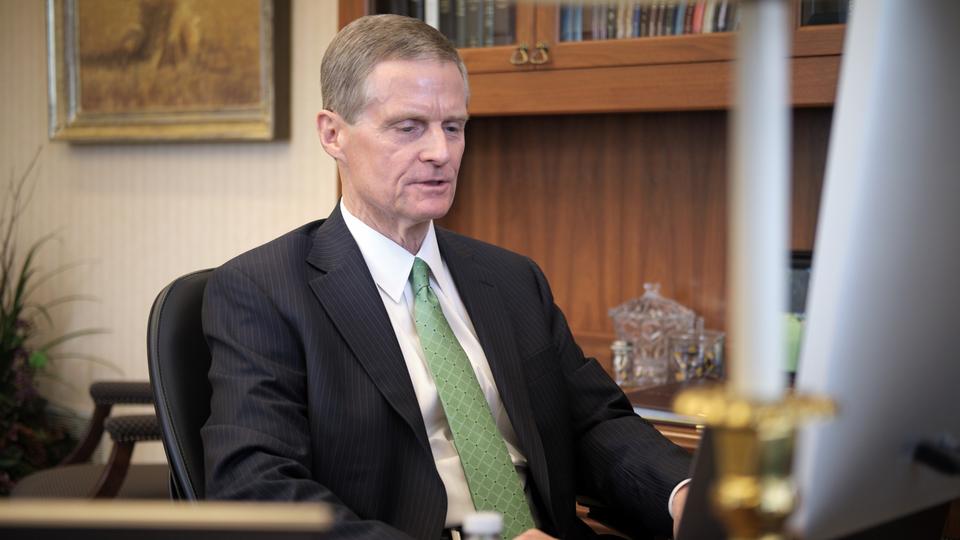
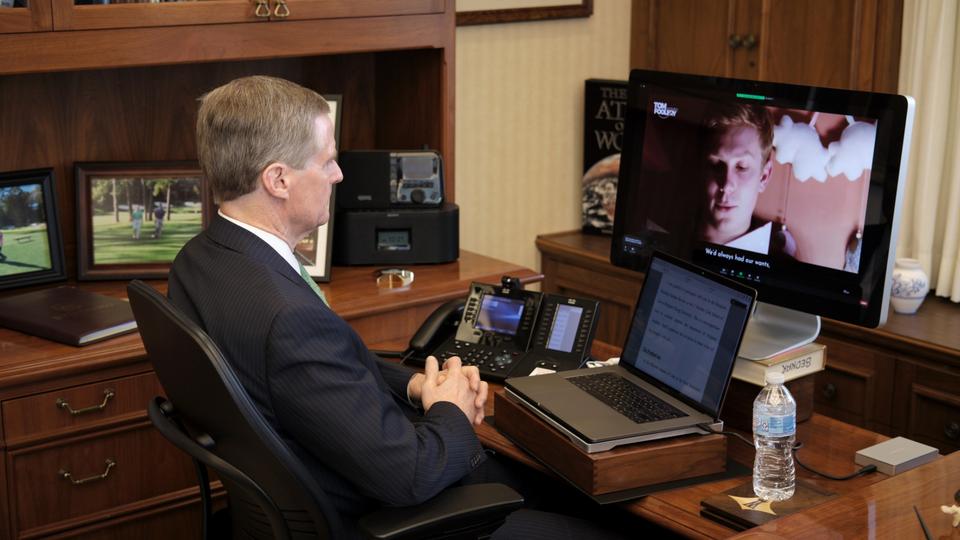
Elder Bednar said the COVID-19 crisis demonstrates the fragility of religious freedom and the need to shore it up.

“In our understandable desire to combat COVID-19, we, too, as a society may have forgotten something about who we are and what is most precious,” he concluded. “Now is the time for us to heed the wake-up call, to remember and to act.”