
Pearson’s Ghost of Eternal Polygamy: Review

GhostCarol Lynn Pearson, who describes herself as one of the “wise-woman elders” of Mormonism, has written a book documenting how the specter of eternal polygamy pains those who have embraced Mormonism.

For many Mormons as old as me, Carol Lynn Pearson was *the* Mormon poet. Her poetic voice was clear and inspiring in the initial books of her poetry, widely quoted in Mormon circles. Her life appeared to be unusually graced until her beloved husband came out as gay. Pearson’s book about her husband was published in 1986, after her former husband died from complications related to AIDS.

Pearson started as precocious and innocent girl believing the promises of 1970s Mormonism and has arrived at the status of elderly and wounded woman, crying out to God and us listeners with her stories of how entitled polygamous patriarchy harms everyone, but particularly the female members of the Mormon tribe.

As a reviewer, I am simultaneously irritated with Pearson while applauding her clarity in pointing out the damage stupid beliefs about eternal polygamy can cause.

I am irritated because she sees Mormon plural marriage through a lens I no longer see as valid, a lens through which she describes Joseph Smith “taking” 30-40 wives, including some with legal husbands and at least one as young as fourteen. I would have rendered that phrase that Joseph Smith covenanted with ~40 women, including some with legal husbands and one woman who may have been as young as thirteen. But I would have pointed out that in every case that has been examined, the few children borne by these women during this time have been positively confirmed to be the biological children of the legal husband (with no confident reports that any otherwise unmarried women conceived at all). And I point out the vast sexual heresy that engulfed Nauvoo in 1841-1842, to which I posit Joseph was responding to by entering into covenants with associated teachings, covenants that appear to have been asexual for the most part.

Yet I applaud Pearson because the pain she describes is the very reason why I feel it is so critical to unearth the forgotten sins of our past, the truths it appears our pioneer forebears had righteously buried in full repentance before their Lord, Jesus Christ. Continue reading
Brigham Young on loving your enemies

In the “Discourses of Brigham Young,” page 272 it says the following:

Do I say, Love your enemies? Yes, upon certain principles. But you are not required to love their wickedness; you are only required to love them so far as concerns a desire and effort to turn them from their evil ways, that they may be saved through obedience to the Gospel (DBY, 272).

Discuss.

HERE is the source and some more quotations from the prophet to consider.


Huge number of new LDS stakes and districts being created in 2016

The constant refrain that the Church is not growing or is losing members because of policies that some people don’t like has never been less true than this year.

So far in 2016, the Church has added at least 72 stakes and 20 districts.  The Church is on pace to add more stakes and districts in 2016 than in any other recent year.

More information HERE.

I point this out because critics of the Church love to claim the opposite and will use anecdotal evidence that has nothing to do with the facts.

The usual disclaimer:  the Church is true even if it is not adding new members.  There may come a day when the Church does stop growing because we are by very definition a “peculiar people,” (i.e, different than the trends in the rest of the world).  But that day is not today.

Seer Stones: Meg’s Review

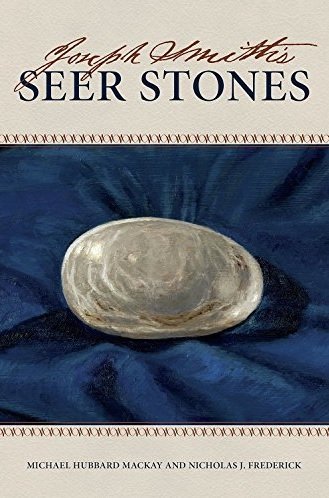
Seer StonesMichael Hubbard MacKay and Nicholas J. Frederick give us a delightful volume discussing Joseph Smith’s seer stones, exploring a portion of Mormon history that was excised along with the mortal practice of plural marriage among the Saints.

Here’s the gist:

Joseph and seemingly most of his colleagues used stones to see things that were otherwise hidden. This included his age peers, respectable members of the local community, and noted Protestant church leaders. When Mormon missionaries traveled to England, they found individuals in England who were similarly using stones to see hidden things. See pp. 158-159.

The Bible has a tradition of prophets seeing things in various miraculous ways, such as visions and dreams. But the ways God used to convey his wisdom also included such methods as writing on walls. The authors include a painting by Rembrandt van Rijn of Belshazzar’s Feast (1636), where writing appeared on the wall of the temple and was interpreted by the prophet Daniel (p. 119). The Bible also includes discussion of items used for divination or to see hidden things (the Urim and Thummim, the white stone John mentions in Revelation). Continue reading

The contrast between the on-line Mormon world and the real Mormon world

I don’t spend much time reading many Mormon blogs.  The primary reason is that it is a depressing exercise.  Don’t get me wrong — even some of the worst Mormon blogs have occasional pearls from people extolling their positive church experiences.  But such jewels usually receive few comments and little traffic.

The three primary themes of the Mormon blog world are 1)the writers are smarter/better informed/more moral/more up-to-date than the leaders of the Church or 2)the writers are much more righteous than “conservative” or “TBM” Mormons 3)Most Church members are  judgmental hicks (unlike the blog writers, of course, who are tolerant and understanding and filled with love for everybody — except for the people they really hate, ie, the other Church members).  And, really, if I wanted to spend my time reading that I could always go to some anti-Mormon web site someplace and read the same thing.

I am sadly forced to report that many Mormons who write on Mormon blogs appear to be obsessed with the faults of their fellow Saints and show no real charity toward people they should love.  The examples are too numerous to mention, and I am not going to give links to any of these blogs because I don’t think people should be reading them.  But in researching this post I looked up the most recent output from about a dozen on-line Mormon blogs, and I found out that people who go to Church are “country club Mormons” who hate gay people, want to oppress women and are overly concerned with what other people wear.  In addition, the prophets are old and out of touch, and the Church used to be better a few decades ago.  And the Church is really, really bad these days because it does not agree with all of the secular trends that the cool people like.

Sigh.

My advice is:  don’t read these blogs.  But if you are one of these people who do read those blogs I would like to give you another perspective.  This perspective comes from somebody who converted to the Church almost two decades ago, and has gone to church in Brazil, Miami and Colorado, where I live now.  I have also visited wards literally all over the world when traveling.  Because of my callings over the years, I have gotten to know hundreds of people who were inactive or who left the Church for one reason or another.  And I have obviously gotten to know thousands of members.  Please keep in mind that as a member of a bishopric and a high councilor, I have had detailed discussions with people about many different issues.

  • I can’t recall ever meeting at Church a latter-day Saint who ever expressed a serious concern over the “patriarchy” or the Church’s position on same-sex attraction.  I have met people who had questions about polygamy or the Church’s position on blacks and the priesthood.  I have met people with questions about the all-male priesthood and the Church’s position on same-sex issues, but none of these people had serious concerns.

Continue reading