Truth versus Myth

Original color transparency of FDR taken at 1944 Official Campaign Portrait session by Leon A. Perskie, Hyde Park, New York, August 21, 1944. Gift of Beatrice Perskie Foxman and Dr. Stanley B. Foxman. August 21, 1944

There are times when we believe things that aren’t quite correct.

One example of this is how most citizens of the United States thought Franklin Delano Roosevelt could walk during his years as president. The press knew the President couldn’t walk, but did not “expose” this physical weakness of President Roosevelt.

Sometimes circumstances have been mis-remembered so long and so persistently that the truth has been obscured. Sometimes the mis-remembered story becomes myth.

One such myth is related to the formation of the Church of Christ in 1830. Many believe the formation of the Church occurred on April 6, 1830 in the Fayette home of the Whitmer family. It is remembered that there were six formal members, though nearly 30 people were remembered as attending the meeting in the Whitmer home.

Alas, it appears this myth isn’t fully consistent with fact. Continue reading

Tithes and Offerings

Tithing image from lds.org

Today my bishop mentioned that tithing, by definition, means a tenth.

This piqued my interest. I’ve been moderately active in following commentary posted on the internet. So I happened to be aware that early members of the Church of Jesus Christ did not have our modern understanding of the tithe. While many gave their all, Steven Harper in his LDS Perspectives interview pointed out that Bishop Partridge originally proposed members of the Church donate a mere 2%.

So when my bishop said that tithing, by definition, is a tenth, I did a quick google search. By golly, it turns out that this is a universally acknowledged definition for the term “tithing.” Digging a bit deeper into the Hebrew term used for Malachi 3:8, it turns out the “tithe” Malachi chided the people of Judah to give to the temple was, in fact, a tenth.[ref]Wikipedia has a nice article on how tithes were administered in Israel. A lazy reading might leave you thinking they only paid a tithe in the seventh year, but a tithe was paid every year. In years 1,2, 4 & 5 the “second tithe” was provided for consumption by Levites generally. In years 3 & 6 the tithe was for the support of the poor. In the 7th year the tithe was specifically for the use of the tabernacle.[/ref]

So if the early members of the Church didn’t understand tithing to be a tenth, it was more a feature of their lack of education than anything else. It certainly wasn’t the Church that invented the definition that a tithe is a tenth. Continue reading

Saints book club – ch 5-6

In these two chapters, we engage in the translation of the Book of Mormon.

Martin Harris deals heavily in chapter 5. He hears about the plates, tells Joseph that he’ll pray about it, and if the story was not of God, he would fight against it. Upon praying, however, the Spirit witnessed to Martin it was true. This convinced him enough that he gave Joseph $50 to travel to Harmony PA, where there would be less risk of attacks from enemies trying to get the plates.

Still, Martin was a mixed bag. One moment hot, the next cold. He received a page of characters from the plates to take to New York City, where the well known story of Charles Anthon occurs. Given that Egyptian was not yet translated (Champollion was only then beginning his translation), Anthon proclaimed more than he really knew about the characters and their translation. Continue reading

When You Are Broken

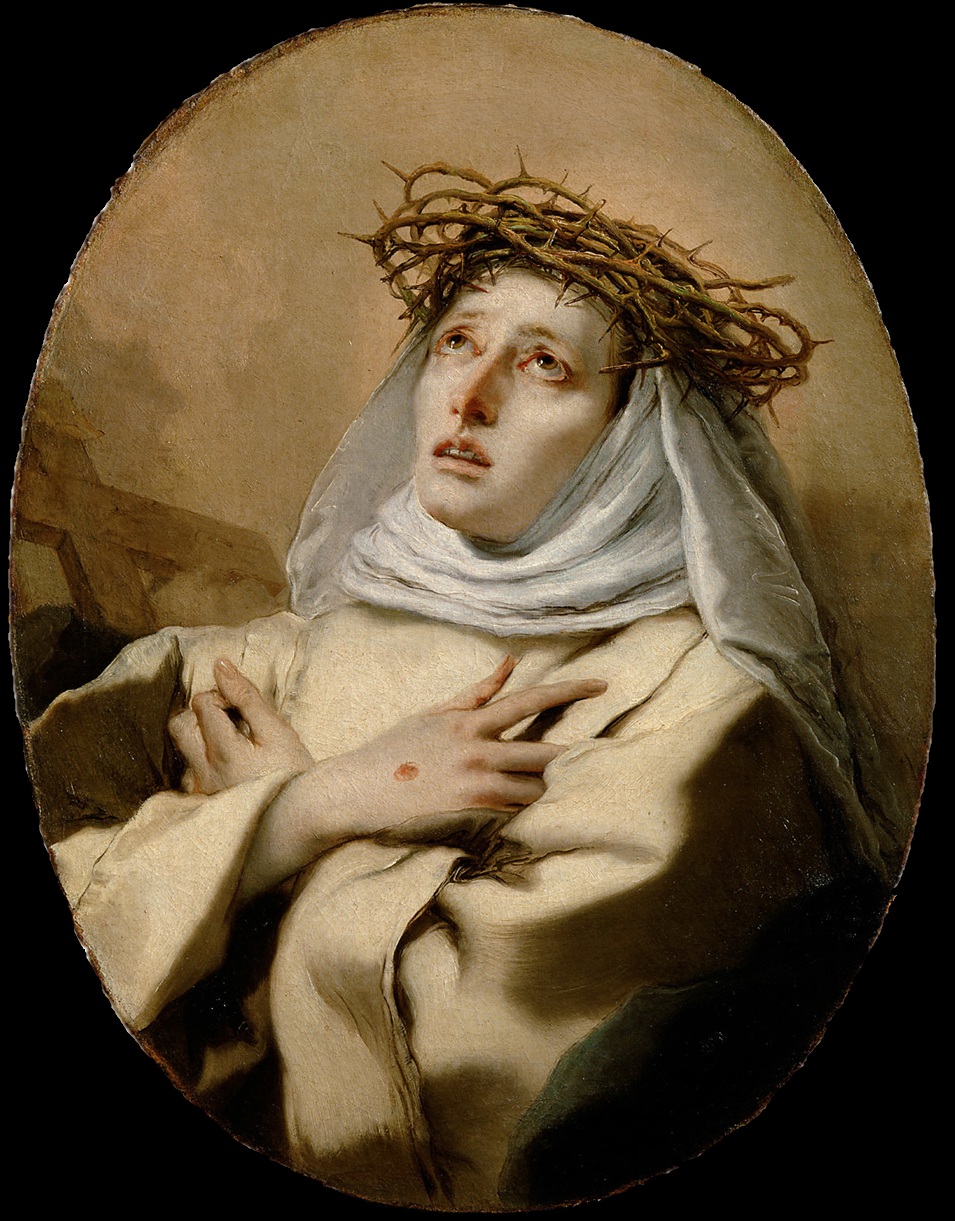
[Image of a suffering female saint (Catherine of Siena)]

This week our local missionaries came over for Sunday dinner.

Those of you who have read my blog posts over the past five years might imagine that I quickly found a way to talk about Joseph Smith and how he aggressively worked to save women (and men) from the effects of coercive seductions that had occurred at the hands of some men in the community.

In the course of this conversation, I swayed into discussion of the time I spent the night behind closed doors with my zone leader, because I had earlier that evening been kissed and fondled by a young man who had expressed his hope of spending the overnight sea voyage having sex with me (or at least necking, etc.).

It wasn’t that I was demanding protection. It was mostly that my zone leader hadn’t known he was reserving a two person cabin for our trip. He was too embarrassed to change the situation, and I was too rattled by the encounter with the eager would-be sexual partner to object to having someone with me that night.

I’m assuming the recent telling of this mission story is what prompted my husband to send me a link to the Salt Lake Tribune story from August 2018 about female missionaries dealing with assault.

Have people not read the Book of Mormon? Have they not studied Church History? Why in the world would anyone ever think that missionaries are immune from harm?

There are times when we have been broken, whether solely as the result of others or as a result of circumstances in which we played a consenting role.

When we are broken, we can seek healing. The great promise of the gospel of Christ is that Our Savior has suffered to make it possible for each of us to be healed. The covenant we make when we join the Church is to minister to one another on behalf of Christ.

I believe what the scriptures say about the reality of a resurrection and a judgment day, when we will all stand before God. In this judgment, I believe we will know as we are known, that we will see all, though our mortal understanding might have been incomplete, as seeing through a dark glass.

I expect, in that day, to cry out in anguish over the pains I could have helped heal, over the pains I inflicted. And I will anguish at the pain I suffered and how those who afflicted me are then forced to acknowledge the harm they, in turn, inflicted.

But in that day of truth and anguish, I believe I will rejoice that My Savior has done for me what no mortal could do, that I and those I love may be cleansed of our wrongs and our sufferings.

Reflections on Reading the Book of Mormon

A couple of days ago I finished reading the Book of Mormon, which I had started in October based on President Nelson’s challenge.

About a year ago I recall opining that the Book of Mormon peoples had a more complete version of the creation narrative, a narrative which was neutered by the Deuteronomists and then corrupted during the Babylonian captivity. At that time I was wondering if the fullness of that creation narrative, which we see in accounts canonized in the Pearl of Great Price and the temple endowment, could have been contained in the initial manuscript pages that have been lost.

During this reading, however, I realized the fullness of the creation narrative can be found scattered throughout the extant Book of Mormon, included as asides during doctrinal discussions about the purpose of this life and the need for a Redeemer.

Saving the 60 Billion

According to some estimates, roughly 60 billion humans have lived on this earth, including the ~7 billion that are alive at the moment.

If God’s plan includes offering redemption to all His children, how are the bulk of the 60 billion to be saved? As many cultures are lost to memory, we cannot do the work entirely by means of searching out the records. There must needs be a way to learn the identities of those memory has forgotten. Continue reading