In the Marrow of our Bones

Elder Whitney Clayton was the keynote speaker this week at an interfaith religious freedom conference series being sponsored by the Catholic Diocese of Sacramento, William Jessup University, and The Church of Jesus Christ of Latter-day Saints. THe Conference series is on the topic of “Preserving Our Religious Freedoms with a Civil Voice: People of Faith Working Together in the Public Square.”

Elder Clayton’s remarks were well received by a very diverse group of people of diverse faith traditions who are coming together to speak up about the important role that faith plays in the public square.

His remarks were recorded and will eventually be available online. However, his remarks were substantially similar to ones that he gave at BYU’s Religious Freedom Annual Review in June 2018. Here is a write up in Meridian on those remarks.

Elder Clayton’s central thesis was that increasingly many people in our secularizing society do not really understand the role that religion plays in the life of the believer. All too often, faith is seen “as something akin to a quirky, private belief or hobby like secretly believing in the Yeti or UFOs or belonging to a weekly bowling league.” From that premise it is easy to treat faith as something quaint or unnecessary. Accordingly, it is easy to say “You are welcome to have your own private fantasy world, but keep it private and don’t make me acknowledge it.” When push comes to shove, beliefs must yield to changing social trends.

But in reality, faith is far deeper than that. “[F]or tens of millions of Americans, faith and religious convictions are the most powerful defining sources of personal and family identity in their lives. … [T]heir faith is marrow to their very bones of who and what they are.” Faith is far more central than that: ”
“Once experienced and accepted, faith in God is life-altering. The faithful, life-changing choice to believe deeply influences ones personal, familial, and cultural identity. It defines who and what we are, how we understand our purpose for being, how we relate to others, how we deal with pain, suffering and death.”

Elder Clayton argued that we can do much more to make clear that religious plays a role at least as profound as our identifiers such as “race, color, national origin, ethnicity, sexual orientation, education, profession, wealth and so on,” and that from such a foundation we can build am ore authentic and productive dialogue with those who might disagree with us.

I really liked Elder Clayton’s focus. All too often, we believers try to minimize or downplay our faith in conversations with others. Instead, we need to be clear about where we are coming from and about those beliefs that are part of the marrow in our bones

Good article from CNN on the Church revelatory process

The CNN religion editor wrote a surprisingly good article that was released today on President Nelson’s process of revelation. Some key excerpts:

When the messages come during the dark of night, Russell M. Nelson reaches for his lighted pen and takes dictation from the Lord.
“OK dear, it’s happening,” the president of the Church of Jesus Christ of Latter-day Saints tells his wife, Wendy Nelson. 
“I just remain quiet and soon he’s sitting up at the side of the bed, writing,” she said in a recent church video. 
Sometimes the spirit prompts the prophet’s wife to leave the bed, though she’d rather sleep. One such morning, Wendy Nelson told Mormon leaders, her husband emerged from the bedroom waving a yellow notebook. 
Russell Nelson has instituted several changes based on revelations since becoming church president in 2018.
“Wendy, you won’t believe what’s been happening for two hours,” she recalled Russell Nelson saying. “The Lord has given me detailed instructions on a process I am to follow.” 
Nelson’s nighttime messages have “increased exponentially,” his wife said, since last year when the 94-year-old took the helm of the Church of Jesus Christ of Latter-day Saints, widely known as the Mormon church. 
“One of the things the Spirit has repeatedly impressed upon my mind since my new calling as President of the Church,” Nelson said, “is how willing the Lord is to reveal His mind and will.” 
Through a spokesman, Nelson declined an interview about his revelations. But more than any Mormon president in recent memory, he speaks openly and often about his divine communications, some of which have significant consequences for the 16.6 million-member church. Last year, Nelson announced that God had told him the church should drop the moniker “Mormon,” a nickname that has stuck since the 1800s.

Check out the entire article here.

Relying on Self (with God’s Help)

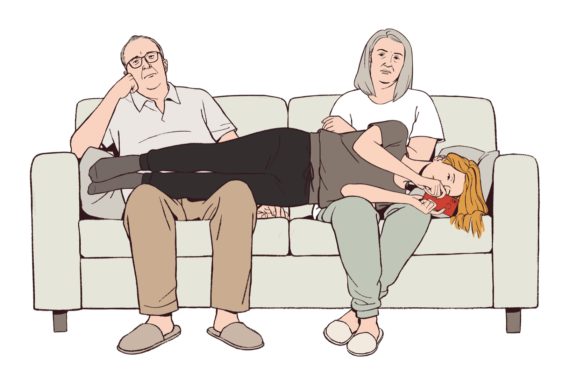
Elderly adults in the United States spend an estimated $400 Billion per year supporting their adult children. (Illustration by Patrick Leger for Barron’s)

A couple of years ago, the Church launched a series of Self Reliance workshops. These can help individuals and families understand their current status and future, then take action to provide for a future that will be a blessing to themselves and others.

As I have participated in numerous Self Reliance workshops in the past two years, I was interested to read Friday’s article in Barron’s by Reshma Kapadia describing the alarming burden older Americans are shouldering on behalf of their adult children.

When does helping an adult child go from compassion to willing participation in exploitation? When does helping children, grandchildren, and friends go from being helpful to debilitating the very individuals we seek to help?

Continue reading

Hot Drinks Cause Cancer

Hotter than this thermometer can measure? Don’t drink it.

In 2016, the International Agency for Research on Cancer[ref]The International Agency for Research on Cancer is associated with the World Health Organization.[/ref] identified one carcinogen as “drinking very hot beverages above 65C (150 degrees Fahrenheit).”

This 2016 guidance has recently been validated by a study published in the International Journal of Cancer. Researchers studied over 50,000 people in Iran. The risk of developing throat cancer was nearly double in those who reported drinking very hot tea (at temperatures higher than 65C or 150 degrees Fahrenheit).

This makes sense. High temperatures are used to kill micro-organisms in organic matter. This process is called pasteurization, and is a great thing for killing microbes in a product you might wish to store for future consumption, such as milk. Need to ensure water is safe in a survival situation? Many folks keep a Water Purification Indicator (WAPI) in their emergency kit, which measures when water has been heated to 150 degrees for long enough to be safe.

So 150 degrees Fahrenheit is something of a magic number.

Do pasteurize food and water.

Don’t pasteurize your throat.

For what it’s worth, this correlates with other behaviors that damage body tissues, such as the link between excessive exposure to UV radiation (sun burn) and skin cancer.

As members of the Church of Jesus Christ, we already avoid caffeinated tea and coffee. In the spirit of reducing cancer risk and being heedful of counsel, feel free to put ice cubes in hot soup, milk in hot cocoa, and let the herbal tea steep for a spell before taking a sip.

Lying

A few years ago a young person I know took the ACT and scored a 34. Or 35. I don’t remember.

To those who may not know, that’s a high score. And in the case of my young friend, the score was a reasonable representation of their academic acumen. This young friend reported this score as part of their application to the only school they wished to attend: BYU.

I remember talking with this friend about other possibilities: Stanford, MIT, Harvard. This young person would just shrug their shoulders.

I heard that when they submitted their combined BYU/BYU-I application, they were accepted by BYU-I within hours. It took BYU considerably longer to tender an offer.

This episode came to mind as I read about the college cheating scandal, where dozens of individuals, several of them famous people, paid tens of thousands of dollars for professionals to take entrance exams on behalf of their college-bound children. One woman paid $50,000 and in turn was able to provide her son a 35 on the ACT to use in his college applications.

In another story that caught my eye, fentanyl is now killing enough people that America’s life expectancy is on the decline. The stories related to that headline are filled with those who have lied. In this case, their lying is associated with thousands upon thousands of deaths.

In a third story, Venezuela is tumbling into fatal disarray. The root cause: fraud and corruption (fancy words for lying).

Exodus 20 doesn’t actually include, “Thou shalt not lie,” as one of the commandments. We are warned against two similar sins: stealing and bearing false witness against a neighbor. Leviticus 19 explores the various deceits that are related to unrighteousness that are to be avoided (Leviticus 19:11 specifically mentions lying). Suffice it to say that anyone raised in the Judeo-Christian tradition has learned from their infancy that lying and deceit are bad.

On the other hand, I have in my day been entrusted with sacred or personal or state secrets. My failure to shout these secrets from the housetops does not constitute lying. Or, at least, were I to disclose such secrets in public, I would lose my friends, affiliation with my faith, my job, and my liberty.

There are those facts which need to remain hidden in order that the world may be healed. This is the purview of holy individuals, friends, and nation states.

Then there are those facts which were created in order to rend the fabric of the world for the unholy benefit of the few. These must be exposed. This is the purview of honest individuals (whistleblowers), law enforcement, and the United Nations.

I would offer a third category: facts which were hidden to heal the world of the past, but which need to be revealed in the present so that a proper understanding of the past can be had for the benefit and healing of the present world. This is the purview of historians.

Don’t lie. Don’t cheat. Don’t steal or kill or bear false witness. Obedience to these things is not childish, nor does it matter if surveys suggest modern folks don’t care as much. The outrage against the college cheaters is proof that modern folks do indeed care very much.