
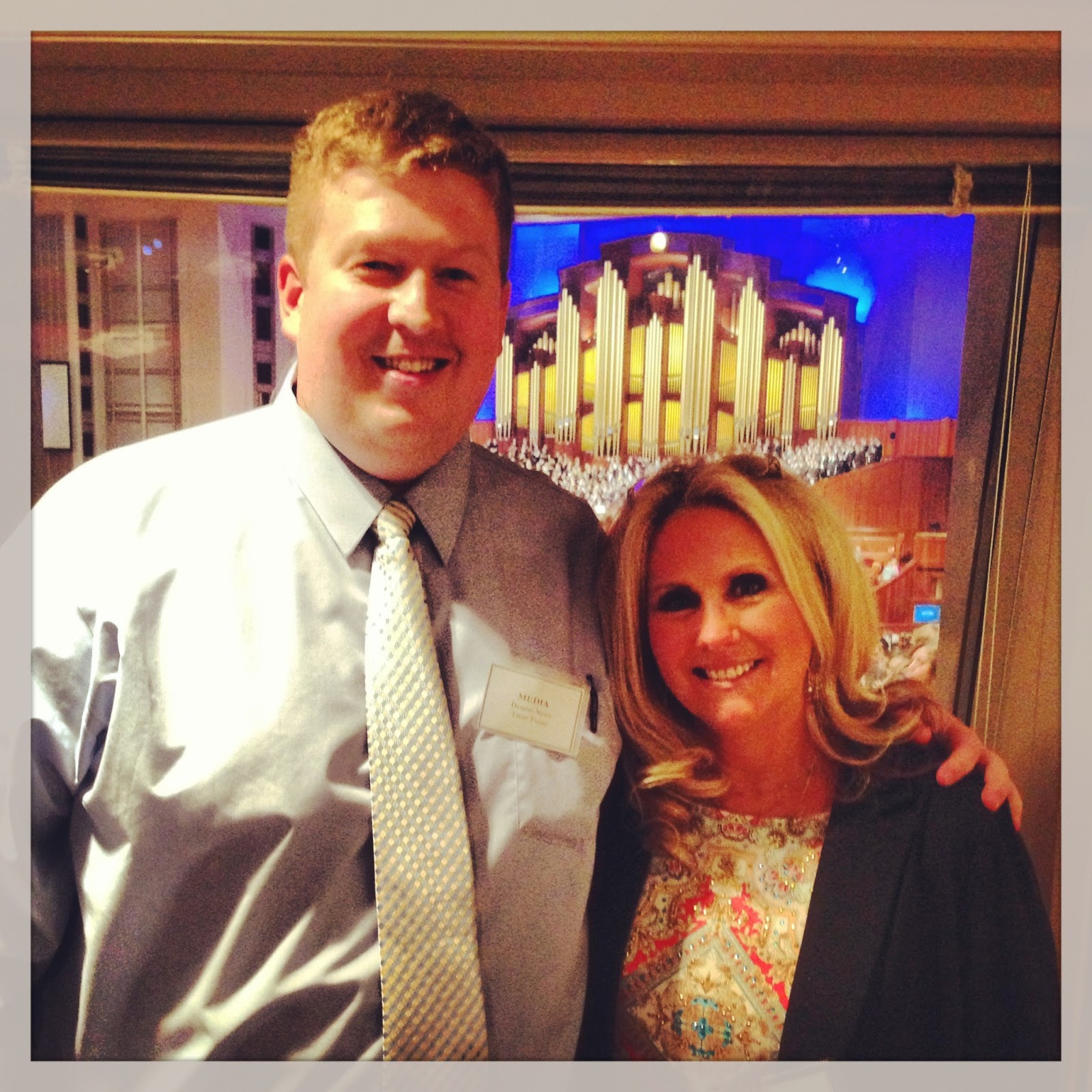
About Geoff B.

Geoff B graduated from Stanford University (class of 1985) and worked in journalism for several years until about 1992, when he took up his second career in telecommunications sales. He has held many callings in the Church, but his favorite calling is father and husband. Geoff is active in martial arts and loves hiking and skiing. Geoff has five children and lives in Colorado.

Guest post General Conference report: Friday and Saturday

By Kathryn Skaggs

Media Room: Trent Toone, Kathryn Skaggs

Saturday’s sessions of the April 2013 General Conference of The Church of Jesus Christ of Latter-day Saints (Mormon), had me thoroughly engaged — every second, during each of the day’s meetings.

Perhaps I was unknowingly spiritually dehydrated? And one could easily blame it on the times we are living in, causing us all to feel as though the winds and the waves are literally refusing to obey — clearly heaving beyond their bounds. Also, I will confess, it could very well be that I was trying with all my might, mind and strength, to perform my social media duties with as much precision as humanly possible — no pressure!

Nevertheless, whatever the reason for my state of mind — even if all of the above — the words of living prophets and inspired leaders, when they began to come forth, for this famished soul, were like manna from heaven — and I did lap them up, not caring if I had to fall to the ground to consume every… last… word.

But wait. Let’s back things up a bit… because, at least for me (and I’m sure many of you will agree) that unusually, and not officially mind you, but this General Conference, actually began on Friday. That’s right. In case you missed it, on Friday, the Mormon Newsroom released back-to-back, two significant items of interest. And both, directly affecting the women of the Church.

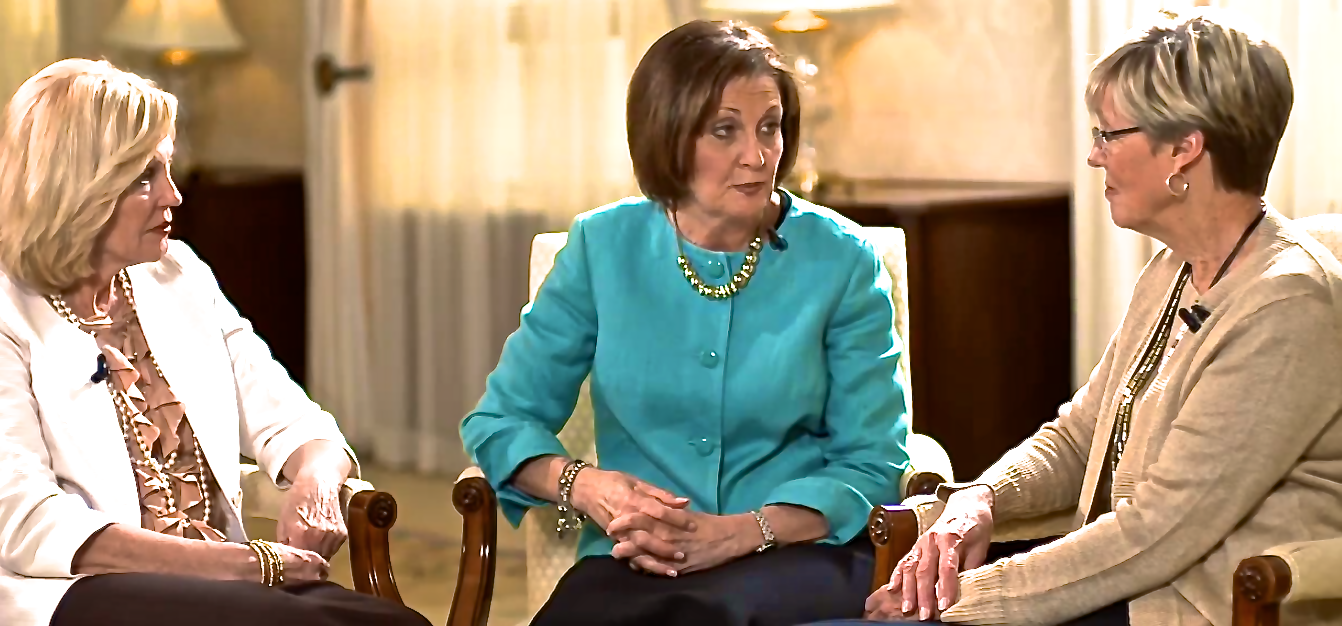
The first, a 15 minute video discussion, featuring the three general President’s of each of the women’s auxiliaries, discussing equality and priesthood. And second, a press release, announcing a new Mission Leadership Council, which will utilize sister missionaries in the mission field, giving them much more responsibility for teaching and training sisters in the field, and counseling with priesthood leaders.
Continue reading

Guest Post: General Conference report from a well-behaved Mormon woman

This is a guest post by Kathryn Skaggs.

The Mormon Newsroom just posted a video discussion of the three top women leaders in The Church of Jesus Christ of Latter-day Saints, who just happen to be talking about the very same controversial issues —  that in times past would have almost seemed taboo for women of such stature to be doing —  which have been floating around the likes of blogs (guilty), Facebook walls and media outlets over the last few months — nearly nonstop. I loved listening to these great women of faith, speaking with such candor and understanding, on topics that needed to be addressed — and by our female leaders. I support these sisters and the positions they take on these matters.

The general presidents of the Relief Society, Young Women and Primary organizations of The Church of Jesus Christ of Latter-day Saints recently participated in a conversation covering a number of topics relating to women in the Church. In the video, Sister Linda K. Burton, Sister Elaine S. Dalton and Sister Rosemary M. Wixom provide insights into their roles in Church leadership, describe the power of the priesthood in people’s lives and provide answers to questions of interest.

Video: Top Mormon Women Leaders Provide Their Insights into Church Leadership


And if that wasn’t enough, as I was writing this post, the  Mormon Newsroom posted this exciting news release, giving more responsibility to women!


Church Adjusts Mission Organization to Implement “Mission Leadership Council”

SALT LAKE CITY —

The Church of Jesus Christ of Latter-day Saints is making adjustments to the way its 405 missions are organized, to better utilize the skills and abilities of all missionaries in training and leadership. The change is due in part to the influx of thousands of young missionaries who are responding to the lowering of age requirements for mission service, announced by President Thomas S. Monson last October. 

Each mission in the Church will organize a Mission Leadership Council that will include both elder (males) and sister (females) missionary leaders. The new mission leadership council will consist of the mission president and his wife, assistants to the president, zone leaders, and sister training leaders. 

“We are very excited about the new Mission Leadership Council and this role for sister missionaries,” said Elder David F. Evans executive director of the Missionary Department. “It will be a blessing to both missions and missionaries throughout the world, and better employ the remarkable faith, talents and abilities of all missionaries.” 

The role of sister training leader has been created as more female missionaries serve in missions around the world. Continue reading

Guest post: FCC wants to allow more swearing, nudity on TV

This is a guest post by David Ferguson.

For those of you who haven’t heard, FCC may modify its swearing and nudity policy. In short, the new policy will allow (a) isolated s-words and f-words in TV shows, and (b) short presentations of female frontal nudity. We’re not talking total debauchery here, but it isn’t something to blink at either.

You can find more about the proposed changes at this link. Fortunately, the FCC has opened the floor up to comments. The link shares instructions on how to file a comment. I encourage it.

I ended up having a Facebook conversation with a friend over this issue. He, a proud social liberal, thinks that the current censorship laws violate the first amendment right to free speech (although the Supreme Court upheld those laws). Like any other citizen, I put a high value on the first amendment, but we do our society a severe disservice by taking the first amendment to its extreme limits.

What many people seem to miss (generally liberals, but sometimes conservatives too) is that the first amendment has limitations. Society generally recognizes that nudity, swearing, and violence (which isn’t part of the FCC debate) aren’t things childrens should be exposed to, and the first amendment doesn’t give companies the right to expose children to this sort of content prematurely. That’s why the mpaa ratings exist. Whatever we think about them, there’s a reason for them, and it’s to protect our children. The point is, we expect the government to participate with parents when it comes to shielding children from adult material.

Critics, like my friend, point out that if parents don’t like what’s on the TV, they can turn it off. Generally speaking, it’s a valid argument, but it isn’t a good argument to validate lifting censorship laws. Parents should supervise their children’s TV usage, but changes in the censorship policy would force most parents to radically alter their TV usage, if, of course, they want to protect their children from exposure to swearing and nudity (which seems like a given). Radically might be a little strong, but maybe not. Most parents can’t supervise their children’s TV viewing habits all of the time. So the policy change would force them to make unusually demanding changes to their lifestyles. I’m not sure we want government policies that complicate childrearing, especially when it limits the normative habits of children and their parents.

In saying that, a pragmatic compromise may be the best option for this debate. A more reasonable, middle approach to the debate would be to relax censorship laws after midnight until, say, 4 AM.

Non-Mormon Mormon Movie: “The Fountain”

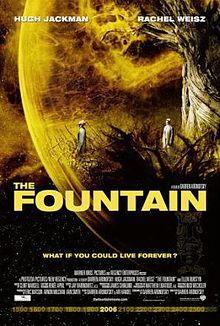
“The Fountain,” made in 2006, is a movie with Hugh Jackman and Rachel Weicz. It is a very artsy, controversial movie that shuttles between three different time periods over 1000 years. My wife didn’t like it but I really enjoyed it, and it has some very interesting religious themes having to do with eternal life and the nature of death.

220px-Fountain_poster_1

It will be impossible to describe this movie without some SPOILERS, so for readers who are bothered by this read no further.

I cannot describe the movie better than the Wikipedia description, so let me go straight to that.

At its core, The Fountain is the story of a 21st century doctor, Tommy Creo (Hugh Jackman), losing his wife Izzi (Rachel Weisz) to cancer in 2005. As she is dying, Izzi begs Tommy to share what time they have left together, but he is focused on his quest to find a cure for her.
While he’s working in the lab, she writes a story about 16th century Queen Isabella losing her territory to the Inquisition while her betrothed, conquistador Tomás Verde plunges through the Central America forest in Mayan territory, searching for the Tree of Life for his Queen.
Since she does not have time herself, Izzi asks Tommy to finish the story for her. As they look out to the stars, she imagines that their souls will meet there when the star dies. And we see astronaut Tom, in 2500, travelling there for the event, in a spaceship made of an enclosed biosphere containing the Tree of Life.
The three story lines are told nonlinearly, each separated by five centuries. The three periods are interwoven with match cuts and recurring visual motifs; Hugh Jackman and Rachel Weisz play the main characters for all three narratives.[1] Even within a given narrative, the elements of that particular story are not told in chronological order.
Whether these stories are actual events, or symbolic, is not clarified; and, Director Darren Aronofsky emphasized that the storylines in their time periods and their respective convergences were open to interpretation.[2]
The director has said of The Fountain’s intricacy and underlying message, “[The film is] very much like a Rubik’s Cube, where you can solve it in several different ways, but ultimately there’s only one solution at the end.”[2]
In a 2012 interview, Aronofsky stated that “ultimately the film is about coming to terms with your own death”.[3]

Continue reading

Notes from Sunday afternoon session of General Conference

Conducting: President Uchtdorf

Hymn: “Come Ye Children of the Lord.”

Opening Prayer: Sister Carol M. Stevens

Hymn: “Tell Me the Stories of Jesus.”

Elder Jeffrey R. Holland

Jesus said: “If thou canst believe, all things are possible to him who believeth.”

Response: “Lord, I believe. Help thou mine unbelief.”

Even if you can no more than desire to believe, let this desire work in you until you believe.

The people wanted some small lifting of the burden carried by them. Jesus heals.

Aimed at young people of the Church.

1)When facing the challenge of faith, the father first affirms the positive — “Lord I believe.” Hold the ground you have already won in troubling times. When difficult moments come, hold fast to what you already know and stand strong until additional knowledge comes.

2)When problems come and questions arise, don’t start with the things you don’t have or don’t know. That’s like stuffing the turkey through the beak. Be true to the faith you do have. Don’t start with doubt. Don’t let the questions stand in the way of faith working its miracle. You have a lot of evidence: you shall know them by their fruits. Don’t hyperventilate if when time to time issues arise. In this world, everyone is to walk by faith.

3)When doubt or difficult come, do not be afraid to ask for help. God will send help from both sides of the veil to strengthen our unbelief. Belief is a precious word and an even more precious act. Christ said, be not afraid, only believe. Belief is the first step toward conviction.

Continue reading