
“Two men went up onto the Bloggernacle to post, one a Progressive and the other a person with conservative views. The Progressive stood and was posting thus:: ‘God, I thank You that I am not like other Mormons: sexist, homophobic, racist, or even like this person with conservative views. and don’t you dare say I’m not a good Mormon, since I fast (sometimes) and I pay tithes of all that I get (based on my idiosyncratic definition of tithing).’ But the person with conservative views just posted silly rewrites of NT parables and then moved on with life.
Monthly Archives: September 2015
Book Review: Peter Enns’ The Evolution of Adam
Many years ago, the son of a good friend was preparing for a mission. He was offered a scholarship to a major university, and so decided to attend for a year before leaving on his mission. By the end of the year, he was no longer an active, believing member. His parents raised him believing in a 6000 year old earth, with a Creation that occurred over a very short period of time. After several science classes that included biology and evolution, he was forced to choose between the incontrovertible evidence of science and the claims made by church leaders and his parents on the age of the earth. Such is a great danger to many of our kids today, and so various scholars and others are seeking methods to be able to resolve the conflict, and hopefully save some of our people.
Recently, my friend Ben Spackman recommended a book by Protestant Bible scholar Peter Enns, entitled: “The Evolution of Adam: What the Bible Does and Doesn’t Say About Human Origins”.
It is an interesting book, with the following chapters:
- Genesis and the Challenges of the 19th Century: Science, Biblical Criticism, and Biblical Archaeology
- When Was Genesis Written?
- Stories of Origins from Israel’s Neighbors
- Israel and Primordial Time
- Paul’s Adam and the Old Testament
- Paul as an Ancient Interpreter of the Old Testament
- Paul’s Adam
Therapy for Spiritual Death, Part 1 [DBT, Tolerating Distress]
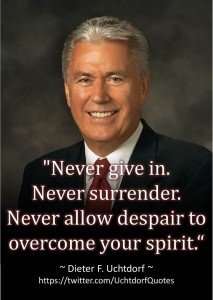 As I consider the methods used to treat those at risk of physical death due to self-injury, it seems that many of these same therapies can be useful to those wishing to escape spiritual “death.”
There are two kinds of spiritual death. One is when an individual becomes overwhelmed to the point that they “allow despair to overcome [their] spirit.” In this first case, the sufferor wishes to overcome their pain.
The second form of spiritual death is when an individual has allowed their love for God to diminish to the point that they no longer believe in that which was precious to them (or their ancestors) in the past. In this second case, the afflicted person may not even wish to overcome their alienation, seeing themselves instead as having overcome the superstitions of the past.[ref]In this I am influenced by Notre Dame’s recent National Study of Youth and Religion, indicating a majority of those who leave their youthful faith tradition for unbelief are raised in homes where the parents are casual in their belief, homes where the young people themselves report that they have not had significant spiritual experiences. This is also influenced by the Pew Research findings that Mormons who leave their faith tradition are unusually likely to abandon religious belief entirely.[/ref]
The four therapeutic skill sets used to treat those in emotional pain are:
- Learning to tolerate distress
- Learning to regulate emotions
- Learning to live in the present (versus obsessing about the past or angsting about the future), and
- Learning to be effective in interpersonal interactions.
Whether concerned with our own possible spiritual death or attempting to cope with the spiritual death of a loved one, these same skills can help us as we move forward. Continue reading
War Room: Prayer as a “Weapon”
Elizabeth Jordan (Priscilla Shirer) with her daughter, Danielle (Alena Pitts) Photo credit: David Whitlow, courtesy of AFFIRM Films/Provident Films
Christian-themed film War Room is a surprise box office success in the slow summer week before the Labor Day holiday, grossing $11M during opening weekend. Predictably, has been panned by traditional reviewers, as represented by an 18% rating at Rotten Tomatoes.
The title of the film led me to presume that this was actually a war film, and I likely would have skipped this film had not a good friend been thrilled to see it. War Room is the fifth movie written and produced by Alex and Stephen Kendrick of Kendrick Brothers Productions. Their previous movies include Flywheel (2003), Facing the Giants (2006), Fireproof (2008), and Courageous (2011).
War Room marks the first time the Kendricks feature a cast that is predominantly Black, bringing both great strength and some weakness to the film. The film tells how prayer transforms a family on the verge of collapse. Continue reading
Counsel of Prophets and Hot Coals
A recent post on Wheat and Tares has got me thinking. The post is titled, “Blaming Parents vs. Mourning with Those Who Mourn.”
I know people whose children have left the Church, who did “everything right.” They had scripture study, gospel conversation, family home evening, bore regular testimony, and did all this with love — and despite that, their children left the Church. I also know parents who did not do all of these things — that is, I know for a fact that they did not have family home evening, regular scripture study, and gospel topics were rarely discussed in the home except perhaps over Sunday dinner. And some of their children have also left the Church.
If I were the teacher of the fifth Sunday lesson, here’s what I would want to say. I certainly would follow the Spirit with a prayer in my heart, and I’m sure that, in the moment and facing brothers and sisters who are clearly hurting, I would probably speak these things in gentler ways than I do here, where I am at a distance and in a blog post.
Continue reading