
Monthly Archives: September 2015
What do the world’s poor want?
For the last two years, the United Nations has been running a worldwide on-line poll asking the people of the world what their priorities are. The poll has more than 8 million answers, the vast majority from the world’s poorest countries. You can see the poll results here.
What do the world’s poor want? Overwhelmingly, they say they:
1)a good education
2)better healthcare
3)better job opportunities
4)an honest and responsive government.
What is last on the list (by far)? “Action taken on climate change.”
And when you start looking at the figures, it turns out that the poorer the country the least likely it is to want action taken on climate change. Even among the richest countries, climate change is only priority number 10 out of 16. Among women from the poorest countries, there is comparatively almost no support for taking action on climate change.
So, we must ask ourselves: why does the Pope and a group of mostly left-wing global elites want to impose policies on the world that the poor do not want? The poor are like most of us, i.e., they want a better life for themselves and their children. Why do so many out of touch know-it-alls think they can tell them what they should want?
#daytoserve – A Report
Day to Serve is an initiative started in the DC area several years ago. During the month from September 11 – October 10/11, citizens from across the political and religious (or non-religious) spectrum select a day to serve and “are encouraged to make a concerted effort to feed the hungry, clean up neighborhoods, and improve communities by recognizing and participating in “Day to Serve” activities,” to cite Virginia’s Day to Serve proclamation for 2015. The event extends beyond the month in fall at times, as with the Washington Nationals’ Day to Serve game (Aug 8 this year), where all food donations and ticket proceeds go to the Capital Area Food Bank. Continue reading
#LDSconf General Conference – Sep 26, ’15, Women’s Session
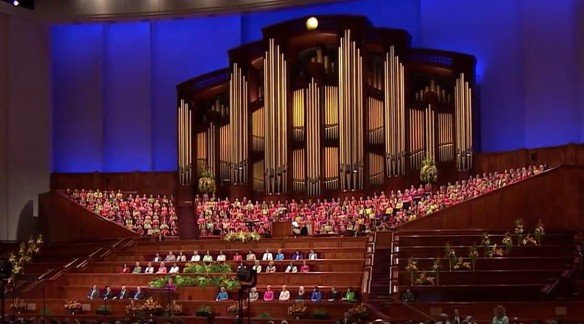
As often occurs in my neck of the woods, we held a social before the broadcast. On the menu were sherbet cups with wafers, along with fresh fruit and cookies. Women and girls from 8 years and up sat in circles together, socializing.
[My daughter noted that the announcer is a woman.] Continue reading
How does the prophet choose new apostles?
With three vacancies in the Quorum of Twelve Apostles, this is a rare and interesting time for the Church. How are new apostles chosen? Elder Christofferson offers some guidance.
Elder Christofferson said the selection and calling of new apostles to the Quorum of the Twelve is the prerogative of the president of the church.
“President Monson, I don’t know if this always has been the case, but his practice has been to ask each of his counselors and the members of the Quorum of the Twelve to give him names they would recommend for his consideration, not to discuss with each other but just individually, to give him whatever name or names they feel impressed he ought to look at,” he said.
“What process he goes through exactly, I’m not sure. That’s, again, something private he pursues. He then brings back, when he’s reached his decision and had the inspiration he needs, the name or names to the council that we have of the First Presidency and the Quorum of the Twelve Apostles to sustain it. That goes forward to general conference.”
In April 2009, President Monson selected Elder Neil L. Andersen as a new apostle after the December 2008 death of Elder Joseph B. Wirthlin.
“I recall this last time around when Elder Neil L. Andersen was called,” Elder Christofferson said. “Before that happened, we were just discussing casually before one of our meetings of the Twelve about the vacancy, and I remember President (Boyd K.) Packer saying, ‘We don’t have to worry, President Monson knows how to get revelation.’
“That’s what it is, a revelatory process in the end. Different prophets may approach it in different ways, but in the end, it’s finding out from the Lord who he wants.”
Elder Christofferson talked about the increased responsibilities that fell on the remaining members of the Twelve with the deaths of their colleagues. Elder L. Tom Perry died May 30, and President Packer, who was president of the quorum, died July 3. Elder Scott had been unable to function in the quorum for months due to health issues.
“This is unusual,” Elder Christofferson said. “We found the last time there were three vacancies at one time was 1906, so it’s not something that comes very often, and I hope it always remains rare. But I see the wisdom in the Lord organizing a Quorum of the Twelve. Sometimes people think that’s a lot, but I can see that’s barely enough.
“It may add a little bit to the load or the responsibility or the assignments of those who are actively functioning for a time, but it’s a brotherhood, and we all pull together, and maybe some things don’t get done or are delayed until later that have lesser priority, but the things that really matter happen and, in the end, we all understand that it’s the Lord’s work, and he really is the one who does it and he lets us help. … Happily we get to be a part of it.”