About Geoff B.

Geoff B graduated from Stanford University (class of 1985) and worked in journalism for several years until about 1992, when he took up his second career in telecommunications sales. He has held many callings in the Church, but his favorite calling is father and husband. Geoff is active in martial arts and loves hiking and skiing. Geoff has five children and lives in Colorado.

Surge in missionaries causes Church to open new MTC in Mexico

Details here.

Elder Russell M. Nelson and Elder Jeffrey R. Holland, both members of the church’s Quorum of the Twelve Apostles, presided at a Tuesday night meeting during which the establishment of what will be the church’s second-largest MTC was announced. The meeting was held on the campus of the church’s privately owned high school, Benemerito de las Americas, which will be closed and its facilities used for the new MTC.

“Church leaders made the decision after considering every immediate alternative that could alleviate the demand at the church’s other missionary training centers around the world, including the MTC in Provo, Utah,” church spokesman Michael Purdy said Wednesday morning, adding that “the change will occur following the end of the current school year in June.”

An email from the Mexico Area Presidency indicated the new MTC will begin operation in July.

Elder Nelson referred to the recent reduction in age requirements for full-time LDS missionaries, which has inspired the recent surge of missionary applications. He said the success of 18-year-old missionaries called from Mexico since 1999 was a significant consideration in the decision to make the change worldwide.

Better internet access for Cuba — can the Church be far behind?

For those of us involved in the internet business, it has been a very interesting time lately. Cuba finally turned up its only fiber-optic cable, and real internet access is finally arriving in the island nation.

It is worth pointing out that such access is still probably only available for a limited number of users, those in the government, some foreign companies and some tourists. But this relatively small step is a big deal for Cuba and Cuban exiles in the United States.

You can read more about the internet arriving in Cuba here. To summarize: Cuba has been completely cut off from the internet except for a few select satellite links. Satellite is problematic because of the latency. A satellite signal must travel from Cuba and then up to a satellite and then down to the Earth again, which means the best latency you can get is in the range of 600 msec. This means that many applications, like Youtube, video and internet voice, will work very poorly or not at all. The fiber-optic cable from Cuba to Venezuela is cutting latency down to as low as 200 msec, which is still pretty slow but will allow other applications to be used. But, again, the internet is not available for general usage yet and is heavily controlled by the government.

Information is power. In theory, more information can help break down the Cuban dictatorship, and this is the hope of most Cuban exiles. But even if the Cuban leadership maintains power, there are small signs that Cuba is opening to new religious groups. One of the interesting trends that has taken place in the last few decades is the opening of the Church to new countries that were previously closed, including Eastern Europe and several additional countries in Asia. The Church is also operating very quietly in other countries where it is not officially recognized. The spread of free information has very often preceded the spread of the Church by a few years.

At last report, a small branch of the Church was operating in Havana.

Continue reading

Natural rights are more important than the ‘common good’

The raging debate over gun control has caused a lot of silliness — both from gun control proponents and supporters of gun rights.  But it is has also brought out some extremely dangerous and short-sighted arguments from some people, and I would like to highlight one especially dangerous one.

This post makes the following argument:

It is the rights culture—the relentless assumption, which liberals pioneered and conservatives have accepted, that the Bill of Rights isolates the individual from considerations of the common good decided upon by the representatives of deliberate majorities.

This particular argument is aimed at the “right to bear arms,” which the Constitution says shall not be infringed. But it is also aimed at the idea that these rights should remain inviolate even if the majority deems these rights can be taken away.

The Constitution makes it clear that rights are inviolate, and the purpose of the Bill of Rights is to highlight certain rights that are to be especially protected. The foundation of these rights is the assumption, outlined twice in the Constitution, that the rights of life, liberty and property shall not be infringed. The rights protected in the Bill of Rights all flow from these three foundational rights to life, liberty and property. So, you have the right to free speech because you have the right to liberty. You have the right to freedom of religion because of the right to liberty. You have the right to the protection from unreasonable searches and seizures because you have the right to liberty and also a right to property. Your home belongs to you, not the government.

The 2nd amendment is based on all three rights: you should be able to own a gun to protect your own life and to protect your liberty, but also you should able to own a gun because it is your property and it is a key element to allowing you to protect your own property. This right to own a weapon was established in the 17th century English Bill of Rights and clearly recognized by colonists as a fundamental right that was established by English common law.

We can see here that the “rights culture” is not some fantasy of right-wing fanatics. It is central to the foundation of the republic. But what is often ignored by critics of the “rights culture” is the fact that tyranny takes place when we, in moments of passion, abandon the “rights culture.” Reminding ourselves that we have certain rights — even if the majority opposes them — is what separates us from the savages.

Continue reading

Where are the unmarried men? North Dakota, Wyoming…

Note to unmarried women:  North Dakota and Wyoming are filled with manly men working in oil fields.   And, by the way, Utah and Hawaii are looking good too.

Check out this chart here.

http://www.nytimes.com/interactive/2013/01/15/us/a-migration-of-unmarried-men.html

Go find them, help them get baptized if they are not already and then get married in the temple.  You now have a plan.


‘Say nothing but repentance unto this generation’

D&C 6:9 says: “Say nothing but repentance unto this generation.”

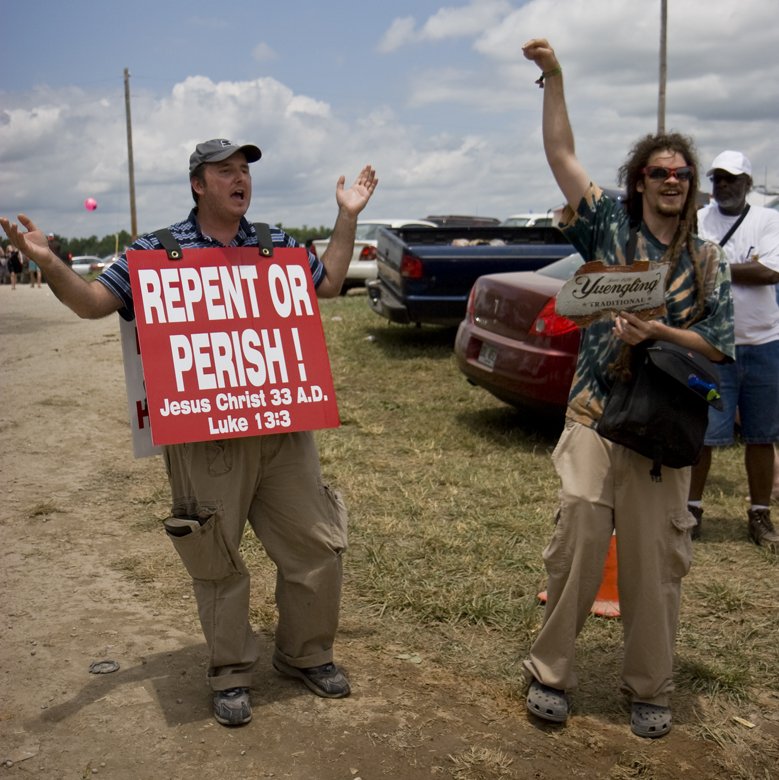
This always struck me as a strange phrase. Really, nothing else? Would that make us like this guy:

repent guy

I think not.

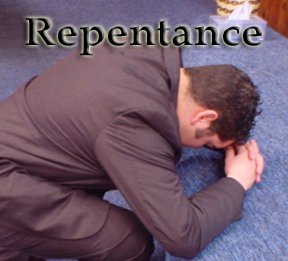
The first point is that saying nothing but repentance means you must start with yourself. This means that what repentance really means is that you must do this:

RepentPray

And you must also do this:


jesus repent

Concentrating on your own repentance is the most important thing you can do.  True repentance comes from relying on the Savior and considering His atonement.

So, what else does it mean to “say nothing but repentance.” Any thoughts?